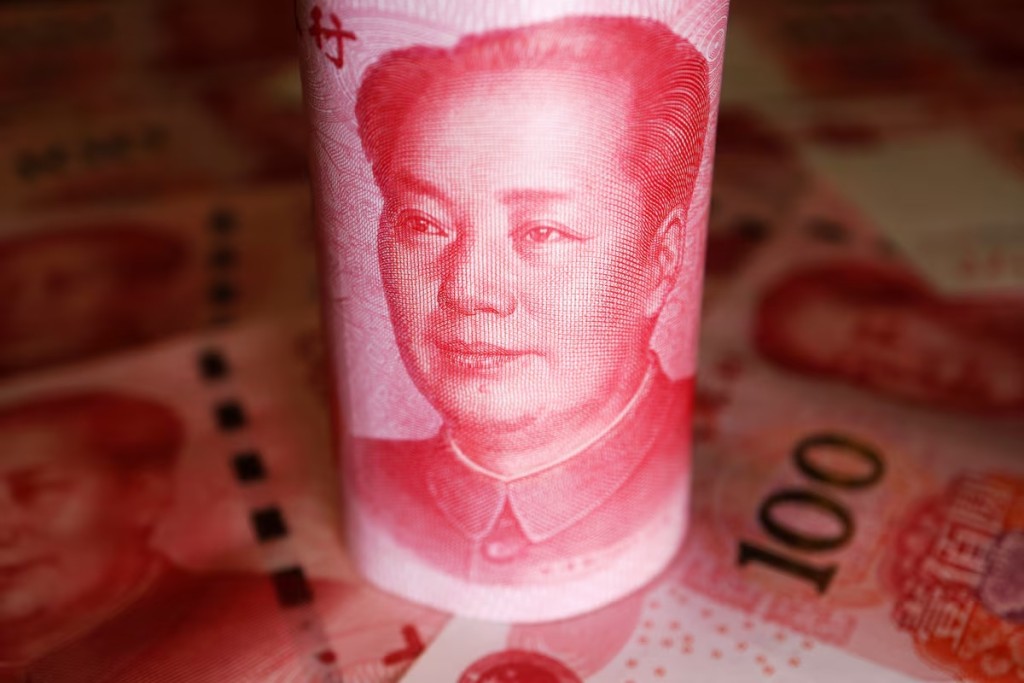
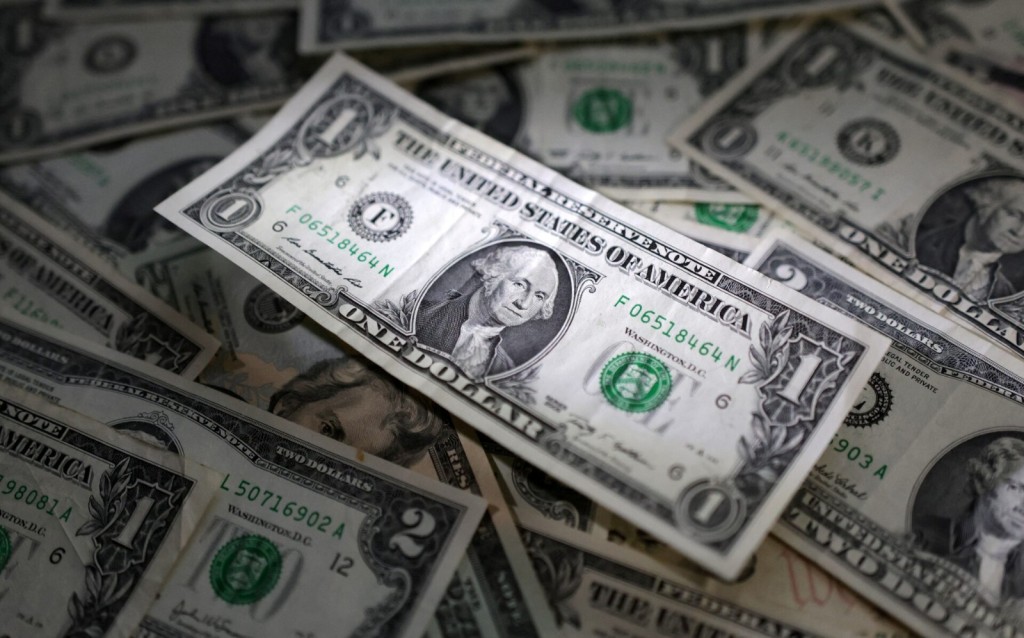
China's yuan strengthened slightly on Thursday as the dollar index corrected and traders weighed signs of China's economic resilience against the country's unattractive yields.
Eyes are also on the US-Israeli war on Iran, as conflicting signs of de-escalation made traders hesitant.
"Despite the ceasefire, the Strait of Hormuz remains largely blocked," the School of Economics at Peking University said in a report.
The Chinese currency is underpinned by relative stability of the domestic economy and society, but is under pressure from "the global rate expectations changed by the war-induced energy shock."
The onshore yuan firmed roughly 0.05 percent to 6.7740 per dollar at 0250 GMT.
The dollar index fell 0.1 percent in Asia morning trading after hitting a near two-month high in the previous session.
On the bright side, China's services activity expanded at the fastest pace in three months in May.
But China's economy is suffering from two-speed growth, with a frenzy in artificial intelligence and robotics contrasting with struggles in "old economy" sectors like real estate.
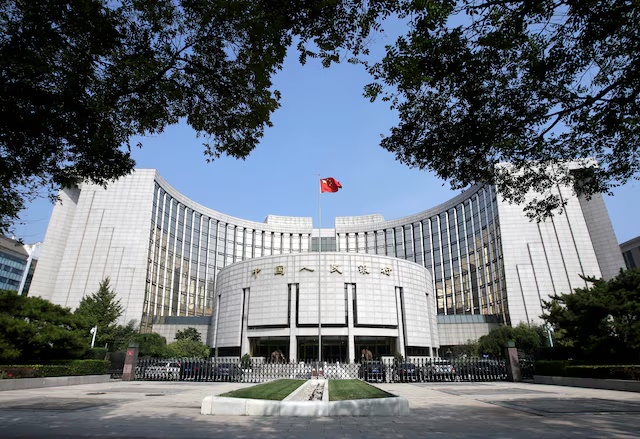
China's central bank on Thursday shut its liquidity tap in open market operations again, in an apparent effort to nudge idle cash into the real economy.
The People's Bank of China said the volume of its seven-day reverse repurchase agreement operations was zero on Thursday, suspending a cash injection for a second straight day.
The inaction came as ample liquidity in the banking system pushed down money-market rates.
That contrasts with a global tilt toward tighter policy to tame inflation fuelled by the Middle East energy shock.
Citing conflicting factors, the School of Economics at Peking University expects the yuan to fluctuate within the 6.72 to 6.83 per dollar range in June.
Reuters