Read More







Ahead of Trump-Xi summit, China warns on US arms sales to Taiwan
13-05-2026 15:03 HKT

Chinese alleged hacking ringleader extradited to South Korea
13-05-2026 14:58 HKT


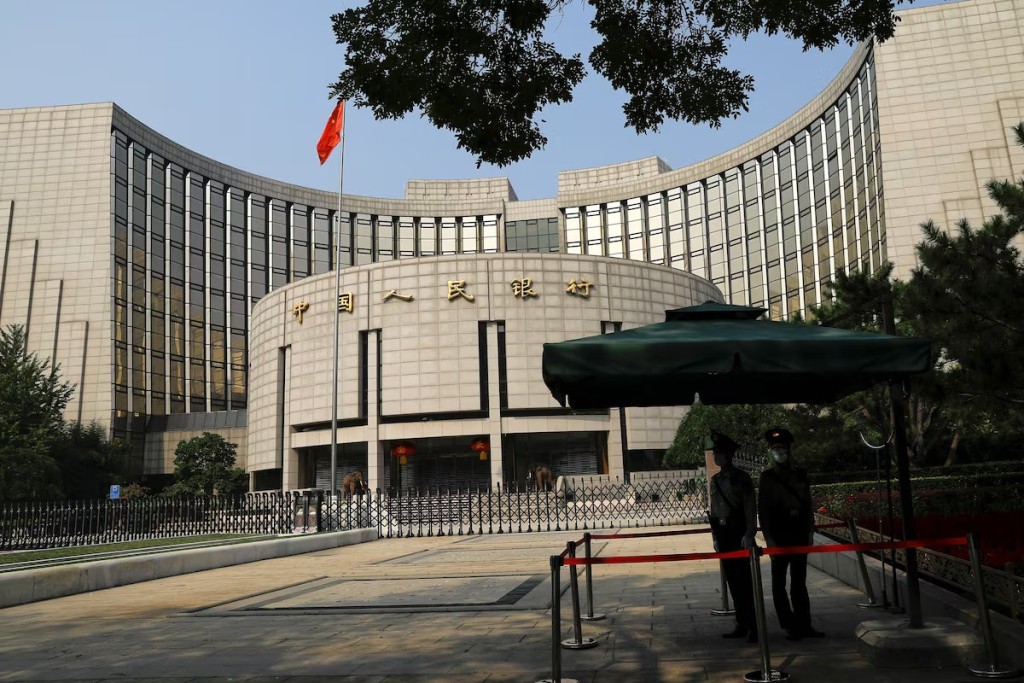
China’s new yuan loans contracted in April for the first time in nine months, sharply undershooting forecasts as seasonal factors and weak credit demand dragged on lending in the world’s second-largest economy.
The surprisingly weak data comes after China’s first-quarter economic growth beat expectations, buoyed largely by resilient exports, and casts more doubt on the health of its domestic demand as the Iran war drags on.
Loans shrank by 10 billion yuan (HK$11.5 billion) in April, far below analysts’ expectations and down sharply from growth of 2.99 trillion yuan in March, according to Reuters calculations based on data released by the People’s Bank of China.
It was the first monthly contraction since July 2025.
Analysts polled by Reuters had expected new yuan loans in April would total 300 billion yuan, compared with 280 billion yuan a year earlier.
The PBOC does not provide monthly breakdowns. Reuters calculated the April figure based on the bank’s January-April data released on Thursday, compared with the January-March figure.
Outstanding yuan loans grew 5.6 percent in April from a year earlier, slower than 5.7 percent in March. Analysts had expected 5.8 percent growth.
That takes the total amount of new loans banks extended in the first four months of 2026 to 8.59 trillion yuan, down from 10.06 trillion yuan in the same period last year.
Lending typically slows in April, as Chinese banks front-load credit at the start of the year to secure high-quality clients and expand market share.
The PBOC pledged to maintain an appropriately accommodative monetary stance and step up support for expanding domestic demand and technological innovation, according to its quarterly policy implementation report released on Monday.
Last month, Reuters reported that the PBOC had instructed some commercial banks to expand loan issuance in April to prevent a sharp slowdown in credit growth at a time of rising external economic risks.
China posted better-than-expected economic growth in the first quarter, showing resilience despite the impact of the Iran war which has driven up commodity prices and inflation expectations, and reducing the urgency for fresh stimulus.
But the growth outlook is clouded by geopolitical uncertainties that could push up production costs, squeeze already thin factory margins and dampen export demand, a key engine for the world’s second-largest economy, over the long term.
While policymakers assess external shocks, China’s domestic consumption and credit demand remain subdued, dragged by a prolonged property downturn, fragile household confidence and weak private-sector investment appetite.
“Without forceful stimulus, the housing bottoming process will be prolonged. We expect China’s housing market to contract this year and next, albeit at a slower pace than in previous years,” Macquarie analysts said in a note in early May.
“That said, property could bottom soon if exports plunge, as Beijing is likely to prop up property as an alternative growth driver,” the note added.
Broad M2 money supply grew 8.6 percent from a year earlier in April, PBOC data showed, above analysts’ 8.5 percent forecast in the Reuters poll. In March, M2 grew 8.5 percent.
The narrower M1 money supply grew 5.0 percent in April from a year earlier, compared to 5.1 percent in March.
Outstanding total social financing (TSF) - a broad measure of credit and liquidity - rose 7.8 percent in April from a year earlier, slower than 7.9 percent in March. Any acceleration in government bond issuance could boost such financing.
Reuters