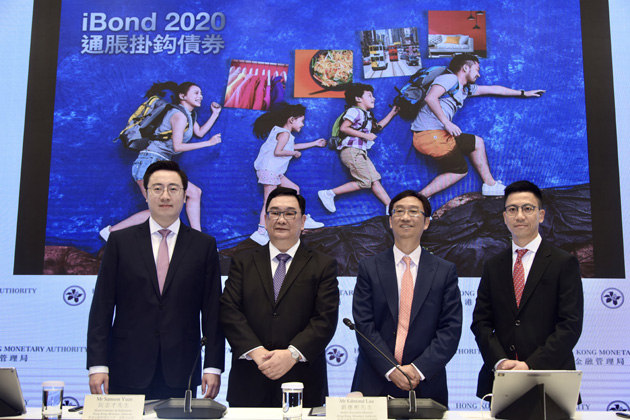
The new batch of the inflation-linked retail bond, or iBond, whose guaranteed yield is twice that of the previous series, is expected to attract a lot of investors amid a low-interest-rate environment.
Heavy demand for the new iBond is expected as the time deposit rate has dropped significantly and current deflation will give way to inflation in the mid-term, according to OCBC Bank economists.
Kenny Ng Lai-yin, securities strategist from Everbright Sun Hung Kai, expects investors to be allocated one to two board lots.
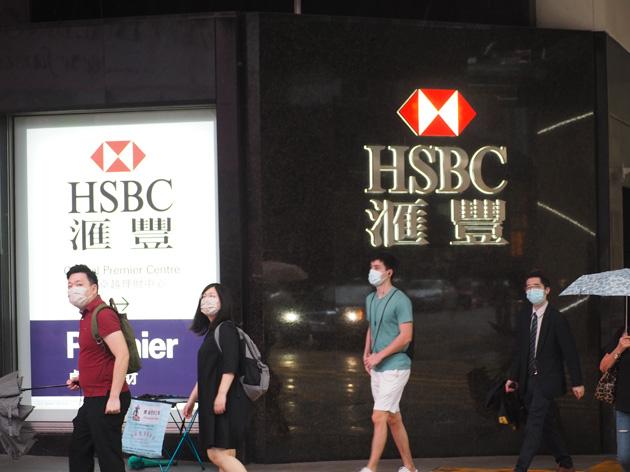
Ng projects the yield might be 2-3 percent on the first day. It is better to use iBond as a short-term investment and switch to HSBC (0005) or other equities, he says, "investors may not receive a higher return after holding on to the bonds for a long time."
Subscriptions of the new iBond will open on Friday. The target issue size is set to be HK$10 billion and could be expanded to HK$15 billion depending on response.
Local brokers are rushing to promote margin financing services for the new bonds, with new players even subsidize additional coupons as well as waiving fees to attract customers. But analysts do not suggest investors using margin loans. Instead, Ng suggests that each family member could use individual accounts to subscribe to one to two board lots to increase the success rate.
Bondholders will receive interest once every six months, a minimum 2 percent, better than most long-term deposit rates of local banks.
By comparison, saving rates in Hong Kong are negligible largely due to the low-interest-rate environment and flush liquidity in the local banking system. Many banks were cutting rates with six-month Hong Kong dollar deposit rate generally below 1 percent, with the aggregate balance, a measure of cash in the local banking system, set to surge to HK$327.5 billion tomorrow, driven by the hot money influx amid actively initial public offering activities.
The iBond will have a tenor of three years and the government will repay the principal at maturity. But analysts do not recommend investors to hold the bonds till maturity, they believe investors could capture a similar, even higher return by cashing all their holdings on the first day. As one will only be yielded around HK$200 for holding a board lot a year, or HK$600 for three years.
Ample Capital director, Alex Wong Kwok-ying, says the 2 percent guaranteed interest rate looks appealing, but the question is that investors could only be allotted few board lots.
He warns that if investors hold on to the bond after one to two weeks, they will have difficulties in selling as the turnover in the secondary markets is likely to sharply slump, based on historical experience. If they hold the bonds until maturity, they will receive the 2 percent yield, but that might be less than 1 percent extra gains compared with market fair value.
The half-yearly interest payments on iBonds are linked to the average inflation measured by the Composite Consumer Price Index, which means investors will be paid higher than 2 percent if inflation exceeds the guaranteed interest rate.
However, an over 2 percent inflation in the next three years "is possible but unlikely" in Hong Kong, because the macroeconomy has been weak and the major CPI components like rental prices have been falling, Alex Wong said.
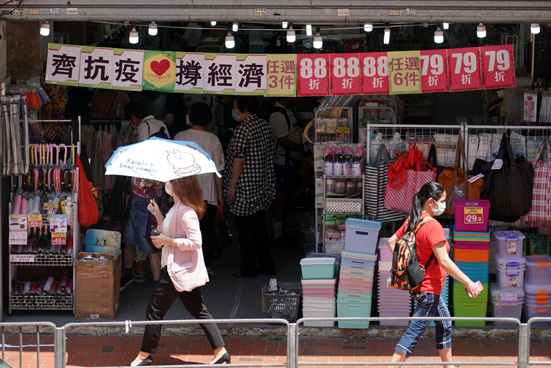
Hong Kong reported 0.4 percent deflation in August, after a 2.3 percent decline in consumer prices in July. The SAR government has lowered the inflation forecast for 2020 to 0.8 percent due to an uncertain economic environment and massive relief measures.
Samuel Tse Ka-hei, economist at DBS Bank Hong Kong, projects inflation to rise over 2 percent in the second and third quarter next year, due to a low base effect and revenge spending, but it might stay at around 2 percent.
Ng says the bond suits investors who have spare cash in banks and want higher interest. But if they intend it as an investment, buying stocks with stable dividend payment is definitely better than holding iBonds till maturity. This is because equity investment is more elastic, and three years are long enough to walk away from the bottom business cycle, he says.
"It's not an 'either A or B' question," Ng says. Investors could apply for one to two board lots of the iBond and make a profit from first-day gain, then they could use the money to invest in equities or bonds for the long term, such as the utility sector, he says.
There are some alternatives to iBonds, for example, risk averters could look at HKT Trust and HKT (6823) and HK Electric Investments (2638), which are considered as "stapled securities" and sort of similar to preferred shares or bonds, says Dickie Wong, executive director of research at Kingston Securities.
Tracker Fund of Hong Kong (2800), an exchange-traded fund tracking Hang Seng Index, could be another choice, but its volatility is higher than HKT and HK Electric despite giving a stable dividend payment, Dickie Wong said.
Ng projects HSBC, which has scrapped its dividend, to recover to HK$35 by the end of this year, adding major concerns will be the US engagement policy with China after the presidential election. HSBC's shares fell to a 25-year low in late September before hovering around HK$30 because of weak fundamentals and the relationship with China. Last week, HSBC was excluded from the international sale of Chinese sovereign bonds.