Read More
A Chinese company has stopped exporting a piece of equipment used to process the electric vehicle battery metal lithium, in the clearest sign yet manufacturers are already implementing export controls proposed by Beijing.
ADVERTISEMENT
SCROLL TO CONTINUE WITH CONTENT
Jiangsu Jiuwu Hi-Tech told customers last month it would stop exporting a piece of filtration equipment known as a sorbent from February 1, according to a source with direct knowledge of the matter and documents seen by Reuters.
China is the world's largest producer of sorbents, used to extract lithium from brines or other solutions containing the battery metal, although its market size can be difficult to ascertain given Beijing's reticence to share data, analysts say.
The decision by Jiuwu shows Beijing's threat, made public in January, to restrict the export of some battery and lithium technology, including sorbents, is changing behaviour even though the change is for now only a proposal. If approved, companies would need government licenses for overseas sales.
An executive at another lithium extraction technology company, also speaking on condition of anonymity, said Jiuwu and Sunresin New Materials, another major sorbent producer, are negotiating with the government over the proposal.
Representatives for Jiuwu and Sunresin did not respond to questions from Reuters. Sunresin's chairman said a month ago the company's overseas expansion plans included transferring technology to customers.
Beijing has not publicly discussed the proposal since it was released last month.
Some in the industry consider it is already a deterrent to exporting listed items to unfriendly countries. A China-based international lawyer with clients in the clean energy industry said it was having a "chilling effect".
Officials with China's Ministry of Commerce have visited several companies to discuss the proposal and in one case, warned against proceeding with a US$1 billion (HK$7.8 billion) export deal that is being negotiated, the lawyer said, speaking on condition of anonymity because of the sensitivity of the issue.
Banks are also asking for extra approvals before signing off on export finance for items on the list, the person added.
While it is unclear how restrictive the curbs would be if implemented, the proposal alone underscores Beijing's willingness to use its dominance of the mining and processing of lithium and many other critical minerals as leverage in its with Washington.
China's antimony export ban, announced last December, has already affected, Reuters has reported.
A spokesperson for Tianqi Lithium Energy Australia, the joint venture between China's Tianqi (9696) and Australia's IGO that controls the world's largest lithium mine and a major lithium refinery, said it was taking advice on Beijing's export proposal and considering its options.
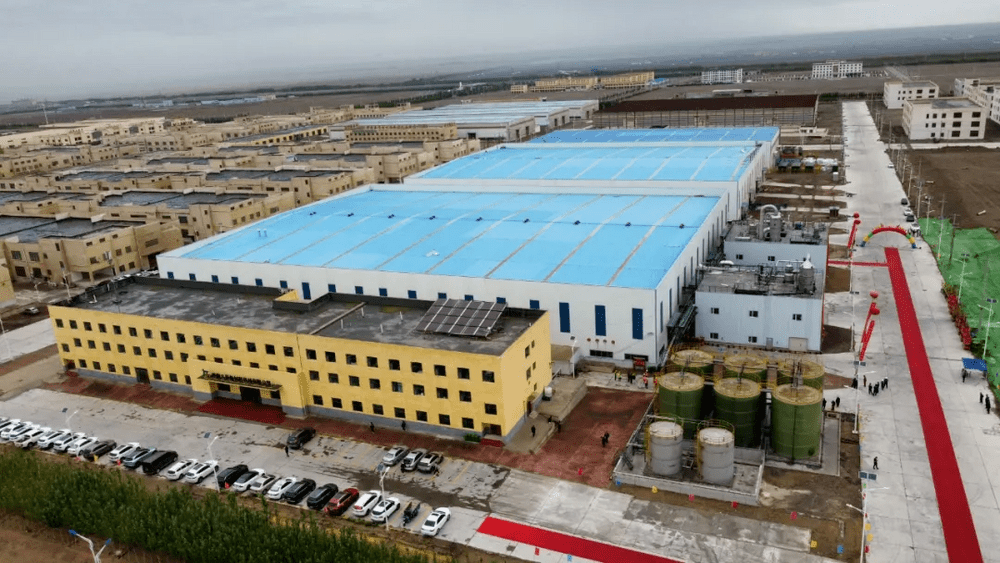
The lithium company Jiuwu Hi-tech's factory in Tibet, China. Photo from the company's website