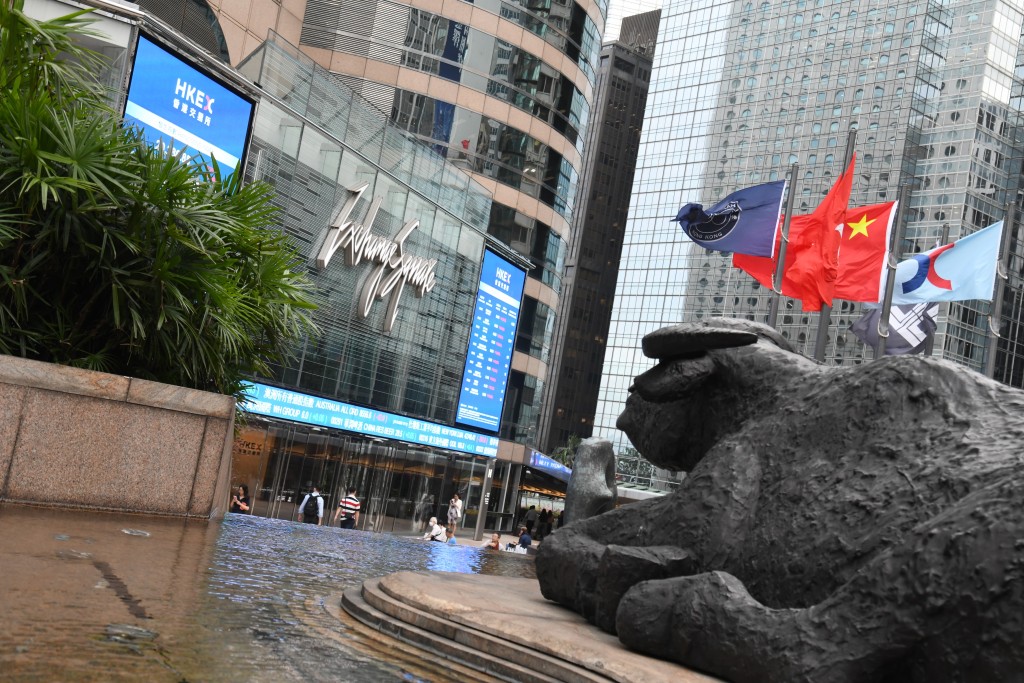
Mainland property manager Central China New Life will begin trading on the main board on Friday, aiming to raise as much as HK$2.16 billion from its initial public offering.
The sister company of property developer Central China Real Estate (0832) has attracted HK$8.09 billion retail orders through margin financing, which means its retail portion was at least 36 times oversubscribed.
Central China New Life plans to spend 60 percent of net proceeds for strategic investment and acquisitions, around 15 percent will be for its mobile app Jianye + and optimizing users' experience. Also, 15 percent will be used to improve operational efficiency. The remaining 10 percent will be for working capital and general corporate purposes.
The company ranked 13th among the top 100 property managers in China last year, according to China Index Academy. Its total gross floor area under management reached 59.3 million square meters as of April 27.
It mainly focuses on Henan province, which is in line with the strategy of CCRE.
Central China New Life has generated a majority of revenue from its sister company. In 2019, 42.5 percent of total revenue came from CCRE and around 80 percent of the revenue from the property management services segment, the key income driver, was contributed by the developer's properties.
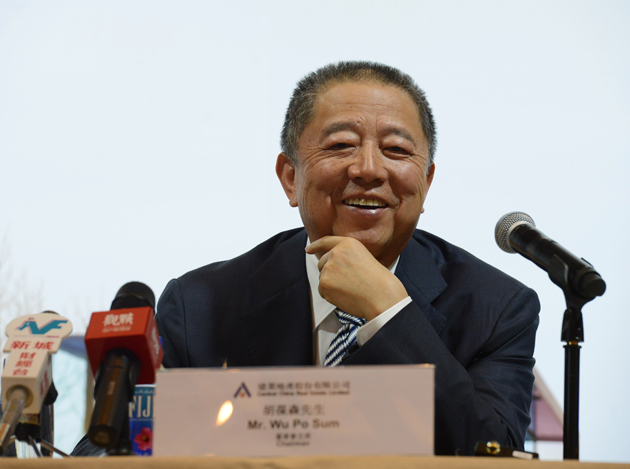
Billionaire Wu Po-sum, chairman and founder of CCRE, will hold 70.62 percent of shares in Central China New Life after listing.
Wu also owns 74.35 percent stake in CCRE and 63.53 percent in DIT Group (0726).
CCRE, which ranked 27th in mainland China by sales, saw contracted sales exceed 100 billion yuan (HK$109.78 billion) last year for the first time since it was established in 1992.
The "taking root in Henan" strategy helped the firm become the biggest developer in the province, seizing 11.2 percent of market share in 2019. However, the business model also made it lag behind peers who started nationwide expansions more than a decade ago, posing a concentration risk, especially for local government policy.
The massive expansion within Henan in recent years has caused a massive debt burden to the developer.
CCRE and Central China New Life have established a presence in all 18 prefecture-level cities in the province. But CCRE's debt-to-asset ratio climbed to 91.25 percent as of December 31 last year, much higher than other top 50 developers.
And for Central China New Life, its gearing ratio was 612.5 percent in 2017, and 448.5 percent in 2018. But the company said its borrowings related to asset-backed securities were fully settled as of June 30 last year, sending the gearing to zero.
The property manager's revenue grew by 50.69 percent to 693.99 million yuan in 2018, and further increased 1.53 times to 1.75 billion yuan last year, thanks to increases in total GFA under management and property management fee.
The gross profit margin also improved by 9.9 percentage points to 32.8 percent from 2017 to 2019, as the company expanded its service scope with high margin products, such as lifestyle, commercial property management and consultation services.
Central China New Life incurred net losses of 3.48 million yuan in 2017 and 17.77 million yuan in 2018, before making a net profit of 227.79 million last year.
The loss was due to the discontinued operation, Central China OP, a sub-leasing service provider, which was sold by the company in March 2019 with an outstanding debt of 59.35 million yuan.
The company said revenue increased by 20 percent in the first quarter from a year ago, amid the Covid-19 epidemic, primarily driven by residential property management and value-added service segments, which offset the losses from its travel, food court services, as well as management services for commercial properties, hotels, and tourism complexes.
Gaoling Fund and YHG Investment, both backed by Hillhouse Capital, served as the cornerstone investors of the deal, which have agreed to buy US$75 million (HK$585 million) worth of shares of Central China New Life. BNP Paribas is the sole sponsor of the flotation.