Staff reporter
If you are a fan of fine pottery and lucky cat figurines, the city of Tokoname in Aichi Prefecture, Japan, is the place to be.
Tokoname, a five-minute drive from Chubu Centrair International Airport in Nagoya, is not only known nationwide for its time-honored ceramics but has also grown in popularity among tourists for scores of endearing lucky cat figurines - or maneki-neko.
Dating back to a millennium ago, Tokoname was noted for firing functional pottery during the Heian period of Japan.
But it was in the Edo period when craftsmen made use of the rich iron in local clay to fire vermilion pottery - a distinct feature that went on to become the iconic Tokoname ware.
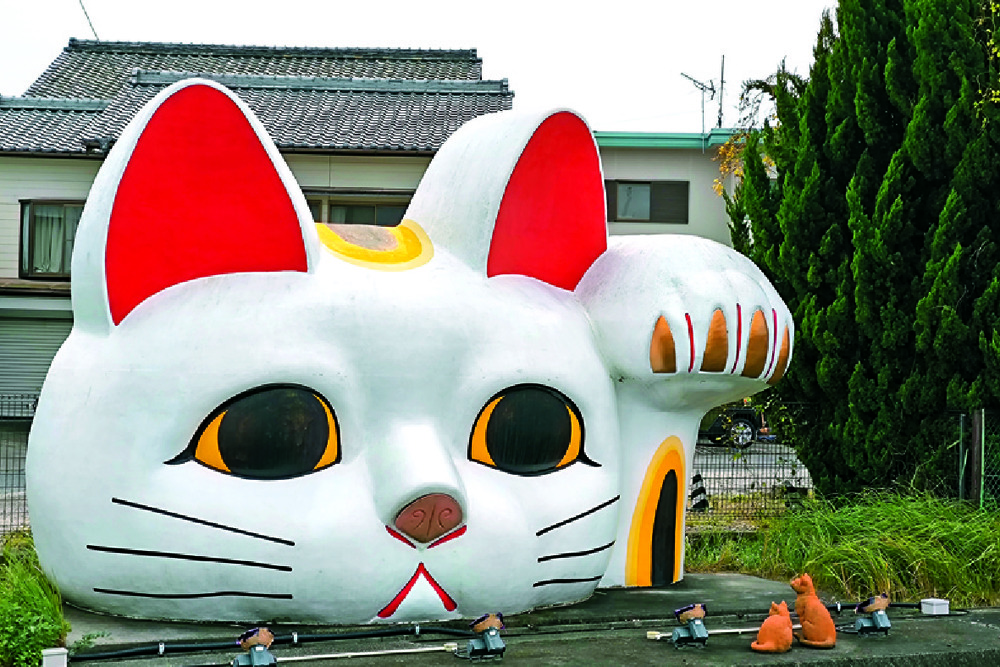
Recognized as a Japanese national traditional craft in 1976 and Japanese heritage in 2017, Tokoname ware is one of the six distinguished ancient kilns of the country - with the longest history and the largest production area. What is also worth the trip to this charming town is Tokonyan, the large lucky cat sculpture near Tokoname station.
Measuring 6.3 meters wide and 3.8m high, the giant cat with a raised left paw is believed to bring prosperity and fortune.
A total of 39 lucky cat ceramic figurines are installed along Maneki Neko-dori - or Lucky Cat Street. And each figurine comes with a distinct blessing, such as good health and a happy marriage.
For the extra meow factor, there are more lucky cat ceramic decorations in front of the Tokoname station.
It comes as no surprise that Tokoname is the main production area of Japan's lucky cat pottery.
The town is a must-see for feline lovers and those in search of luck embodied in exquisite figurines.
When strolling along the picturesque streets, be sure to check out the two designated pottery walking trails by the Tokoname City Tourism Association and grab the printed maps. Both routes begin and end at Tokoname City Ceramics Center.
The shorter one is about 1.6 kilometers long and can be completed in around an hour, while the longer one is about four kilometers and takes two to three hours to complete.
If you want to see the highlights, you could choose a shorter route. Along the way, on top of getting a close look at Tokonyan, you also pass by Toei Kiln - Japan's largest and oldest existing Tokoname kiln - and Takita House, which is designated as tangible cultural property. More on Tokoname ware and the characteristics of the Tokoname kiln can be found in the exhibition studio building in the Tokoname kiln square.
Dokanzaka, the hill where the walls are built with huge ceramic pipes and sake jars, also makes for a stunning picture.
Grab the chance to visit pottery studios along the way to purchase gorgeous pottery, or even participate in workshops to experience the joy and beauty of making pottery yourself.