Disu Dang
Time moves forward, yet history lingers. In Alicja Kwade: Pretopia, which is on view at Tai Kwun now, the artist explores the concept of time, and the intricate interplay between history and reality.
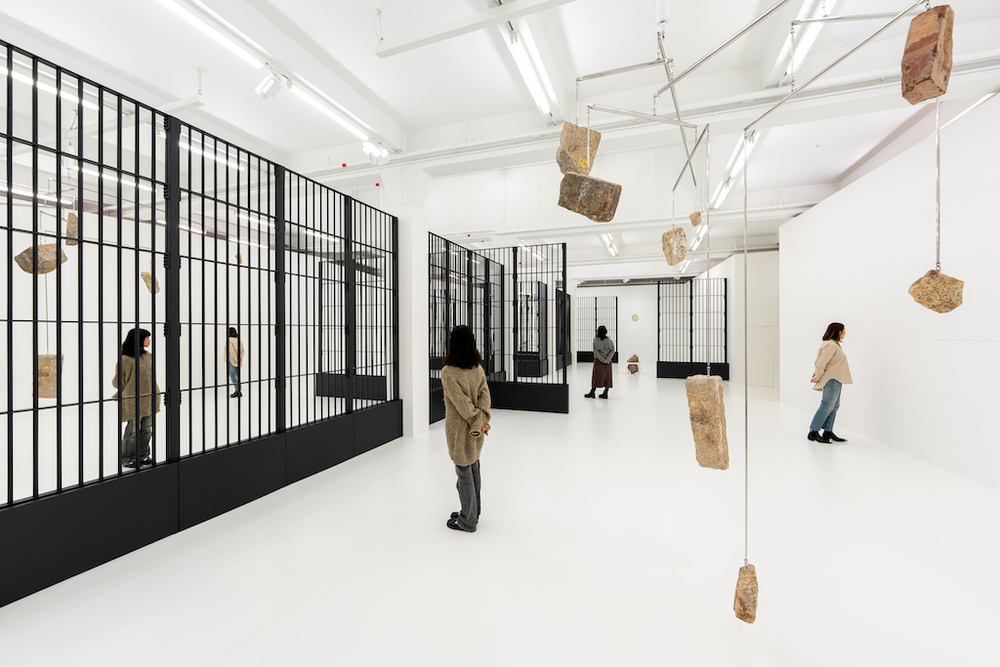
The exhibition brings together nine key works from the Polish-born, Berlin-based artist Alicja Kwade, alongside newly commissioned installations that respond to the historical and architectural context of Tai Kwun.
Renowned for her ability to transform scientific and philosophical ideas into sculptural environments, the artist has created a space where each work interacts with the others, forming what she describes as a kind of multiverse.
“An exhibition, in the best case, is always like a story — it’s always like a new composition,” she said. “It’s like writing notes for a composition, you bring single elements of artworks to resonate with each other and form a symphony.”
At the core of Pretopia is an investigation into how time, space, and perception shape our understanding of reality.
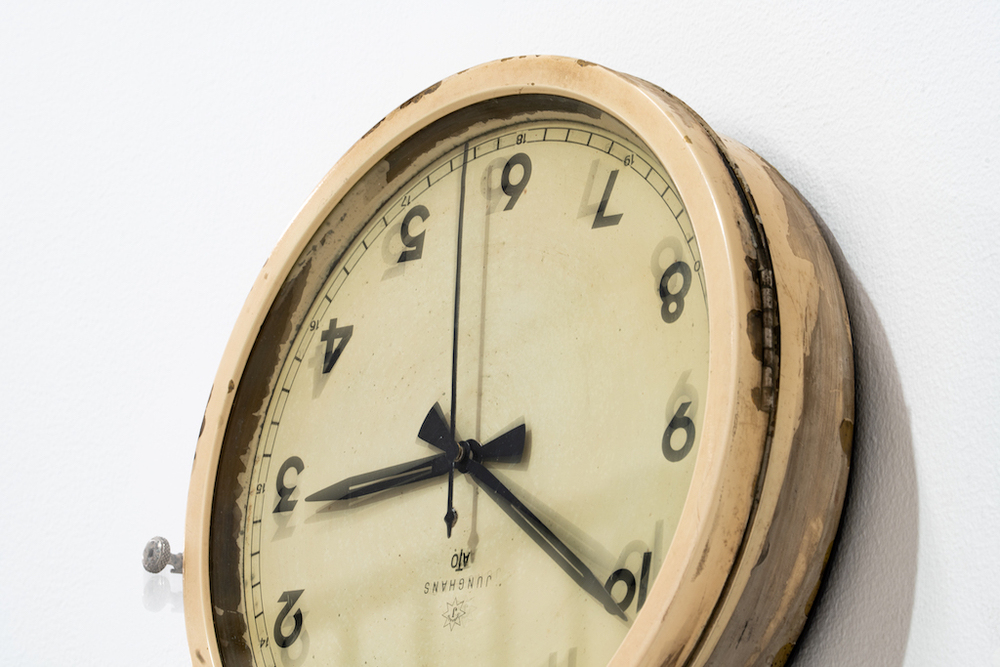
In 218 Days and 9 Hours, a performer places tiny clock hands along the gallery walls every weekend, visualizing the passage of time. As visitors walk by, they can witness how the performer keeps track of time.
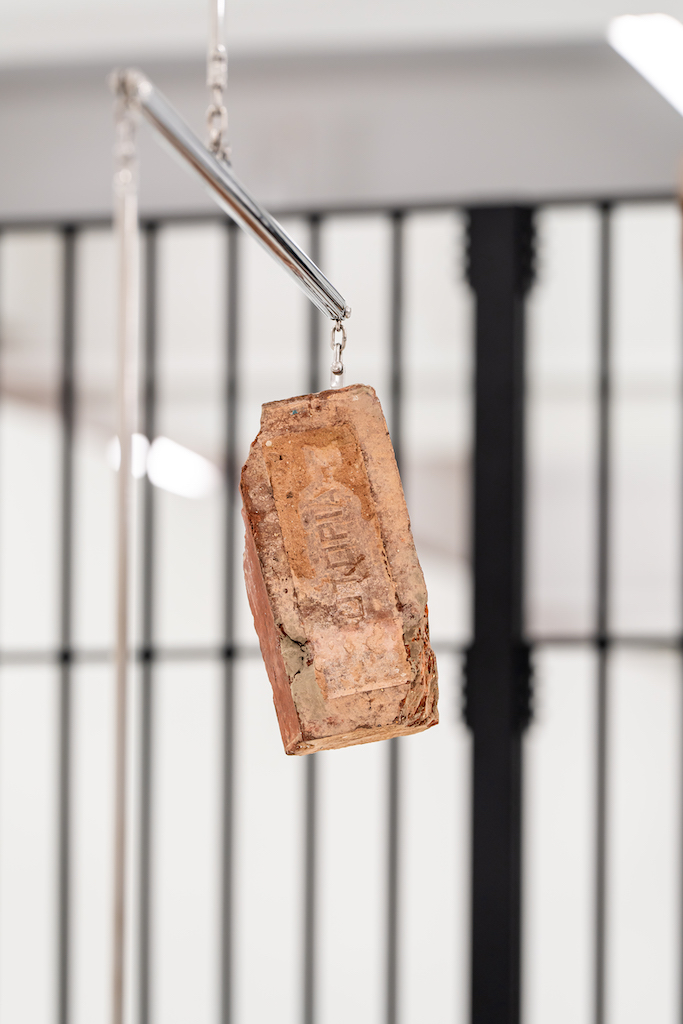
Perhaps the most conceptually significant piece in the exhibition is Pretopian Skies, where bricks and stones—some originally part of Tai Kwun’s historic prison walls — suspend from a rotating structure. You can see the bricks stamped with the word Utopia, which lays the conceptual groundwork for the exhibition.
“It’s such an absurd and ironic and even sarcastic thing to have bricks named ‘Utopia’ to build a prison,” Kwade said.
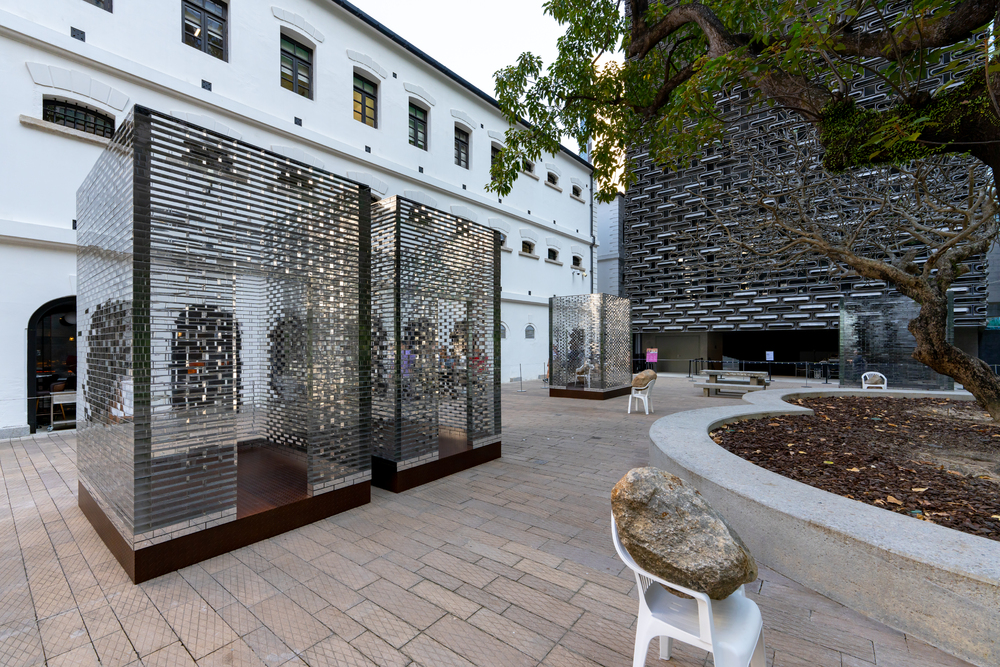
Alongside Pretopia, Waiting Pavilions, Kwade’s first site-specific installation in Hong Kong, stands at Tai Kwun’s Prison Yard. It consists of six freestanding glass brick structures that mirror the former prison cells, which allows visitors to step in and interact with the artwork.
Kwade said she spent a lot of time in Tai Kwun’s prison yard to conceptualize the work. “I spent a lot of time on this yard to imagine what that used to be and what it is now,” she said. “It used to be a prison and now it’s a place where people from all walks of life come to visit, gather and have fun. It’s a very emotional combination.”
She said any kind of interaction is welcomed: “Whenever I’m doing public art, I try to make it accessible. I want people to interact and have fun with my work.”
Alicja Kwade: Pretopia is on view at JC Contemporary, Tai Kwun, until April 6, while Waiting Pavilions will remain in Tai Kwun’s Prison Yard until 2026.