It’s been hotly debated over the years but a topic that’s becoming more and more pertinent with America’s debt hitting the stratosphere and the world losing trust in the almighty dollar: is it time to ditch the Hong Kong dollar’s peg to the greenback for a basket of currencies?
The United States has now lost its last remaining perfect sovereign rating and with its debt now at a staggering US$36 trillion (HK$280 trillion) and the specter of its defaulting on payments as early as August, markets are bracing for a fresh wave of volatility.
While this raises serious questions about whether the US dollar will lose its status as the world’s reserve currency in the years to come, it also gives Hong Kong a chance to demonstrate its resilience and role as a global international financial center.
Ratings downgrade is the end of an era
Moody’s downgrade of US debt from the AAA to Aa1 marks the end of an era in which all three major credit rating agencies – Fitch and S&P included – gave US Treasuries top billing.
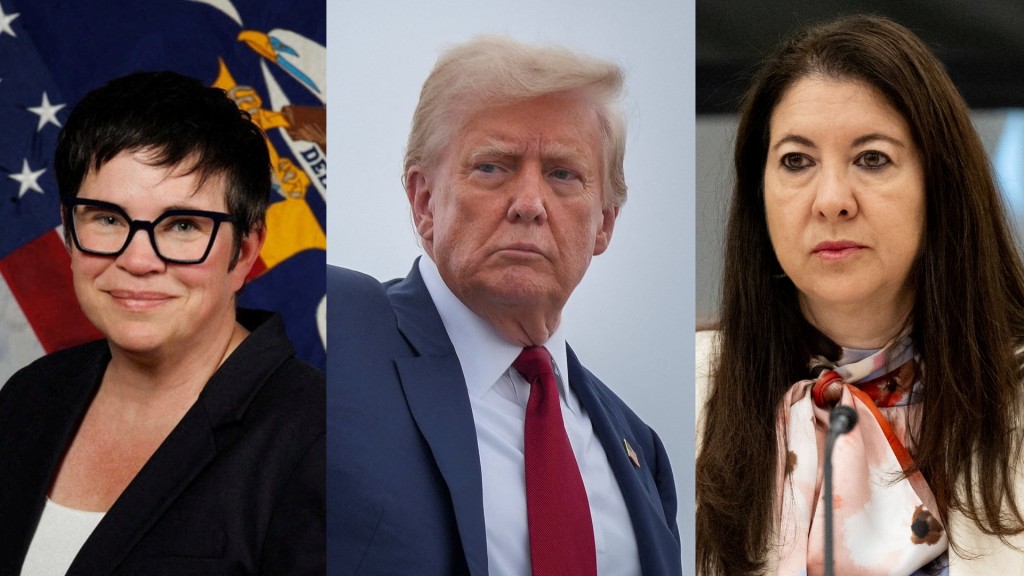
This will raise US borrowing costs, stymie efforts by President Donald Trump to stabilize the economy and have a huge impact on global markets that rely on the US dollar as the world’s reserve currency.
Market sentiment can sour overnight. After Trump unleashed his so-called his “Liberation Day” tariff war, volatility surged across US currency, bond and stock markets.Though calm’s been restored following a US-China trade truce, the latest downgrade risks reigniting instability.
Major foreign holders of US Treasuries, especially China, will be more inclined to diversify away from US dollar-denominated assets.
Meanwhile, the UK has overtaken China as the second-largest holder of US Treasuries, highlighting a shift in global asset strategies.
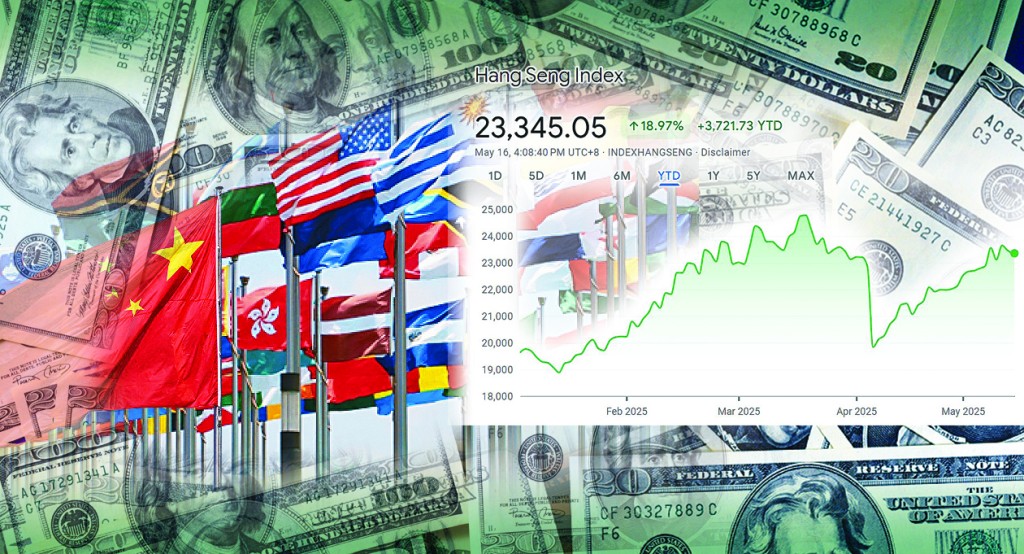
Hong Kong has remained relatively unscathed through the recent turmoil with the stock market attracting a flurry of listings including CATL’s, the world’s largest so far this year at HK$35.66 billion.
While the peg has no doubt given Hong Kong stability and credibility, it ties the city to the fortunes of a currency that’s under pressure.
A decade ago, there were discussions about linking the local dollar to the yuan to better reflect Hong Kong’s economic ties with China.
Though such a move may appear too risky for now amid China’s own economic challenges, it is no longer unthinkable.
Hong Kong’s leaders have over the years steadfastly ruled out ditching the US dollar peg which has been in effect since 1983.
As recently as January, Hong Kong Monetary Authority chief executive Eddie Yue Wai-man and finance supremo Paul Chan Mo-po both threw cold water on such suggestions, with Chan telling the World Economic Forum in Davos that stability was all-important during Trump’s regime, and that the peg has served Hong Kong well.
Peg to a basket of currencies
But a gradual shift toward to a basket of currencies and commodities including the yuan, euro, stablecoins and gold is worth exploring to mitigate the risk of dependence on a single currency.
Yes, the HKMA would have to proceed with extreme caution on any such move as continuity of policy and stability is paramount, as younger leaders take the helm over the next decade.
In a world increasingly defined by an “East up, West down” dynamic, Hong Kong’s free economy and financial expertise are bedrocks of resilience but the city must strengthen its economic fundamentals, diversify its currency strategy and lead rather than follow the changing world financial order.