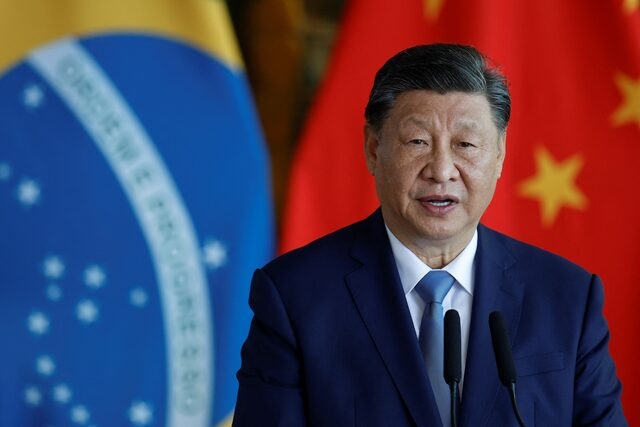
President Xi Jinping’s visits to Vietnam, Malaysia and Cambodia are a clear step to court Southeast Asia. The question is whether he will secure an alliance opposed to Donald Trump’s tariffs.
The Association of Southeast Asian Nations or Asean is China’s largest trading partner with US$911 billion (HK$7.1 trillion) in trade in 2024.
For example, China exported a record US$162 billion worth of goods to Vietnam in 2024, surpassing its US$152 billion exports to Japan. In 2023 and 2022, China’s exports to Vietnam roughly stood at US$135 billion and US$118 billion.
Little wonder that Xi starts the tour with Vietnam, followed by Malaysia and Cambodia.
Xi has reserved more time for Malaysia, which makes sense as Malaysia is the 2025 Asean chair and this could offer Beijing a broader platform to influence the bloc. It is expected the message that China is a reliable trading partner or leader of the “Global South” in contrast to Trump’s “unilateralism” will be stressed during the visits.
Historically, Asean nations have resisted aligning fully with either America or China while maintaining neutrality.
While Vietnam and Malaysia balance their Chinese relationship with the United States and the Philippines is a US treaty ally with enhanced defense ties, both Hanoi and Manila are wary of Beijing’s claims over the South China Sea. Cambodia is China’s closest ally in the bloc.
Vietnam, Malaysia and Cambodia all face hefty tariffs – 46, 24 and 49 percent respectively – though paused for 90 days. Many firms from the mainland and Hong Kong have already used these countries to dodge earlier US tariffs.
These three nations are among the 75 countries seeking tariff negotiations with the US.
Theoretically, Asean’s economic growth, projected to be 5.1 percent this year, could absorb more Chinese goods though not enough to replace the US market.
Yet, some Asean nations reportedly fear that they would be flooded with cheap Chinese goods and local firms could be hurt.
Figures are revealing.
China’s direct exports to the United States reached US$440 billion in 2024, which came as China’s exports to Vietnam in 2024, for example, rose to a record US$162 billion to surpass its US$152-billion exports to Japan. In 2023, China’s exports to Vietnam stood at US$135 billion.
At the same time, the United States became the largest destination for Vietnamese exports, amid claims that a significant quantity of China’s exports to Vietnam eventually reached America under the “Made in Vietnam” label.
If the door to the US market was shut, the Vietnamese market would lack the breadth and depth to absorb the Chinese goods imported.
Cambodia, given its limited gross domestic product estimated around US$38 billion in 2024, would be much easier to tilt though the impact on the region would be limited.
Businesses from Hong Kong and the mainland have significant Asean investments with factories in Vietnam, Malaysia and Cambodia after firms relocated part of the production from the mainland, or widely known as China+1, over the past several years to avoid earlier US tariffs.
Together with the Chinese diaspora like Jollibee’s Tony Tan Caktiong in the Philippines, Sino Group’s Ng family in Singapore and Malaysia’s Robert Kuok, they wield economic clout. But it would be imprudent to overstate the diaspora’s loyalty to Beijing because they tend to identify with their host nations after generations.
It is going to be a tough sell.