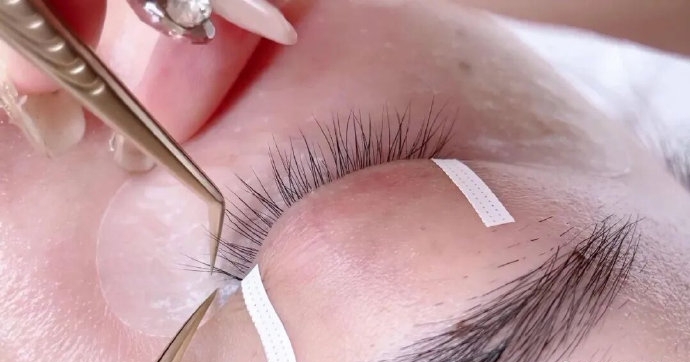
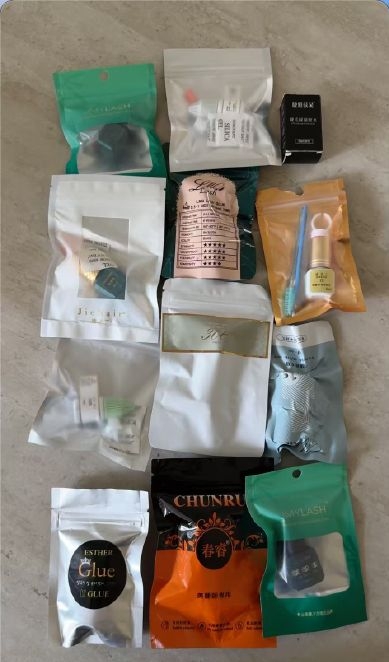
More than 80 percent of 28 popular eyelash glues tested positive for carcinogenic substances, with some exceeding safety limits by thousands of times, according to a recent report by the Shanghai Consumer Council.
The test by the Shanghai consumer watchdog revealed that 24 of the 28 samples contained the banned substance hydroquinone, a potential carcinogen that can be linked to skin irritation. Additionally, 20 samples contained formaldehyde, a Group 1 carcinogen, and nine tested positive for toluene, a Group 3 carcinogen.
The test also discovered 22 samples that contained methyl methacrylate, a chemical commonly found in industrial super glue.
Investigators who inspected the factories found that claims of "formaldehyde-free" are simply marketing gimmicks, with manufacturers admitting that current technology cannot balance strong adhesion with low irritation. It is reported that the removal of formaldehyde would lead to the lash extensions falling off within days.
Considering eyelash glues are not classified as cosmetics and lack dedicated product standards, most manufacturers reportedly adopt loose standards or directly apply industrial adhesive standards, skipping safety testing entirely.
Authorities have warned of legal consequences, including fines of 15 to 30 times the value of goods if products are found to contain banned ingredients. For cases that cause severe harm, criminal charges may also apply for manufacturing or selling substandard cosmetics.
From eye irritation to cancer
Health experts cautioned that short-term exposure to these toxic glues can cause burning, stinging, tearing, and redness around the eyes.
Alarmingly, long-term contact can lead to corneal damage, liver and kidney dysfunction, and increased cancer risk, with hospitals having reported cases of vitiligo triggered by eyelash glue exposure.
To ensure safety, consumers are advised to choose products with a cosmetic registration number over cheap, unbranded alternatives. Consumers are also urged to seek medical assistance if redness, swelling, or itching occurs after using the product.