Dear You is poised to become the mainland's second-highest-grossing film of the year after surpassing 1.3 billion yuan (HK$1.5 billion) in ticket sales within a month of release, raking in tourists to Chaoshan cities, according to East Week magazine, a sister publication of The Standard.
Initially perceived as a niche film primarily in the Chaoshan dialect and lacking celebrity presence, the film scored 9.2 stars on Douban – a film review website in the mainland – which ranks Dear You as the highest-rated Chinese-language film over the past two decades.
The family drama, which cost 14 million yuan, was largely filmed at the Chaoshan Three Cities – namely Shantou, Chaozhou, and Jieyang. The film's release boosted tourism and revenue for the area.
According to data from Tongcheng Travel, when the film went viral, flight bookings to Chaozhou-Shantou Airport more than doubled. During the May Day Golden Week holiday, more than 1.7 million people visited sites from the film, including a stone bridge in Xiqi Village, Jieyang, where the protagonists first met.
The Shantou Municipal Government has also launched themed itineraries for visitors and offers discounts for those presenting Dear You tickets, converting film traffic into tourism revenue. Many Chaozhou delicacies, such as olive vegetables and beef hotpot, made it to the hit. The film is more than a mere production – it is also a catalyst to spotlight Chaozhou culture.
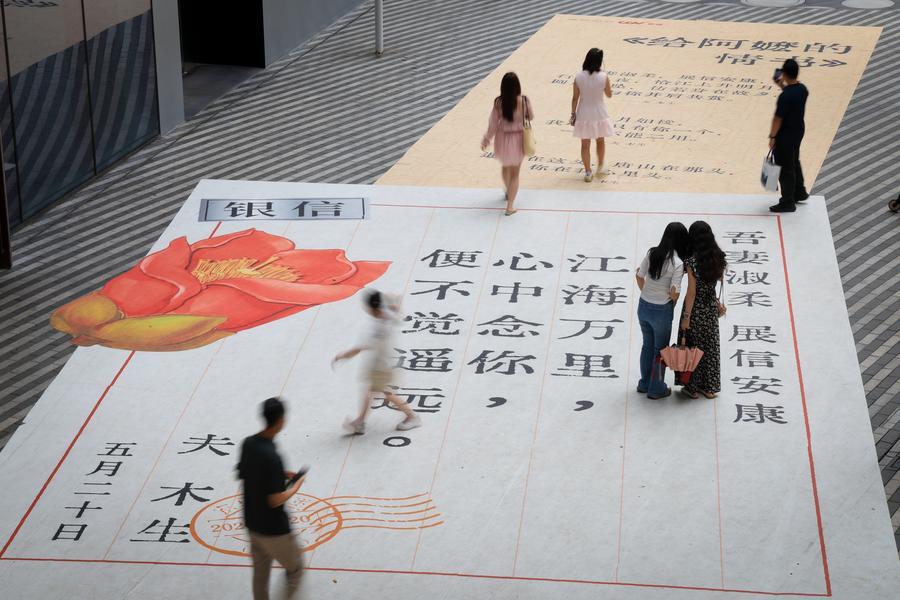
The plot centers on the story of overseas Chinese emigrating to Southeast Asia, and threads through qiaopi – transnational family letters – a documentary heritage inscribed on the Unesco Memory of the World Register in 2013.
In the mid-19th century, large numbers of the mainland Chinese were forced to head south due to poverty, working as laborers or running small businesses in Thailand, Malaysia, and Singapore. They relied on smugglers and money-transfer agencies to send qiaopi back home, containing words of comfort and amounts of remittances. For many, qiaopi are also proof of their loved ones being alive and well.
There are numerous qiaopi memorial halls in southern China and other regions. These halls display a collection of the letters, recounting this history for future generations.
Director Lan Hongchun said that the team spent three years creating Dear You, interviewing more than 120 elderly people in Chaoshan who experienced the migration to Southeast Asia. Lan claimed 90 percent of the film's plot is based on real-life stories.
Facing incredible enthusiasm, many HongKongers crossed the border to Shenzhen just to watch Dear You. It has been reported that arrangements are being made for the film to be released in Hong Kong cinemas.