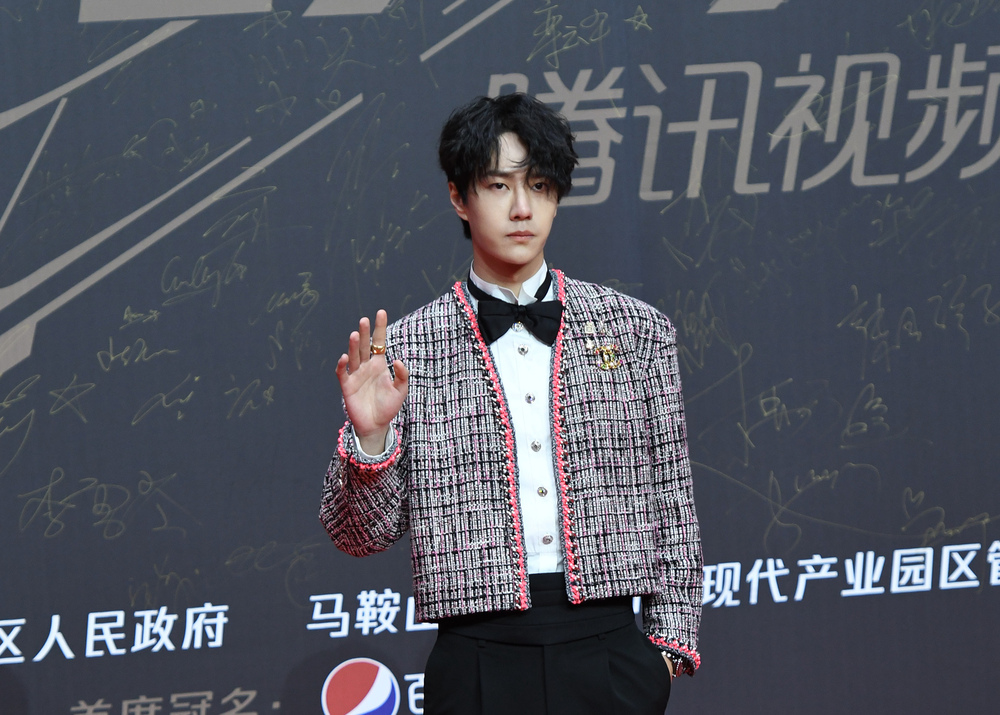
Jennifer Zhan would do almost anything to see Wang Yibo, the Chinese actor, rapper and motorcycle racer. When she heard that his latest movie, Hidden Blade, would be released in China this month, the 30-year-old bought a plane ticket from Canada, where she lives, to see it with her parents and friends back home.
“I want to support him, to show my idol’s popularity,” said Zhan, a travel agent who checks Wang’s social media every day and buys the fashion items he wears as much as her budget allows.
Wang is one of the top stars at YH Entertainment Group, China’s largest artist-management firm. He’s sold tens of millions of singles and works with brands including Chanel and Moncler. With more than 40 million online followers, he’s one of the major reasons for YH’s success.
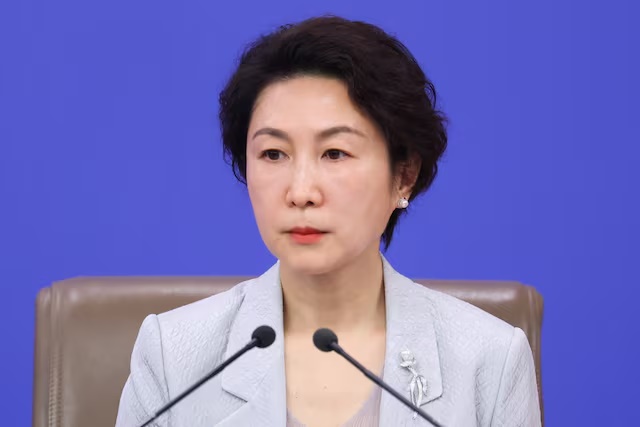
YH is known for bringing the K-pop model to China. Its founder and chairwoman, Du Hua, dubbed the “godmother of Chinese entertainment,” started grooming the nation’s superstars more than a decade ago, securing backing from Alibaba Group Holding Ltd. and ByteDance Ltd.’s Douyin, the TikTok equivalent on the mainland.
Wang, who was already participating in Chinese hip-hop dance competitions at age 13, was among the first to join Du’s training program. He was then selected to be part of UNIQ, a boy band akin to BTS.
Now YH is finally going public after an unsuccessful attempt in September.
To get the sale done, the company reduced its size and picked up four cornerstone investors, including billionaire Ding Shijia from China’s Anta Sports Products Ltd. It raised about HK$490 million (US$63 million) on Wednesday — down from an original listing for as much as US$140 million — and this time its retail portion was oversubscribed by almost 30 times. The shares start trading on Thursday in Hong Kong.
Du, who owns a 43 percent stake in YH, is now worth about US$240 million, according to the Bloomberg Billionaires Index.
“The overall IPO market in Hong Kong has turned better in recent weeks, and investors are interested in YH again as China is reopening,” said Stanley Chan, director of research at Emperor Securities. The offering’s smaller size and cornerstone investors have helped build confidence, he added.
A YH representative declined to comment.
Du, 41, said in a Vogue China interview from 2018 that she dreamed of becoming an artist herself when she was in middle school. Instead, she went on to study English at a Chinese university and later worked for an internet-service provider for five years, eventually rising to become the head of its music unit before leaving to found YH in 2009.
She burned through 2 million yuan (US$295,000) in seed funding in six months before realizing the traditional route of signing up artists to publish records wasn’t going to get her far. The K-pop model was taking over the world.
So she pledged her house to get the money she needed to fly to Japan and South Korea, where she learned the particulars of picking talented teenagers to turn them into the next superstars.
Du’s business really took off in 2018, when online streaming platforms under Tencent Holdings Ltd. and iQiyi Inc. started reality shows that let viewers pick their idols to form the next music band. Many of YH’s artists gained national popularity through the programs, and now the company manages seven groups.
But Chinese authorities have since banned the shows to curb excessive fan culture among young internet users, limiting the ways entertainment agencies can promote their clients. Adding to the chilling effect, some artists have been caught avoiding taxes, leading to fines and shunning from the industry.
While YH’s revenue jumped 40 percent to 1.3 billion yuan in 2021 and profit was up 15 percent, the company is also facing its own challenges. It operates in a particularly competitive sector, and results are closely linked to its best artists, with its top performer accounting for almost 60 percent of sales for the nine months through September, it said in its listing prospectus, without specifying the names of its best-selling stars. YH has said it will keep promoting its established talent and expand its trainee roster.
“If YH wants to produce the next big hit actor or actress, it will need a lot of time and resources,” said Lutina Gu, a consultant at Daxue Consulting in Shanghai.
Those are common issues in the industry. Hybe Co., the agency that manages BTS, is also heavily dependent on the pop sensation, and its shares still haven’t recovered fully from a tumble in June, when the group said it would take a break.
Still, Hybe founder Bang Si-hyuk remains among South Korea’s richest people with a US$1.7 billion net worth. Park Jin-young of competitor JYP Entertainment Corp. and SM Entertainment Co.’s Lee Soo-man each have stakes worth more than US$250 million in their respective companies.
Now Du is part of the group.
“Finding the next superstar comes always with a lot of uncertainty,” Emperor Securities’ Chan said.
(Bloomberg)
Wang Yibo. (Bloomberg)