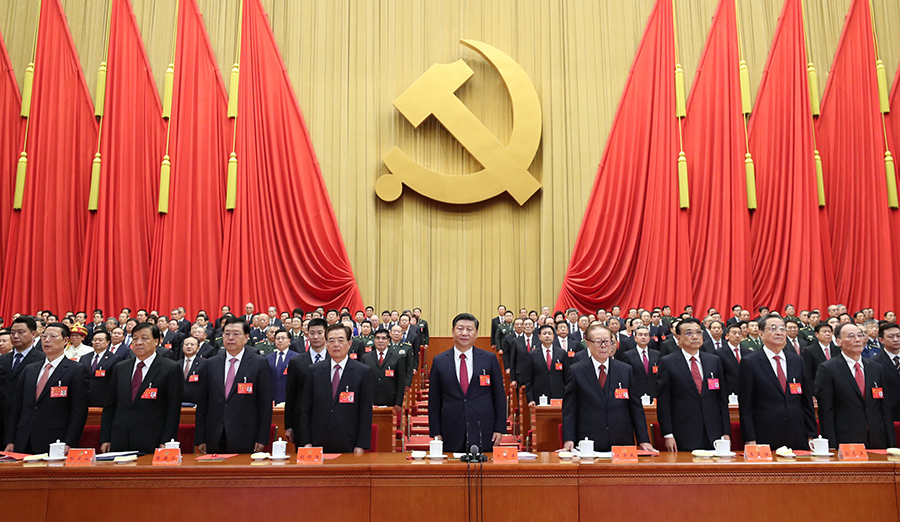
China's ruling Communist Party will hold a once-every-five-years Congress starting on Oct 16, state media said on Tuesday, during which President Xi Jinping is widely expected to secure a precedent-breaking third leadership term.
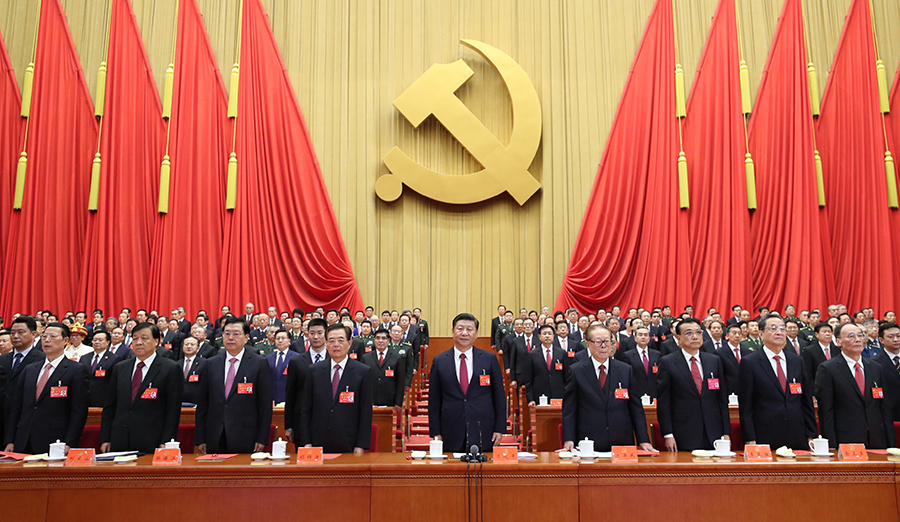
During the Congress, which typically lasts about a week, roughly 2,300 party members will gather, mostly behind closed doors, at the Great Hall of the People on Tiananmen Square, to choose the party's leadership for the next five years.
The Political Bureau of the Communist Party Central Committee on Tuesday held a meeting on the preparatory work for the 20th CPC National Congress. Xi presided over the meeting.
The meeting also decided that the seventh plenary session of the 19th CPC Central Committee will be convened on Oct 9 in Beijing.
According to the Chinese state news agency Xinhua, the Congress will thoroughly implement Xi Jinping Thought on Socialism with Chinese Characteristics for a New Era.
"The congress will thoroughly review the international and domestic situations, comprehensively grasp the new requirements for the development of the cause of the Party and the country on the new journey in the new era, as well as the new expectations of the people."
All preparatory work for the Congress is proceeding smoothly and preparations should be continued earnestly to ensure a successful congress, according to the meeting.
Xi, 69, has steadily consolidated power since becoming party general secretary a decade ago, eliminating any known factional opposition to his rule. China's most powerful leader since Mao Zedong, Xi is expected to exert largely unchallenged control over key appointments and policy directives.
On the day after the 20th Party Congress, Xi is expected again to be conferred the roles of General Secretary of the Communist Party and Chairman of the Central Military Commission.
His five-year term as president is expected to be renewed at the annual meeting of parliament in March, and follows his move in 2018 to break with precedent and eliminate the two-term limit on the presidency.
With little change expected in broad policy direction, key outcomes from the Congress will revolve around personnel – who joins Xi on the Politburo Standing Committee, which currently has seven members, and who replaces Premier Li Keqiang, who is set to retire in March.
Contenders to be premier, a role charged with management of the economy, include Wang Yang, 67, who heads a key a political advisory body, and Hu Chunhua, 59, a vice premier. Both were previously the Communist Party boss of the powerhouse southern province of Guangdong.
Another possibility for the premiership is Chen Min'er, 61, a Xi protege who is party chief of the vast municipality of Chongqing but has never held nationwide office.
The makeup and size of the next PSC, now at seven members, will also be closely watched.
BEYOND THE CONGRESS
After the congress, many in China and globally will watch for Beijing's efforts to stave off a protracted economic downturn, which raises the chance Covid curbs being eased, although a lack of widespread immunity among China's 1.4 billion people and the absence of more effective mRNA vaccines remain constraints.
Beijing's strict "dynamic zero" Covid policy has led to frequent and disruptive lockdowns that have frustrated citizens, battered its economy and made China a global outlier.
Investors will also watch for how Beijing copes with souring relations with the West.
Xi's stated desire to bring Taiwan under Beijing's control will also be in focus during a third term, especially with tensions heightened following U.S. House Speaker Nancy Pelosi's recent Taipei visit. Taiwan's democratically-elected government strongly rejects China's sovereignty claims.
Since assuming power, Xi has quashed dissent in the once-restive regions of Tibet and Xinjiang and brought Hong Kong to heel with a sweeping national security law.
Few China-watchers expect Beijing to make a military move on Taiwan anytime soon, and there is little sign of preparing society for such a high-risk step and the blowback it would provoke, such as heavy Western sanctions.
But for Xi, successfully resolving the "Taiwan question" would secure his place in Chinese history alongside Mao's.
(Xinhua and Reuters)
File Photo