Read More
China’s local governments are rushing to issue bonds to refinance hidden debt, further tightening liquidity in the financial system.
ADVERTISEMENT
SCROLL TO CONTINUE WITH CONTENT
Regional authorities are set to sell 1.69 trillion yuan (HK$1.81 triillion) of bonds in the first two months of 2025, an unprecedented amount for the period, data compiled by Bloomberg show. About half of the issuance, or 850 billion yuan, is to replace off-balance sheet debt, according to the data.
The unusually big offering has exacerbated a cash squeeze this year, as banks rush to absorb the securities. Money-market rates have surged recently as the People’s Bank of China refrained from monetary easing and kept liquidity conditions tight, in an effort to support the yuan.
China’s local governments are rushing to issue bonds to refinance hidden debt, further tightening liquidity in the financial system.
Regional authorities are set to sell 1.69 trillion yuan of bonds in the first two months of 2025, an unprecedented amount for the period, data compiled by Bloomberg show. About half of the issuance, or 850 billion yuan, is to replace off-balance sheet debt, according to the data.
The unusually big offering has exacerbated a cash squeeze this year, as banks rush to absorb the securities. Money-market rates have surged recently as the People’s Bank of China refrained from monetary easing and kept liquidity conditions tight, in an effort to support the yuan.
The sales so far meant for such purposes account for about 42 percent of the two trillion yuan quota allocated for this year.
Local authorities may have seized the window ahead of the National People’s Congress in early March to offer a large amount of “swap bonds,” said Yuan Haixia, executive director of the research institute at China Chengxin International Credit Rating With most of the local bonds held by banks, they’re facing bigger challenges managing liquidity, she added.
Government bond supply is expected to increase through the year following China’s pledge of greater fiscal support. Vice Finance Minister Liao Min said at a January briefing that the 2025 deficit-to-GDP ratio will rise.
How the banks secure funding amid higher costs and purchase the newly-issued bonds will have implications across China’s money and bond markets. The seven-day interbank repo rate rose above a broader market gauge in a few sessions this month — an anomaly as it’s usually cheaper for lenders to borrow funds from each other.
The central bank has been draining funds in most daily operations this year, widening the gap between the benchmark money market rate and the policy rate to the most in four years. While the People’s Bank of China ramped up cash injections on Friday, it did little to ease the market crunch.
Among the local governments’ debt-swap bond issuance this year, more than 60 percent were 20- and 30-year notes, Bloomberg-compiled data show. This indicates authorities have taken advantage of still-low yields to secure long-term financing.
BLOOMBERG
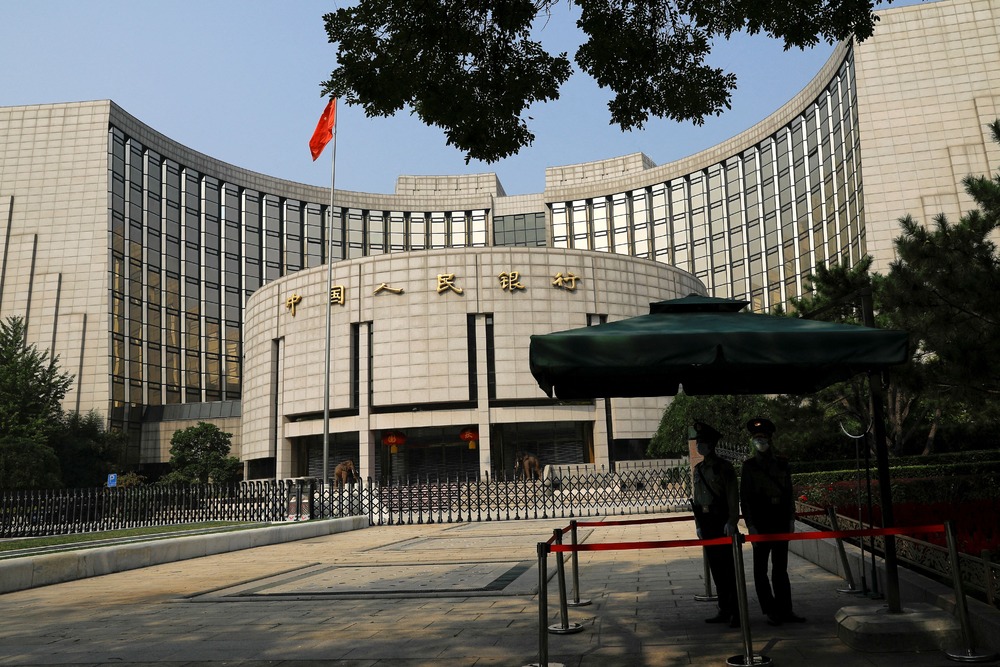
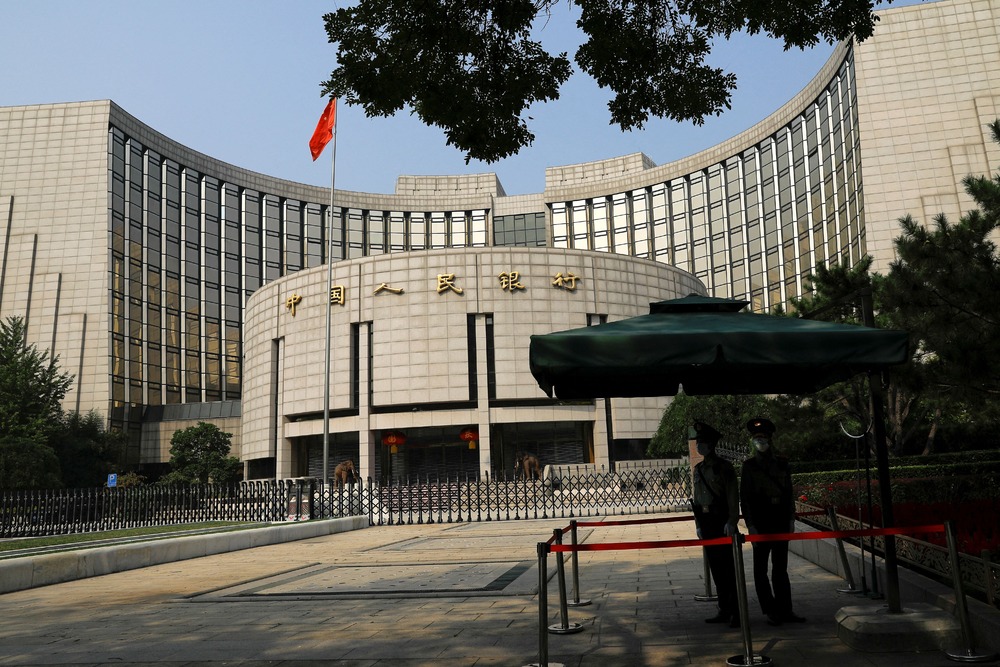
The People's Bank of China. Reuters