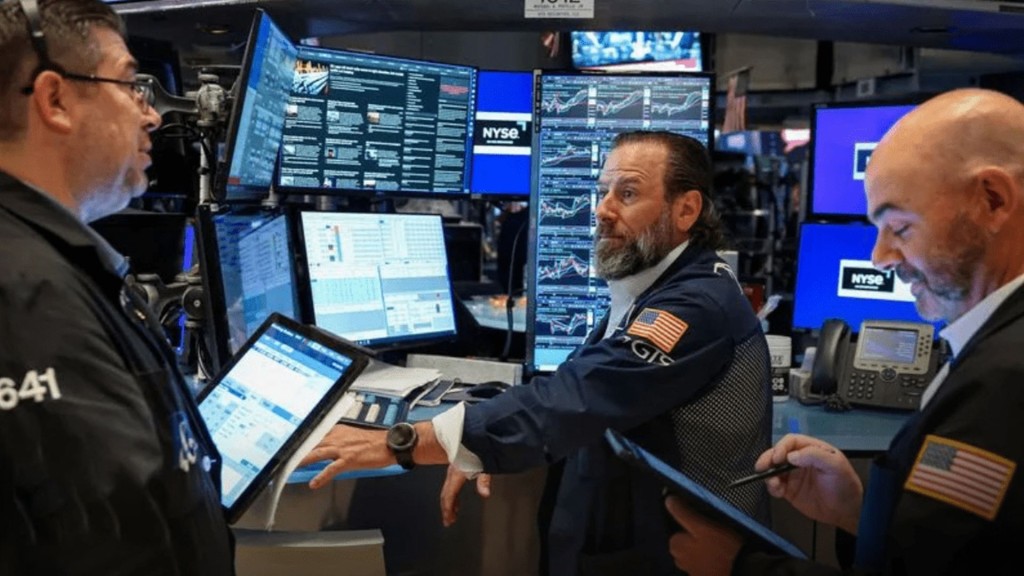
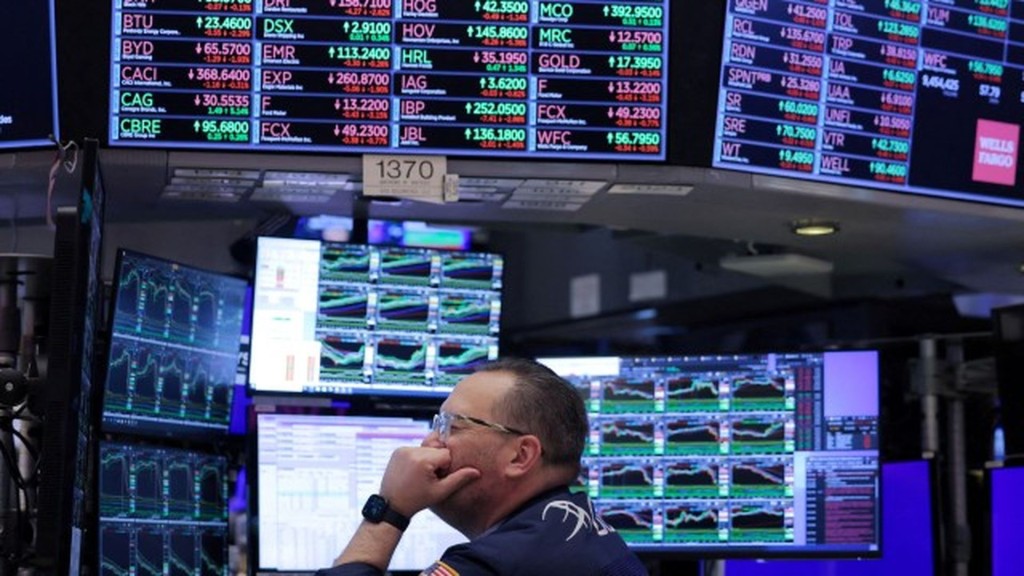
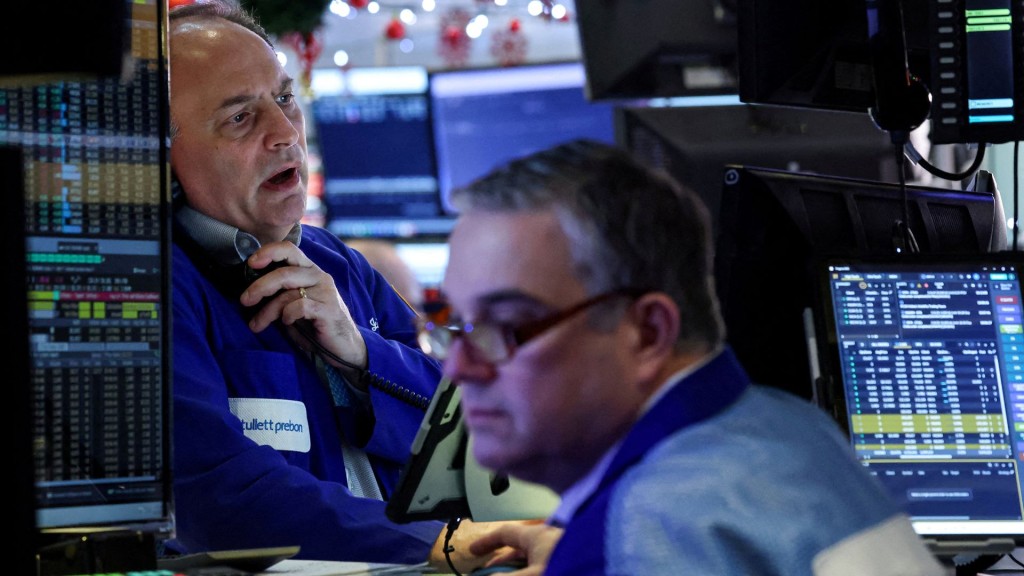
Wall Street's main indexes closed higher on Wednesday as oil prices fell while Iran reviewed a U.S. proposal to end the war in the Middle East, feeding investor hopes for de-escalation in the fourth week of a war that has disrupted global energy flows and stoked inflation concerns.
While Abbas Araqchi, Iran's foreign minister, said that authorities were reviewing the U.S. proposals, he added that Tehran has no intention to hold talks with Washington.
Initially, Iran said it considered U.S. proposals delivered by Pakistan as excessive and demanded sovereignty over the Strait of Hormuz.
The mixed messages led to choppy trading. Michael James, equity sales trader at Rosenblatt Securities, said: “There are a lot of frayed nerves out there with sentiment and headlines driving a lot of the market action.”
Any signs of communication between the countries provided some hope for investors, however, following signals that Washington has been seeking a ceasefire and restoration of shipping through the crucial Strait of Hormuz, which about 20% of global oil shipments pass through.
"There is optimism that the proposal and counter-proposal are setting the stage for more negotiations," said Gene Goldman, chief investment officer at Cetera Investment Management.
But until there is clarity on when the war might end, Goldman said he expects "volatility to remain elevated given the impact of higher oil prices on inflation."
The Dow Jones Industrial Average .DJI rose 305.43 points, or 0.66%, to 46,429.49, the S&P 500 .SPX gained 35.53 points, or 0.54%, to 6,591.90 and the Nasdaq Composite .IXIC gained 167.93 points, or 0.77%, to 21,929.83.
During Wednesday's session, energy .SPNY was the weakest of the S&P 500's 11 major industry sectors, falling 0.5%. The strongest sector gainers were materials .SPLRCM, up 2%, and consumer discretionary .SPLRCD, which added 1.2%.
With oil prices settling down more than 2%, shares in companies that depend heavily on fuel were rallying. Cruise operator Norwegian Cruise Line NCLH.N closed up 2.8% while the S&P Composite 1500 Passenger Airlines index .SPCOMAIR rose 1%.
The small-cap Russell 2000 index .RUT finished up 1.2% after hitting a two-week high during the trading session.
U.S.-listed shares of Arm ARM.O rallied 16.4% after the company unveiled a new AI data center chip that is expected to bring billions of dollars in revenue. It was the biggest gainer in the Philadelphia Semiconductor Index .SOX, which closed up 1.2%.
Other rallying chipmakers included Advanced Micro Devices AMD.O and Intel INTC.O, which both finished up more than 7%. Nvidia NVDA.O shares added 2%.
Destiny Tech100 DXYZ.N surged 15% after a report that SpaceX aims to file its IPO prospectus as soon as this week. SpaceX is the fund's largest equity holding.
Other space companies rallied in response with Rocket Lab RKLB.O adding 10.3% while Intuitive Machines LUNR.O rose 14.7% and EchoStar SATS.O added 7.4%.
The oil price spike has revived inflation worries, complicating the interest-rate outlook of central banks. Markets are no longer pricing in any easing from the Federal Reserve this year, according to CME Group's FedWatch Tool, compared with the two cuts that were expected before the war broke out.
Among other movers, U.S.-listed shares of JD.com JD.O rose 8% and Alibaba BABA.N rose 3.5% after Chinese state media and the regulator urged the food-delivery platform industry to end a price war. Robinhood Markets HOOD.O rallied 5% after the trading platform announced a new $1.5 billion share buyback program.
On U.S. exchanges 17.07 billion shares changed hands compared with the 20.69 billion-share moving average for the last 20 sessions.
Advancing issues outnumbered decliners by a 2.86-to-1 ratio on the NYSE, where there were 115 new highs and 127 new lows. On the Nasdaq, 3,174 stocks rose and 1,523 fell as advancing issues outnumbered decliners by a 2.08-to-1 ratio. The S&P 500 posted 17 new 52-week highs and 24 new lows while the Nasdaq Composite recorded 64 new highs and 172 new lows.
Reuters