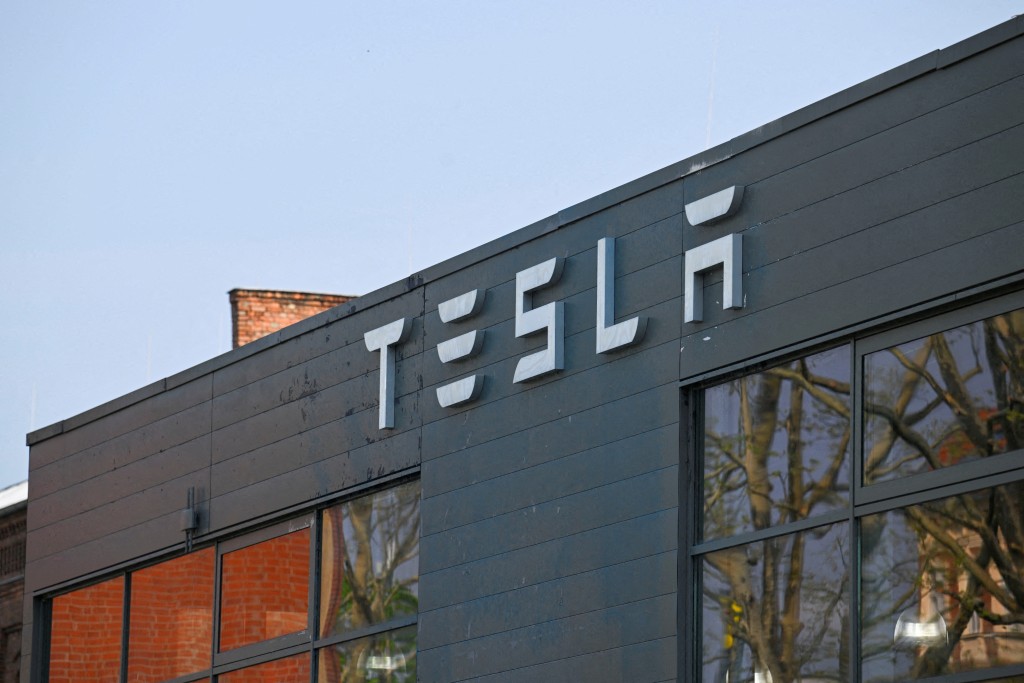
As Elon Musk pivots to robots and AI, he wants investors to stop thinking of Tesla TSLA.O as simply an automaker. Yet to fund those bets, he is relying on a car business that is under mounting pressure, as the company’s second-quarter results on Wednesday showed.
Tesla missed analysts' profit forecasts for the April-to-June period and, for the first time in more than two years, reported negative free cash flow as the EV maker accelerated spending on infrastructure for its AI and robotics ambitions.
Shares were down about 4% in extended trading.
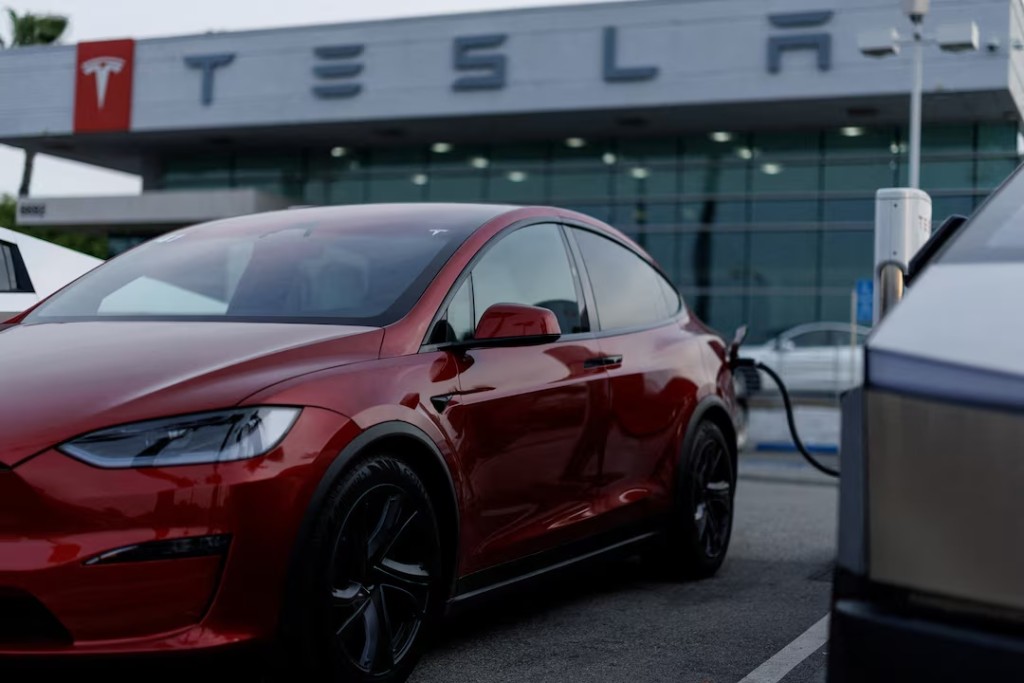
The profit miss and cash burn come despite record vehicle deliveries in the quarter as a fuel-price surge sparked by the Iran war drove EV demand, especially in Europe, and Tesla deployed more energy storage products.
MORE CAR SALES, LOWER PROFIT
The sales rebound was a bright spot, but there were also signs of strain on the core car business.
Lower average selling prices hurt Tesla's profitability, as it faces tougher competition across its biggest markets. Average revenue from each Tesla sold in the quarter dropped to $42,730, from $45,345.
Money from regulatory credits, sold to traditional automakers that did not meet emissions standards, is also drying up after a policy change, falling by about two-thirds from a year earlier, to $146 million.
The profitability squeeze on Tesla's car business will make it harder to fund Musk's spending plans — more than $25 billion this year, nearly triple what the company spent last year, to pay for AI-powered self-driving technology, robotaxis and humanoid robots.
"This is a massive capex year, but I'm confident that all the things that we are investing in will yield incredible returns," Musk said on a post-earnings conference call with analysts.
To boost profitability, Tesla is counting on its advanced driver assistance software — called Full Self-Driving Supervised — to spur future car sales and revenue growth. Tesla said it finished the quarter with about 1.5 million active FSD subscriptions, up 56% from a year earlier.
The company received approval in April to deploy FSD in the Netherlands, and some other European countries have also allowed the technology following the Dutch approval. Tesla is also pushing for approval in China.
While much of Tesla's valuation hangs on the promise of potentially high-margin revenue streams, the spending is heightening investor scrutiny.
"Monetization remains the central concern following the earnings miss," said Ryan Lee, senior vice president of product and strategy at exchange-traded product firm Direxion. "The question is how quickly those investments can begin supporting the valuation."
Tesla made capital expenditures of $5.8 billion in the second quarter, more than double the amount of the year-ago period and the first quarter.
That pushed free cash flow to negative $1.1 billion. Analysts had expected a cash burn of $3.3 billion.
AUTOMOTIVE BUSINESS UNDER PRESSURE
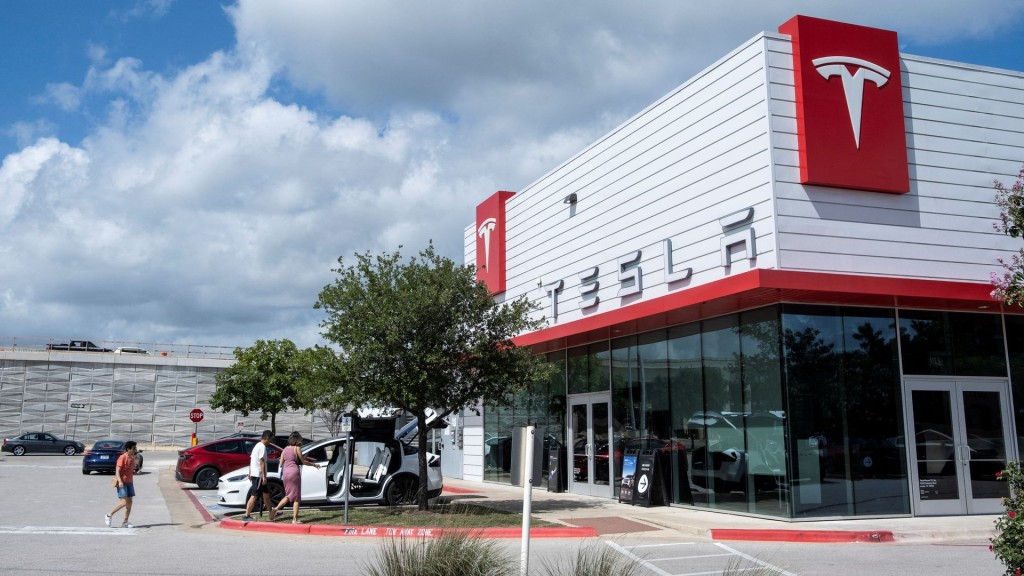
Tesla delivered 480,126 vehicles in the second quarter, above Wall Street expectations and up from 384,122 vehicles a year earlier.
The Austin, Texas-based automaker reported revenue of $28.24 billion, well above analysts' average estimate of $25.71 billion. But adjusted profit in the quarter was 33 cents per share, versus analysts' average expectation of 51 cents per share, according to data compiled by LSEG.
Automotive gross margin also came in at 16.3%, compared with 18.04% analysts expected, according to Visible Alpha data.
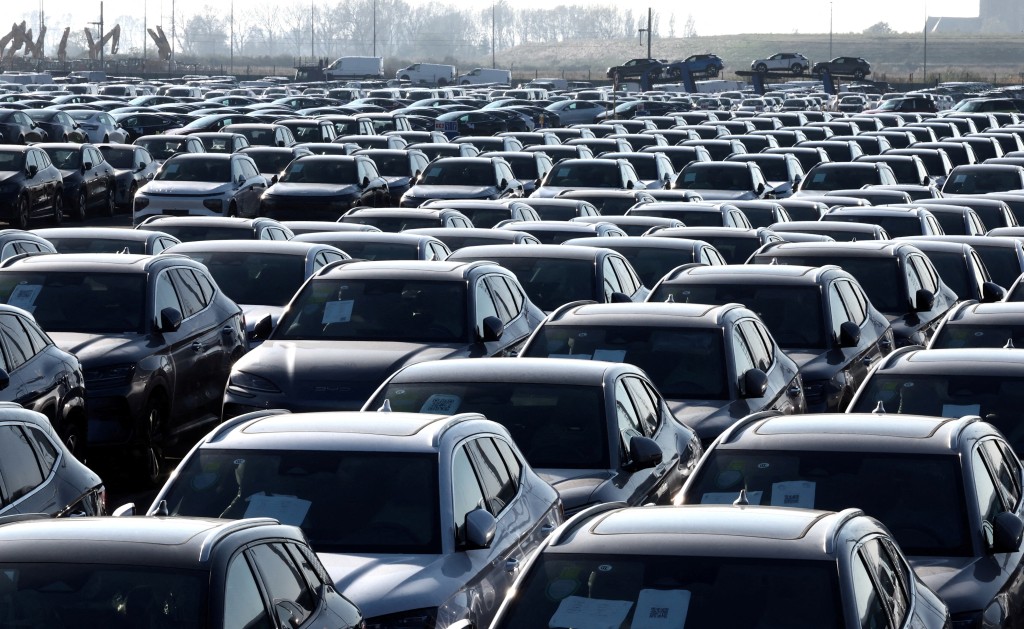
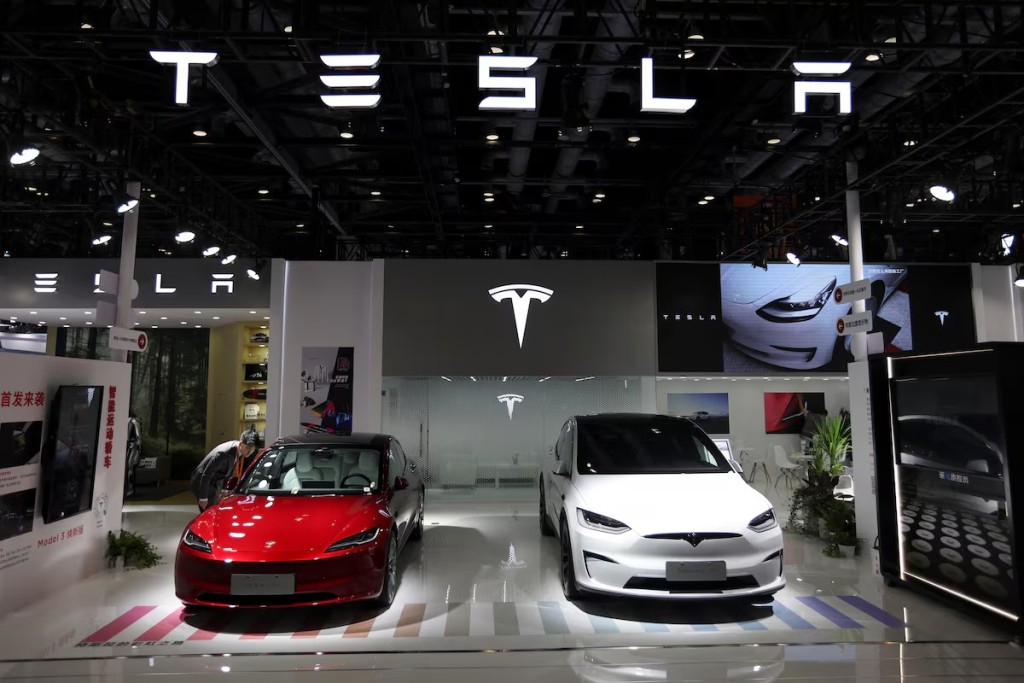
The core automotive business remains under scrutiny as competitors introduce newer models, often at lower price points, while the company continues to rely heavily on its Model 3 compact sedans and Model Y SUVs for volume.
Tesla has tried to stimulate demand through lower-priced trims, including stripped-down, affordable versions of the Model 3 and Model Y late last year, and the launch this month of a six-seater variant of the Model Y in the United States, where demand has been hit by the removal of key tax credits last year.
Wall Street expects Tesla to deliver about 1.7 million vehicles in 2026, according to Visible Alpha data. That would imply growth from last year's levels.
Tesla's energy generation and storage unit has emerged as a key counterweight to the auto business, helped by demand for grid-scale batteries that support renewable energy, data centers and electricity-network stability. Tesla deployed 13.5 GWh of energy storage products in the quarter, up from 8.8 GWh in the first quarter and 9.6 GWh a year earlier.
But investors have increasingly turned their attention to Musk's push into self-driving technology and robotics, seeking clearer evidence that Tesla's autonomy narrative is shifting from promise to commercial reality.
Tesla's shares have fallen more than 15% this year. At about $1.4 trillion, it remains the world's most valuable automaker by a wide margin, reflecting investor expectations that self-driving software, energy storage, robotaxis and humanoid robots could eventually deliver higher-margin growth than vehicle sales.
Reuters