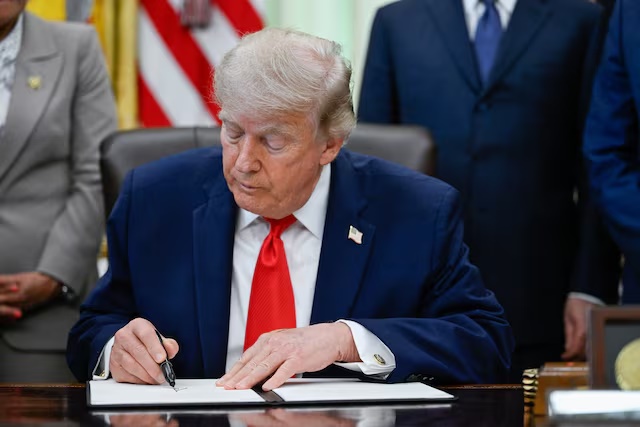
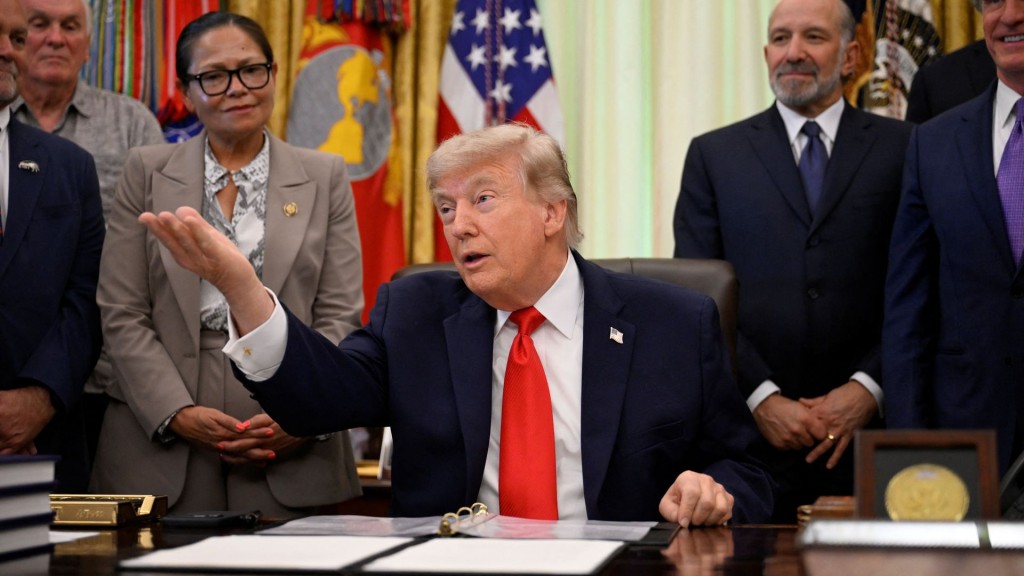
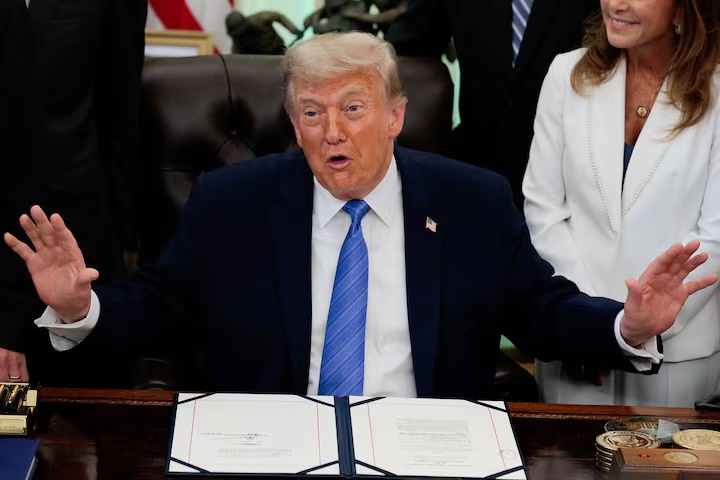
Little is known about what President Donald Trump's intentions are for the G7 summit in Evian, France next week, except maybe the obvious: the American president will impose his schedule and his mood.
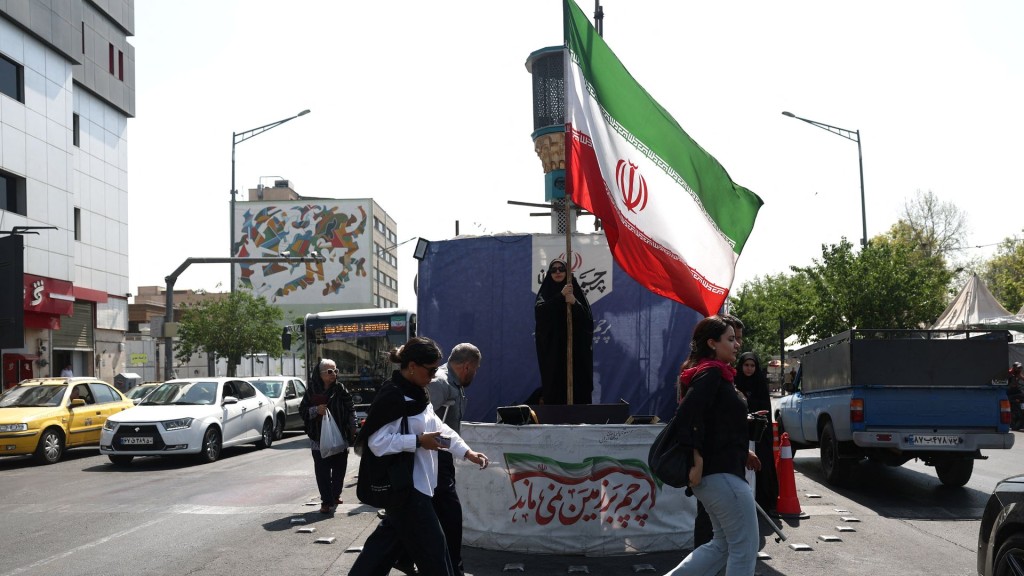
The latter may depend largely on the peace agreement discussions with Iran, which were gathering steam Friday.
"It is not possible to 'manage Trump' the way it has been possible during his first term," Liana Fix, associate fellow at the Council on Foreign Relations, told AFP ahead of the summit that will bring the US face-to-face with France, Germany, Canada, Italy, Japan and the United Kingdom.
All these countries' leaders have been on the receiving end of Trump's trade wrath or diplomatic intimidation -- with the exception of Japan's Prime Minister Sanae Takaichi, who he is very fond of.
Every other leader expected on the shores of Lake Geneva has been the target of attacks, criticism or mockery from the Republican billionaire.
- 'Expect the worst' -
Neither growing unpopularity that could cost Trump control of Congress in November, nor the Supreme Court's annulment of his across-the-board tariffs is likely to soften his bruising stance toward global partners.
European leaders in particular have learned, through the Greenland episode, trade conflicts, and the Iran war, "to hope for the best but to expect the worst," Fix said.
Moreover, the US has informed Europeans of their intentions to significantly reduce the number of planes and warships made available to NATO in Europe, the New York Times reported.
"I don't think you're going to see a weakened president," Jackson James, senior fellow at German Marshall Fund of the US, told AFP.
"I think he's going to go over there and do what he always does, which is just try to bully his way through these very, very complicated issues and try to get the American agenda, as he sees it, fulfilled."
Trump "says he doesn’t like these multilateral meetings," but "cannot bear for an assembly of world leaders to meet and he not being there," Victor Cha, an expert for the Center for Strategic and International Studies, said during a press conference.
"So he shows it up at these things and he leaves early," Cha said, as he did during the last G7.
- Versailles -
Still, French president Emmanuel Macron hopes to persuade the impatient American president to stay for a dinner at Versailles on Wednesday evening, playing to the 79-year-old's fascination with monarchy and ornate trappings of luxury.
France has already tried to cater to the American president by changing the dates of the summit so it would not coincide with his 80th birthday and the celebratory mixed martial arts tournament Trump will host at the White House on Sunday.
Some experts also consider it a concession to Washington that South Africa, which was being considered for participation in the G7 summit, will ot be participating.
Paris insists, however, that there was no pressure to withdraw the invitation to South Africa -- a nation Trump accuses, without evidence, of broad persecution of its white population.
Several analysts say at least one issue that France has put on the table for discussion may bait Trump's interest: trade relations with China.
- Ukraine -
The balance of power has also shifted somewhat when it comes to Ukraine, where the situation has not fundamentally changed since Trump began his second term.
In 2025 "Europeans just sort of agreed that they had to bend the knee to Trump because of Ukraine" and its need for US military support, but now "we’re just in a different dynamic where Ukraine is not as dependent on the United States," said Max Bergmann, a CSIS Europe expert, said at a briefing.
Ukrainian President Volodymyr Zelensky, who probably knows better than anyone how quickly a meeting with Trump can spiral out of control, has been invited to a discussion session in Evian.
AFP