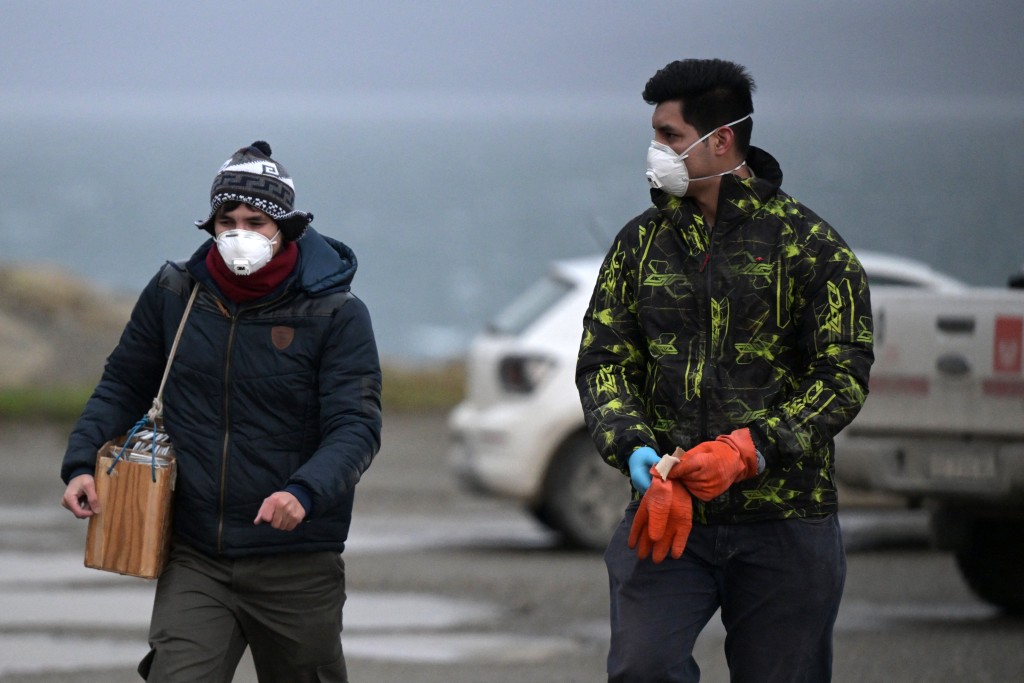
The Andes strain of hantavirus typically circulates via rodents, but human-to-human transmission such as the outbreak aboard the MV Hondius is not impossible either.
Three infected people died on the cruise ship that set sail from Ushuaia in the southern Argentine Tierra del Fuego province on April 1.
The South American country recorded transmission of the virus via humans during an outbreak in 1996, which was then confirmed in a second outbreak in 2018.
AFP breaks down what Argentine scientists know so far about the rare respiratory disease and how it spreads.
- The role of rodents -
Hantavirus typically spreads through the urine, faeces and saliva of infected rodents, generally in closed environments.
The long-tailed rat known as Oligoryzomys longicaudatus carries the Andes strain in Patagonia.
According to biologist Raul Gonzalez Ittig of the scientific research agency Conicet, cases in Argentina may be linked to the El Nino phenomenon.
Its heavy rains caused vegetation to grow more, which may in turn have increased Argentina's rodent population.
Although higher rodent numbers do not necessarily lead to an outbreak, they do create more opportunities for contact, Gonzalez Ittig told AFP.
Meanwhile, drought and fires "cause rodent populations to decline," he said.
In the known cases of human-to-human hantavirus transmission, the only rodent involved is the one that caused the first infection.
In cases of human-to-human transmission, existing knowledge about environmental factors relating to contagion from rodents "does not apply," infectious disease specialist Maria Ester Lazaro told AFP.
- No mutation -
Human-to-human transmission of the Andes strain "is not the rule but an exceptional event," according to epidemiologist Rodrigo Bustamante.
It requires close contact of less than one meter for 30 minutes, he said, adding that hantavirus is "much less transmissible" than Covid-19 or the flu.
Bustamante noted that infections are most likely to occur between members of a household.
Scientists have rejected the idea that a recent mutation made the Andes virus transmissible between humans.
"Each hantavirus has evolved since ancient times along with its rodent host without undergoing significant mutations," Lazaro said.
How the virus spreads along "transmission chains with several links," and not just to one person, remains unknown, she added.
Gonzalez Ittig believes the virus was always capable of such transmission, suggesting that humans may have begun to occupy a space where rodents already carried the disease.
- Difficult to study -
Because there are so few hantavirus cases, "you need a very long time to have a minimally decent number to draw conclusions," according to Lazaro.
Bustamante has observed the same issue -- there have only been between two and four hantavirus cases a year at the hospital where he works in Bariloche.
The pace of the virus's effects on infected people makes things challenging too, according to experts.
In the beginning, patients may seem fine, but around the fourth day, symptoms can worsen "in a matter of hours," Lazaro said.
This makes determining the patient's movements or scheduling clinical trials difficult, she added.
Scientists from Argentina's leading epidemiological Malbran Institute will lead a fact-finding mission to Ushuaia next week to determine whether the virus is present in the area.
During the current epidemiological season, which runs from June to June each year, Argentina has recorded 102 hantavirus cases -- almost double the 57 reported in the same period the previous year.
AFP