Read More
In a sign that the coronavirus is spreading across South Korea, more patients have been newly added outside the greater Seoul area over the past week.
ADVERTISEMENT
SCROLL TO CONTINUE WITH CONTENT
Excluding the southern resort island of Jeju, 16 major cities and provisions reported new virus infections, Yonhap reports.
Of the newly identified local infections, 125 patients were reported in the capital city of Seoul, 102 from Gyeonggi province and 17 from Incheon, just west of Seoul.
The southeastern port city of Busan reported eight additional infections. The central city of Daejeon reported six more cases, and four were reported from the southeastern city of Daegu and five from the southwestern city of Gwangju.
Health authorities said a surge in patients traced to a church in northern Seoul and infections tied to a massive weekend rally in central Seoul appear to have served as a catalyst in spurring the virus to spread nationwide.
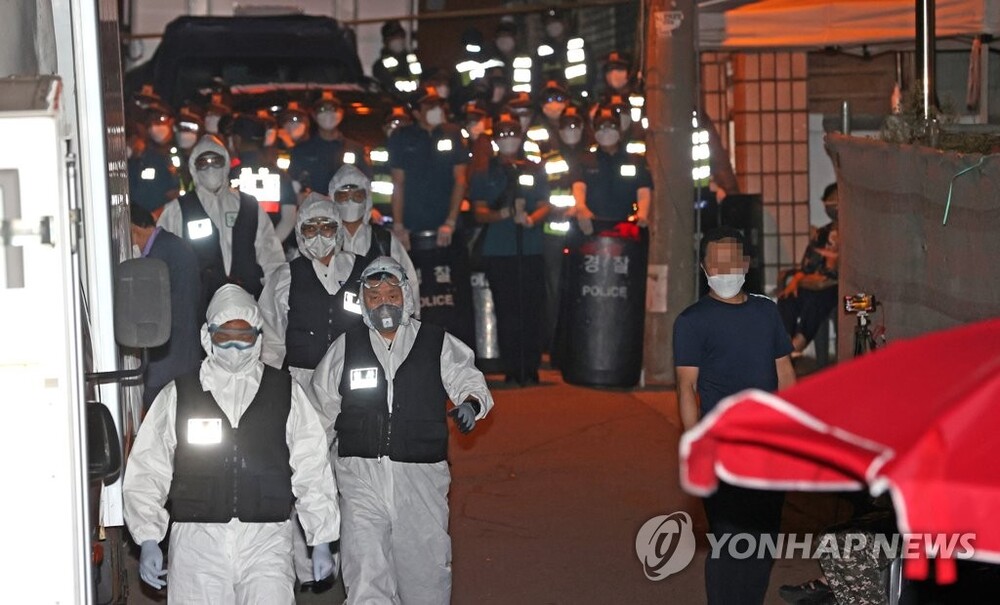
Cases tied to the Sarang Jeil Church in northern Seoul, a new hotbed of the latest flare-up in virus cases, came to 676 as of noon Thursday, up 53 from a day earlier.
The Sarang Jeil Church-linked infections marked the largest after more than 5,000 virus cases traced to the minor religious sect of Shincheonji were reported in Daegu in late February and early March.
Health authorities also have been urging participants in the anti-government rally held on Saturday to immediately take virus tests regardless of showing symptoms. Some Sarang Jeil Church members took part in the rally.
But health authorities have been facing hurdles in tracing potential cases as some of protesters had traveled to Seoul from other cities, hundreds of members of Sarang Jeil Church refused to get tested, and the church provided an inaccurate list of its members to health authorities.
Cases linked to the weekend march came to 60, of which 33 patients are affiliated with the conservative church. At least 18 patients who joined the rally do not have links to the church.
The spiking virus cases are likely to present tough challenges to the country over whether to impose more tougher anti-virus measures.
Alarmed by soaring virus cases, South Korea raised the level of social distancing in Seoul and Gyeonggi Province on Sunday by one notch to Level 2 in the three-tier system for two weeks.
Starting Wednesday, the measure was expanded to Incheon.
Indoor meetings of 50 or more people and open-air gatherings of 100 or more people are banned in principle. So-called risk-prone facilities, including karaoke rooms, clubs, PC cafes and buffets, have been ordered to shut down.
The government has been cautious about raising the level of social distancing to Level 3 as doing so has far-reaching social and economic impacts.
The highest anti-virus curbs can be issued when the number of daily virus cases reaches a two-week average of 100-200 and the doubling of new patients occurs more than twice a week.
If the level is raised, gatherings of 10 or more people will be banned, and offline school classes will be suspended.
The country reported nine imported cases, with three cases coming from the United States and another three from the Philippines.
Cases coming in from overseas rebounded back to double-digit numbers since mid-June for about a month, but such infections recently slowed.
South Korea reported two more deaths, raising the tally to 309. The fatality rate was 1.85 percent.
The total number of people released from quarantine after making full recoveries stood at 14,120, up 57 from the previous day.
The country has carried out 1,754,123 coronavirus tests since January 3.
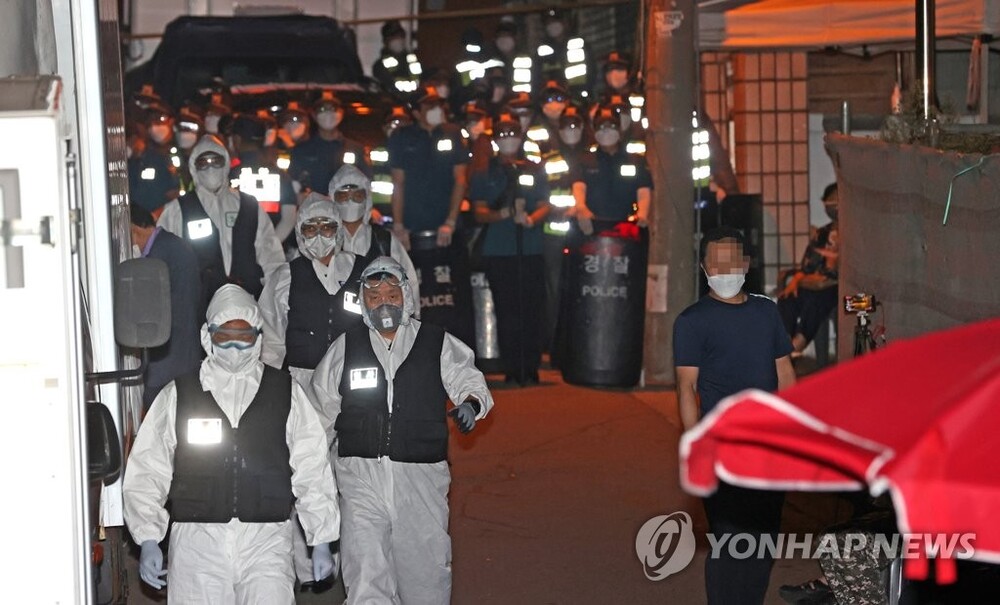
Korean police leave the Sarang Jeil Church in northern Seoul on August 20.