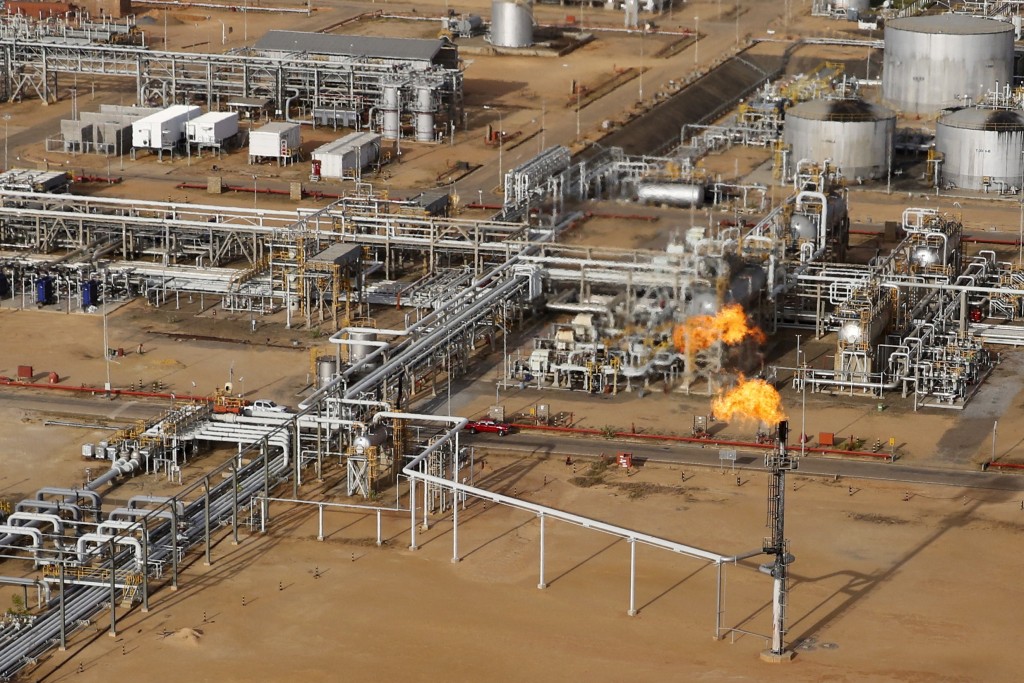
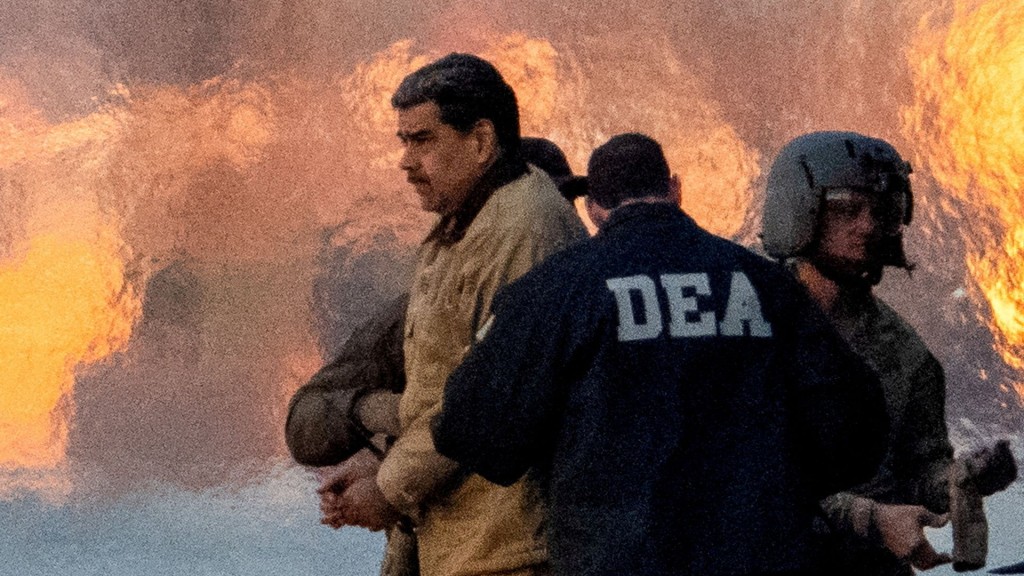
China is a major customer of and investor in Venezuela's oil sector, which President Donald Trump aims to revive following the US military's ouster of President Nicolas Maduro on Saturday.
Years of mismanagement, underinvestment and, more recently, US sanctions have slashed Venezuelan crude production to about 1.1 million barrels per day (bpd) last year from a peak of some 3.5 million bpd in the late 1990s, according to official figures.
Here are details on Beijing's role in the country's oil sector.
A MAJOR BUYER
Much of Venezuela's exported oil is sold to China, although Beijing declares very little and imports are often rebranded. Imports hit about 470,000 bpd during 2025, according to energy analytics firm Vortexa, or roughly 4.5 percent of China's seaborne crude imports.
Small independent refiners known as "teapots" are the main Chinese buyers of discounted Venezuelan crude. A portion also goes to repaying Caracas' debt to Beijing, which analysts estimate exceeds US$10 billion.
AN INVESTOR AND PRODUCER
Chinese investors poured US$2.1 billion into the country's oil sector after 2016, according to a 2023 estimate from the American Enterprise Institute, and are among a handful of foreign firms still operating in the country.
- China National Petroleum Corp. The major state-owned oil company was a big investor before the US imposed sanctions in 2019 and still produces crude at the Sinovensa joint venture with state-owned oil company PDVSA. CNPC stopped lifting Venezuelan oil in 2019, but crude has since made its way to China via traders and other state-owned firms. CNPC is a partner in a joint venture that controls 1.6 billion barrels of oil reserves in the country, according to Morgan Stanley.
- Sinopec Group. The state-owned giant is a partner in a joint venture that controls 2.8 billion barrels of reserves in Venezuela, according to Morgan Stanley.
- CNPC and Sinopec did not immediately respond to queries on their Venezuela involvement.
- China Concord Resources Corp. The private company planned last year to invest more than US$1 billion in two oilfields to produce 60,000 bpd by the end of 2026, Reuters reported. The company could not be reached for comment.
- Kerui Petroleum. The private oil services company was granted an oil production contract in 2024 by PDVSA, according to a July 2024 S&P report, citing an anonymous PDVSA official. It was unclear if the contract is active, as many are not. The company did not respond to a request for comment.
- Anhui Erhuan Petroleum Group. The private refined oil wholesaler and retailer was also granted an oil production contract in 2024 by PDVSA, according to the same S&P report, again citing an anonymous PDVSA official. It was also unclear if the contract is active. The Chinese company denied any involvement in a PDVSA joint venture in a phone call to Reuters on Monday.
Crude output in Venezuela is set to increase over a period of time following the dramatic US strike and capture of its president, likely raising global supply and weighing on prices longer-term, oil analysts said.
American forces seized Venezuelan President Nicolas Maduro from Caracas over the weekend, and US President Donald Trump said Washington would take control of the oil-producing nation and that the US embargo on all Venezuelan oil remained in full effect.
The Organization of the Petroleum Exporting Countries (OPEC) member holds about 17 percent of global oil reserves, or 303 billion barrels, ahead of OPEC leader Saudi Arabia, according to the London-based Energy Institute.
Venezuela was producing as much as 3.5 million barrels per day (bpd) of crude in the 1970s, which at the time represented over 7 percent of global oil output. Production fell below 2 million bpd during the 2010s and averaged some 1.1 million bpd last year, or just 1 percent of global production.
JPMorgan analysts led by Natasha Kaneva said in a note that with a political transition, Venezuela could raise oil production to 1.3-1.4 million bpd within two years and potentially reach 2.5 million bpd over the next decade, up from about 800,000 bpd currently.
"These dynamics are currently not reflected in the back end of the oil futures curve," the note added.
Goldman Sachs analysts led by Daan Struyven said in a January 4 note that any recovery in production would likely be gradual and require substantial investment.
The analysts estimated a US$4 per barrel downside to 2030 oil prices in a scenario where Venezuela crude production rises to 2 million bpd.
In the short term, Venezuela's oil production outlook this year will depend on how US sanctions policy evolves, the Goldman analysts said.
"We see ambiguous but modest risks to oil prices in the short run from Venezuela depending on how US sanctions policy evolves," they added.
Goldman's 2026 oil price forecasts remained unchanged, with Brent's average at US$56 and West Texas Intermediate at US$52 a barrel while Venezuela's 2026 oil production is forecast to stay flat at 900,000 barrels per day.
Reuters