The unveiling of the Hong Kong Jockey Club Series: Treasures of the Mughal Court at the Hong Kong Palace Museum marks a significant cultural milestone for the city.
This exhibition, featuring artifacts from the Victoria and Albert Museum, offers more than just a glimpse into the opulent artistry of the Mughal empire – it presents an opportunity for Hong Kong to celebrate its multicultural identity and strengthen ties with its diverse communities.
The Mughals and their global influence
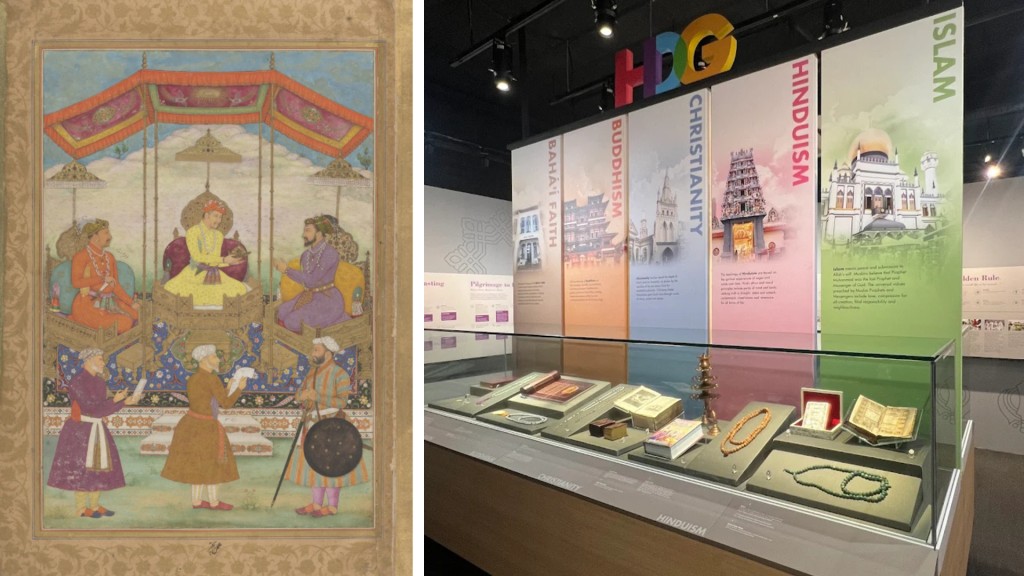
The Mughals (1526–1857) were one of South Asia’s most influential dynasties, blending Persian, Central Asian and Indian traditions.
Founded by Babur, who claimed to be a descendant of Genghis Khan and Timur, the empire spanned modern-day India, Pakistan, Bangladesh and Afghanistan.
Under rulers like Akbar, Jahangir and Shah Jahan, who built Taj Mahal, Mughal art flourished, absorbing influences from Chinese landscapes transmitted via the Persians.
Yet, the empire’s decline under British colonization scattered its treasures worldwide.
Today, these artifacts serve as bridges between cultures, reminding us of a time when empires thrived on exchange rather than exclusion.
Hong Kong’s role in reconnecting histories
The Mughal empire’s story of conquest, exile and artistic synthesis resonates with Hong Kong’s own history as a crossroads of trade and migration.
Moreover, the city is home to a vibrant South Asian community, including Indians, Pakistanis, and Nepalis, whose ancestors may have lived under Mughal rule. Rather than treating these groups as ethnic minorities, Hong Kong should follow the example of Singapore, where diversity is celebrated as a strength.
The Harmony in Diversity Gallery near Chinatown showcases how Singapore acknowledges its multicultural past, including conflicts, to foster unity.
Similarly, Hong Kong can use this exhibition to engage its South Asian residents, inviting them to share their heritage with the wider public.
Inclusive cultural diplomacy
By highlighting the Mughal empire and its Chinese connections, this exhibition underscores how cultures have always influenced one another.
And Hong Kong, with its blend of Eastern and Western traditions, is the perfect venue for such a narrative.
The government and cultural institutions should take this opportunity to host guided tours for the South Asian communities and involve community leaders in discussions.
We should also promote educational outreach and develop school programs that link Mughal history to Hong Kong’s multicultural present, and highlight shared artistic legacies by emphasizing cross-cultural exchanges between the Mughals and the Chinese.
The city can transform this exhibition into a living conversation about shared histories and mutual respect.
In a world increasingly divided by identity politics, Hong Kong has the chance to show that true harmony lies in celebrating differences, not erasing them.
Let us not just admire the past but learn from it and invite everyone, regardless of ethnicity, to be part of the story.