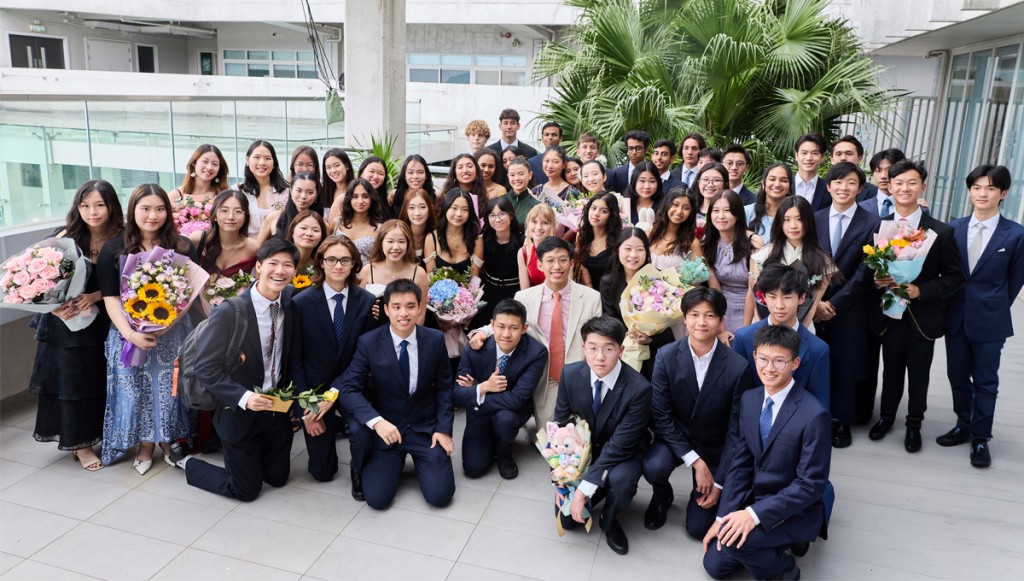
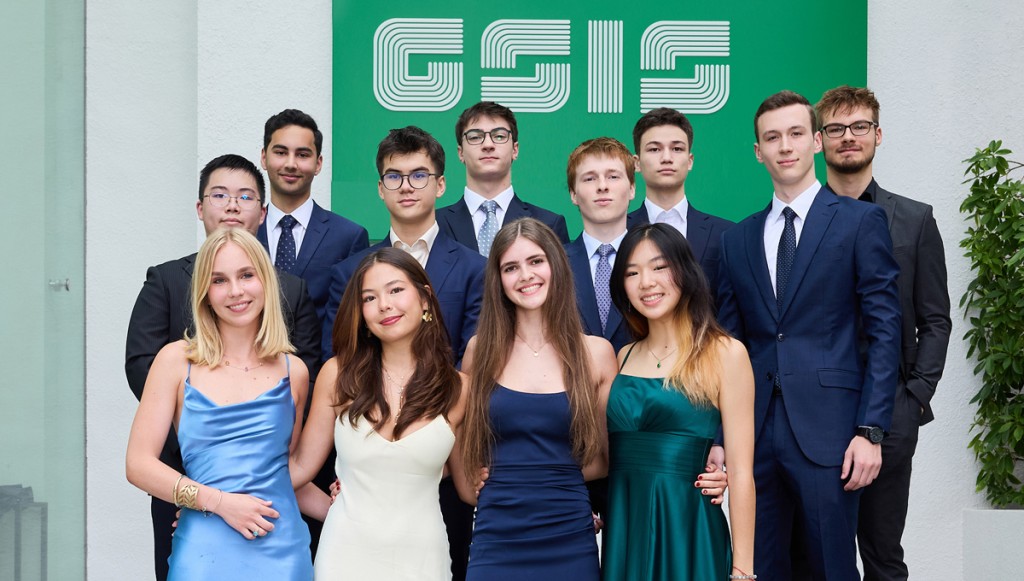
At German Swiss International School (GSIS), the class of 2025 achieved outstanding results in both German International Abitur (DIA) and International Baccalaureate (IB) examinations, thanks to an excellent academic programme that guides and motivates students to become independent learners, together with knowledgeable faculty staff who delivers complex curricula in an engaging and relevant way.
The cohort of 12 DIA students scored an exceptional average of 1.8, with a perfect score of 1.0 obtained by 16 year old Samuel, making him the youngest DIA graduate ever worldwide.
“For me, time management and my teachers’ advice formed the foundation for my studies,” says Samuel, who is heading for ETH Zurich in Switzerland while spending time composing Neo-Classical music and doing charitable work.
“Creating a document of everything I had learnt in the past two years in Chemistry helped me to link different pieces of information together. Completing mock exams taught me the importance of prioritizing and being aware of the time it takes to complete a task. Strategies such as these helped me to connect information together and complete my exams in a timely manner,” he ponders.
“The last two years of your school life will certainly not be easy. Discipline is requisite for success and improvement; avoid wasting any time and aim to manage it to the best of your ability. On the other hand, aim to make studying enjoyable, and understand that mistakes and setbacks are unavoidable but are valuable learning opportunities,” he advises.
As for IB, 100% of this year’s cohort of 68 students passed with impressive results, in which seven students – Edith, Emily, Maxwell, Michael, Nadia, Rachael and Tarama – achieved a maximum score of 45 points, and 75% of the students achieved 40 points or more. In addition, six bilingual diplomas were awarded – two in English-German and four in English-Mandarin.
For Edith, who is traveling and volunteering before starting her studies at Brown University, is excited about Brown’s open curriculum, which will allow her to explore both Environmental Studies and Economics, along with other fields that she finds interesting.
Looking back, her fondest memories of GSIS are Discovery Week, inspiring classroom discussions, and the supportive community that became like a second family.
To future IB students, she advises: “Embrace the challenge but don’t forget self-care — balance is crucial for success. Identify what works for you and be strategic about strengthening areas where you have room to grow.”
Emily, on the other hand, says humbly: “As everyone studies and lives differently, my general advice will probably be: don’t stress too much. Focus on understanding the material, don’t just memorize it. Don’t drink energy drinks and get some proper sleep.”
Maxwell confesses that procrastination is what he found the most challenging, and limiting daily study time and maintaining a work-life balance helped a bit. He will be off to Shanghai for a month-long internship on quantitative analysis in finance, which will require both math and coding skills. “Hopefully this opportunity will provide me with some additional knowledge that I can bring to the University of Warwick, where I will be doing a 4-year master’s course in mathematics,” he explains.
Meanwhile, Nadia is excited to pursue medicine in Hong Kong, a field that combines her love for science with interacting with people. To future IB students, she recommends choosing subjects they are genuinely interested in because it will make studying more enjoyable. Additionally, she encourages students to seek guidance from subject teachers, as their experience with IB allows them to share strategies that have worked well.
“Throughout these years, GSIS has become a second home for me. I will dearly miss my friends, teachers, and the different activities we did together,” she sums up.
Michael, too, will be attending medical school. He shares some tips with future students: “First, create a revision timetable to ensure all subjects are covered in sufficient detail; second, seek help from teachers when necessary; and third, maintain a healthy study life balance to prevent burnout,” he says.
Rachael, also going into medicine, made flashcards from her notes and studied in public libraries so that she can fully relax at home. She recommends students to start brainstorming their IAs and EE early, and begin flexibly with something imperfect is better than waiting for the “perfect” time, which rarely comes. More importantly, she points out: “Don’t let IB consume your high school experience.”
“We could not be any prouder of our students, whose outstanding results are yet again a testament to their ongoing commitment, incredibly hard work and striving for excellence,” says Alexandra Freigang-Krause, School Principal of GSIS.
Simon Misso-Veness, Deputy Principal and Head of English International Stream, emphasizes the importance of extracurricular activities in helping academic performance: “Education is about teaching the whole person. Academics are part of this profile but we learn so much about ourselves and others through being part of a team, collaboration and working towards a shared goal.”
Apart from offering over 100 extracurricular activities, GSIS also has a dedicated university guidance team which guides students and families starting from Year 10 for the English International Stream and K10 for the German International Stream.
“Excellence comes in many ways, and we would like to emphasize that, as a school, we take pride in and deeply value all our students´ achievements, celebrating their unique strengths and talents,” adds Freigang-Krause.