Read More









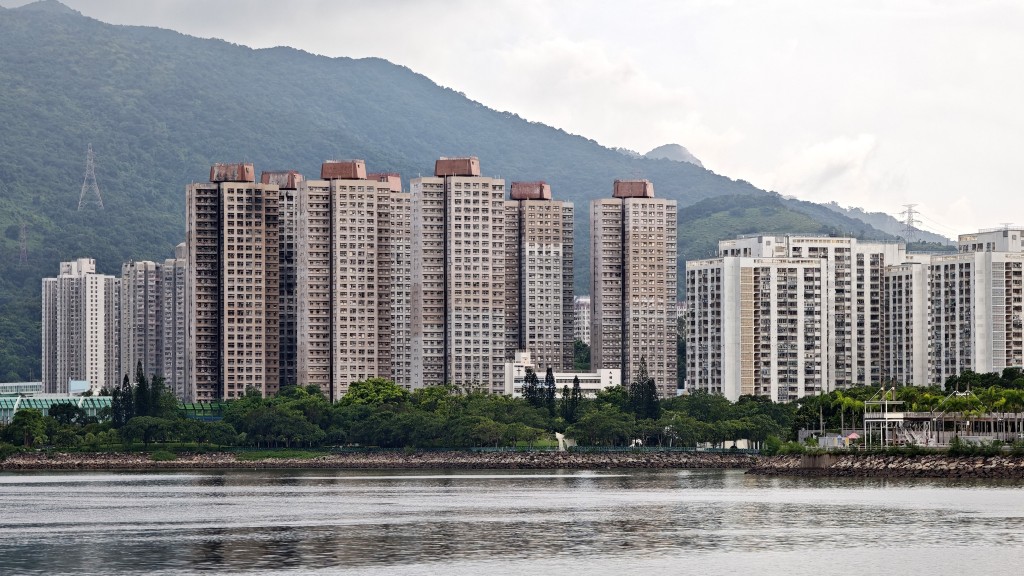
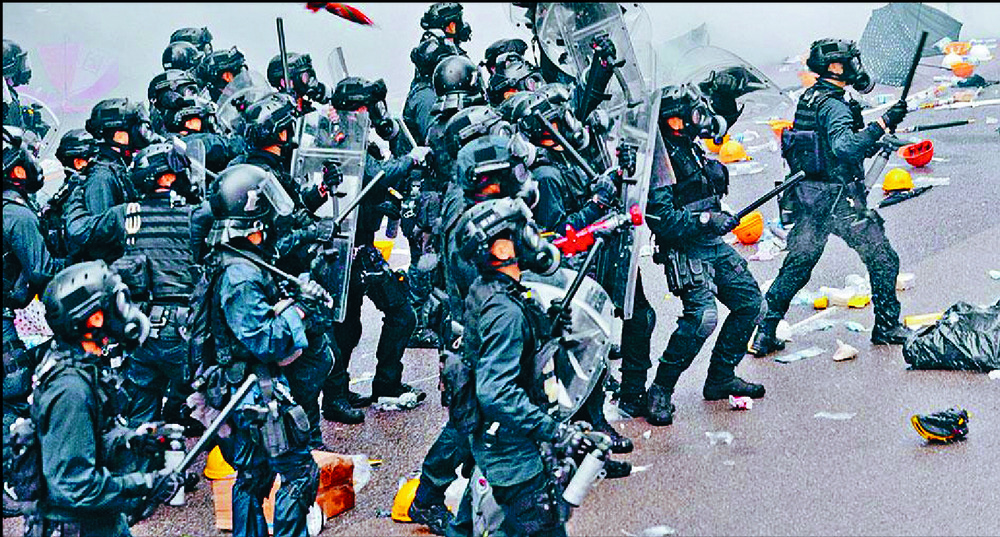
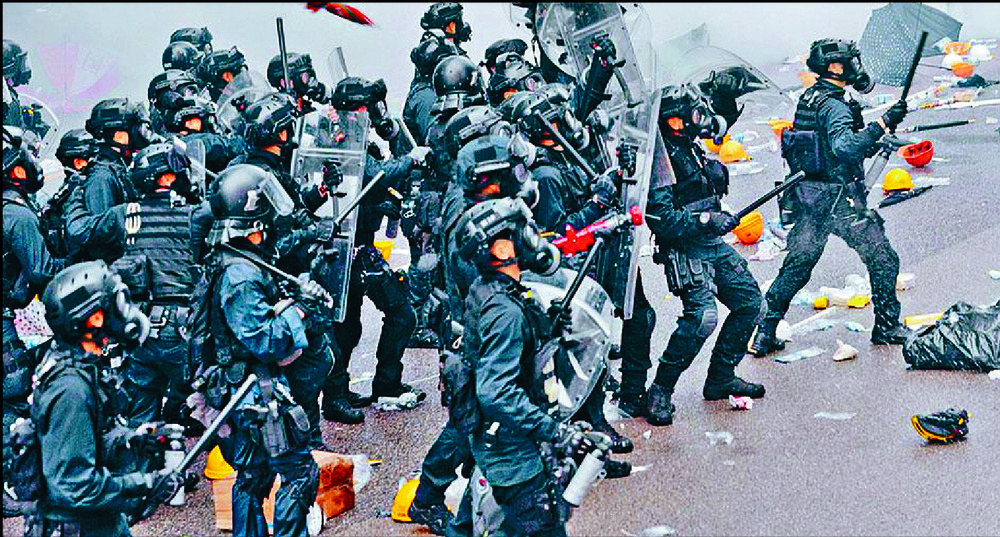
For much of last year the community was embroiled in violence and conflict. This escalated in intensity as the year progressed.
In early September 2019 a self-proclaimed leader of the insurgency was interviewed by a journalist from The Australian. In answer to the question: "What exactly is your aim?" he said: "To crush the police. Then the government will come out and talk to us".
Arising from all this, there were many complaints lodged against the conduct of individual officers. These led to the proceedings heard by Anderson Chow J, and his judgment delivered on 19 November 2020 in Applicants v The Commissioner of Police.
The applications for leave to start proceedings for judicial review raised two separate matters:( 1 ) the processes involved in identifying officers taking part in counter-insurgency operations, and
( 2 ) the procedures used by the Complaint Against Police Office for dealing with complaints, and the supervisory functions of the Independent Police Complaint Council as set out in the Ordinance of the same name regarding CAPO's findings.At the conclusion of a 66-page judgment Chow J made no substantive orders of any kind, but declared as follows:
( 1 ) "The failure of the Commissioner to establish and maintain an effective system to ensure that every police officer deployed in carrying out non-covert duties in Operation TIDERIDER wears and prominently displays an identification number or mark which is unique to that officer violates Article 3 of the Hong Kong Bill of Rights".( 2 ) "The Government of the HKSAR is under a duty, pursuant to Article 3 of the Hong Kong Bill of Rights, to establish and maintain an independent mechanism capable of conducting effective investigation into complaints of suspected ill-treatment by police officers in contravention of Article 3 of the Hong Kong Bill of Rights, and that the existing complaints mechanism involving the CAPO, with oversight by the IDPCC, is inadequate to discharge this obligation."
Simply looking at those two declarations alone, it strikes one as very odd indeed.The first declaration concerns identifications worn by special units when deployed on counter-insurgency operations. The fault found by the judge was failure to "prominently display an identification number or mark."
What does this mean? "Prominently displayed" in broad daylight? Or in the dark? In the midst of a struggling mob? Viewed long range? The judge said ( para 37 ) that an alphabetical system displayed on the back of an officer's helmet made him "more easily identified." Is this not "prominent" identification enough ?More pertinently still: Is a judge equipped to make assessments of this nature? Has he been given responsibility to decide how identification numbers and marks should be displayed ?
The judge accepted evidence that the police had a system "which would permit individual officers to be traced when necessary or required" ( para 39 ). And "even if the complainant is unable to provide sufficient information to enable a police officer to be identified immediately, there are other means which CAPO may employ to identify the officer in question " (para 43 ). He concluded by saying that the "methods and inquiries" used by the police were ones which "any conscientious body tasked with the duty of investigating complaints against police officers" would use (para 45 ).How, in the face of all that, could the judge have made the first declaration? Logic provides no answer. Nor common sense.
As regards the second declaration, the judgment (in paras 47-56 ) laid out in detail the structure of CAPO, showing it to be a highly professional organization, well capable of dealing with complaints.Then in paras 57-64 the judge set out the statutory scheme in the Independent Police Complaint Council Ordinance for supervising the handling of complaints by CAPO.
The judge clearly accepted that there was in place "existing complaints mechanism" for investigating complaints under what he called a "two-tiered system." These findings flatly contradicted the judge's statements in the second declaration.The facts accepted by the judge showed that both as regards ( a ) identifying individual officers in the course of special operations like TIDERIDER and ( b ) systems for dealing with complaints, no fault could be found.
How then could the judge have plunged into making such absurdities as the two declarations? The answer lies in the mother of all absurdities: Calling in aid Article 3 of the Hong Kong Bill of Rights to justify the making of the declarations.Article 3 simply says: "No one shall be subjected to torture or to cruel, inhuman or degrading treatment or punishment. In particular, no one shall be subjected without his free consent to medical or scientific experimentation." Full stop.
The common man would immediately have exclaimed: "What? Torture? Where does that come in? Torture is the infliction of extreme pain usually practised by rogue states to force confessions. What has that to do with this case ?"The answer, according to the judge, lies in European human rights case law: Go and read cases like Hristovi v Bulgaria, Ataykaya v Turkey, Rassid v Bulgaria, Dedovskiy v Russia, Rodrigues v Uruguay etc etc referred to in his judgment and you'll find out.
As one commentator puts it: "The judge made a Tarzan leap into a forest of words"; the judgment is the stuff of comic strips, of fairy tales.The sole respondent to these proceedings was the Commissioner of Police. He must be shaking his head in total bewilderment. To start with, he is not responsible for the making of legislation in Hong Kong: Neither the Independent Police Complaint Council Ordinance nor any other statutes. What is he supposed to do in light of the second declaration ?
As regards the first declaration, the judgment said in conclusion that it was now "a matter for the Commissioner to devise an appropriate system to meet [ the two declarations ].""Appropriate system": What does that mean? According to the judge, that would be a system satisfying the "requirement of independent investigation under the procedural limb of Article 3 of the Bill of Rights" (para 103). Where does one find such "procedural limb" in Article 3 ?
Presumably, CAPO will continue to function in accordance with its established procedures, on a daily basis, and the IPCC will continue to discharge its statutory functions regardless of what the judge had said.The declarations made by the judge are meaningless words: they have no bite: the growls of a toothless tiger.
But such posturing does great harm to the rule of law.It can now be seen in retrospect that, some years back, Beijing was already developing concerns about the rule of law in Hong Kong. This found expression in the 2014 White Paper which led to a silent march in protest by many lawyers. The rot has got much worse since then.
The community is now pondering the question of judicial reform.What might that involve ? It must be a radical change in the culture of the judiciary: one which makes it impossible to yield judgments as seen in this case.
The rule of law is robust and effective. It is a disciplined process. The law does not act in vain. The courtroom is not a place for debate with lawyers.Had these simple rules been followed, the applications for leave to start judicial review proceedings in this case would have been dismissed as frivolous and vexatious. The determination would have been half a page.