Read More
Themis Qi
ADVERTISEMENT
SCROLL TO CONTINUE WITH CONTENT
Dubai plans to ask licensed virtual asset issuers and service providers to disclose the names of crypto whales to protect consumers as the city in the United Arab Emirates vies to become a global hub for the burgeoning sector.
If the majority of tokens are owned by its creator or an institution, their names should be disclosed, Virtual Assets Regulatory Authority chief executive Matthew White told The Standard.
This will help investors know more about the products as most tokens are not owned by their creators but by third parties like venture capitalists, he said.
However, VARA would not necessarily ask for specific people to be named, White said.
Most cryptocurrency holders including those who own bitcoins use pseudonyms which means transactions are tied to wallet addresses rather than real names.
This adds to the challenge of tracing scammers and money launderers in the real world.
In 2024, losses from crypto scams jumped nearly 40 percent from the previous year to at least US$9.9 billion (HK$77.22 billion) and could climb further to a record US$12.4 billion if more data were available, blockchain research firm Chainalysis says.
White believes disclosures of major holders can be achieved as virtual assets are created and stored on the blockchain, a decentralized and immutable ledger of all transitions shared across a peer-to-peer network.
VARA is also looking at mandating issuers and service providers to unveil the composition and auditing of the reserves and clearly define redemption mechanisms, offering investors a “clear description of risks.”
The new requirements are a part of the regulator's plans for the first quarter of the year, with most of them already under way, he said.
Dubai aims to become a global hub for finance and technology by 2030 and VARA was established in March 2022 as the world’s first independent regulator for virtual assets.
Since launching services in February 2023, it has granted 24 licenses to service providers and 10 in-principle approvals, with 350 applicants in the pipeline.
Binance, the world’s largest crypto exchange, won approval to set up shop in the city last April.
VARA offers eight types of licenses to those who provide services including advising, brokerage and deal-making, custody, exchange operation, lending, asset management, transfer and settlement and issuance, versus two to three licenses that the regulators in Hong Kong and other regions have set.
The modular design will help VARA to be agile and effective and supervise a broader range of activities, White said.
With generative artificial intelligence sweeping across various sectors, VARA has already adopted the technology to help monitor virtual asset transactions and identify any suspicious ones or compliance breaches, White said.
Without revealing specific AI use, White said the technology allows its staff to add more value to their work.
White believes Dubai's success can be attributed to a top-down approach to policy-making, conducive business environment and its reputation as a “safe and family-oriented city.”
He said the regulator is open to the possibility of working with Hong Kong, though he has nothing specific in mind as of now.
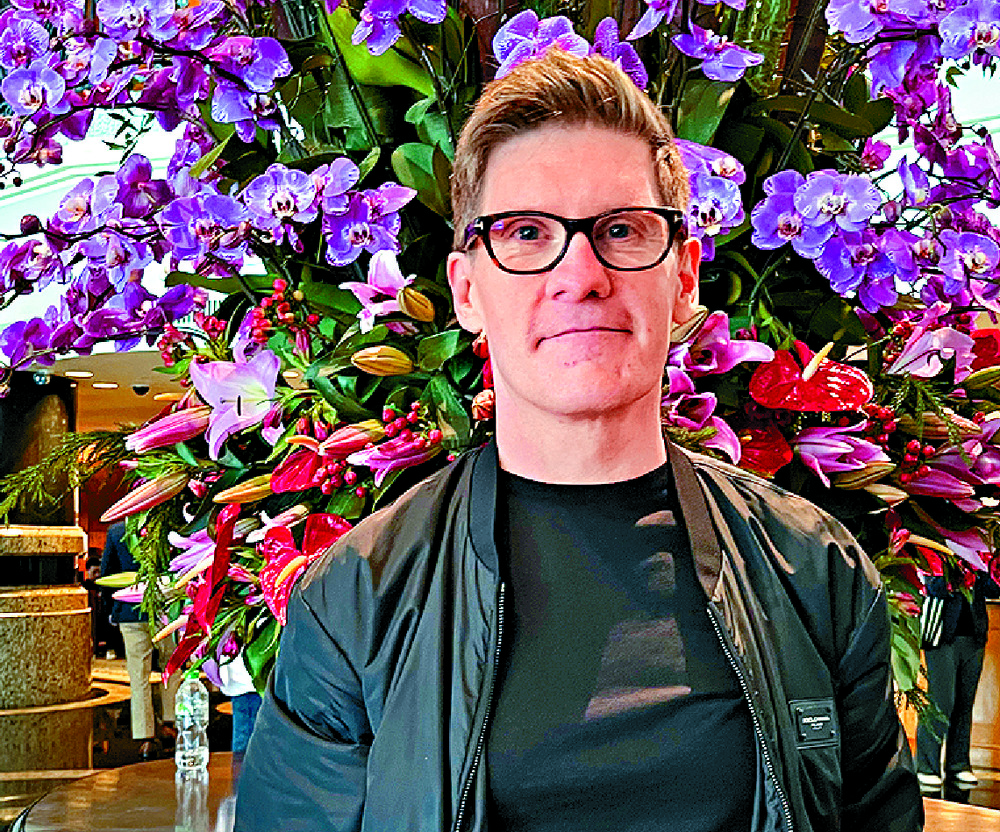
Matthew White wants issuers and providers to give investors a clear description of risks. SING TAO