Read More
Hong Kong plans to provide a series of policies that are expected to attract at least 200 family offices by 2025 and has received inquiries on listings and taxation from family office leaders, Secretary for Financial Services and the Treasury Christopher Hui Ching-yu said yesterday.
ADVERTISEMENT
SCROLL TO CONTINUE WITH CONTENT
In addition, family offices that enjoy tax relief will be required to employ at least two people in Hong Kong each year and spend HK$2 million on related expenses to ensure that they can promote local employment and the economy.
The administration had on Friday announced a series of measures including a new capital investment entrant scheme and tax concessions to lure wealthy family offices the same day Hong Kong hosted a high-level conference aimed at attracting such businesses.
Chief Executive John Lee Ka-chiu had earlier set a target of attracting 200 large family offices to set up in the SAR by 2025.
Hui expects the proposal to provide a profits tax exemption on family-owned investment holding vehicles managed by single-family offices could be passed by the Legislative Council within one to two months.
Friday's Wealth for Good in Hong Kong conference drew more than 400 attendees, including over 100 people identified as key decision-makers from global family offices.
Hui said he spoke with decision-makers during the conference and received many inquiries about initial public offerings and related tax arrangements in the SAR.
Some family offices have many investment projects in hand and may consider listing in Hong Kong, Hui said.
And by attracting family offices other financial services, such as accounting and consulting, can benefit.
Meanwhile, wealthy entrepreneurs have been flocking to Hong Kong regional rival Singapore, where the backlog of single-family offices applying for tax incentives and pending approvals alone is around 200, according to Senior Minister Tharman Shanmugaratnam.
On the recent collapse of Silicon Valley Bank and the crisis of Credit Suisse, Hui believes it has not been having a major impact on Hong Kong as local banks' exposure is very limited.
The local banking system in Hong Kong is healthy, Hui said, with a capital adequacy ratio of more than 20 percent. That is well above the international minimum requirement, which is 8 percent.
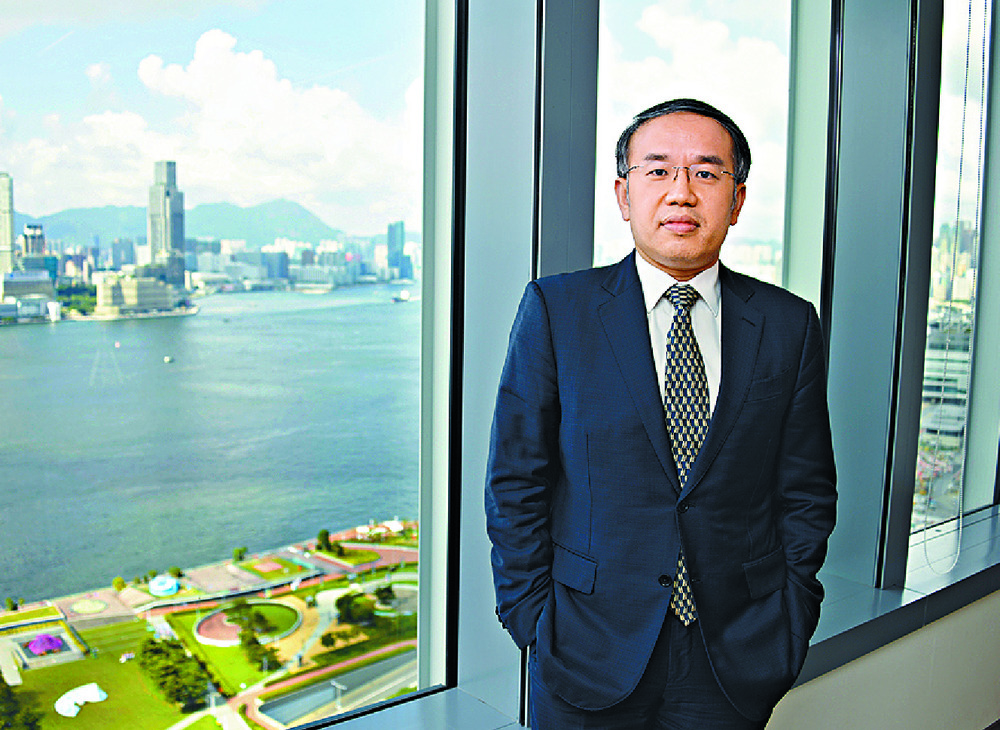
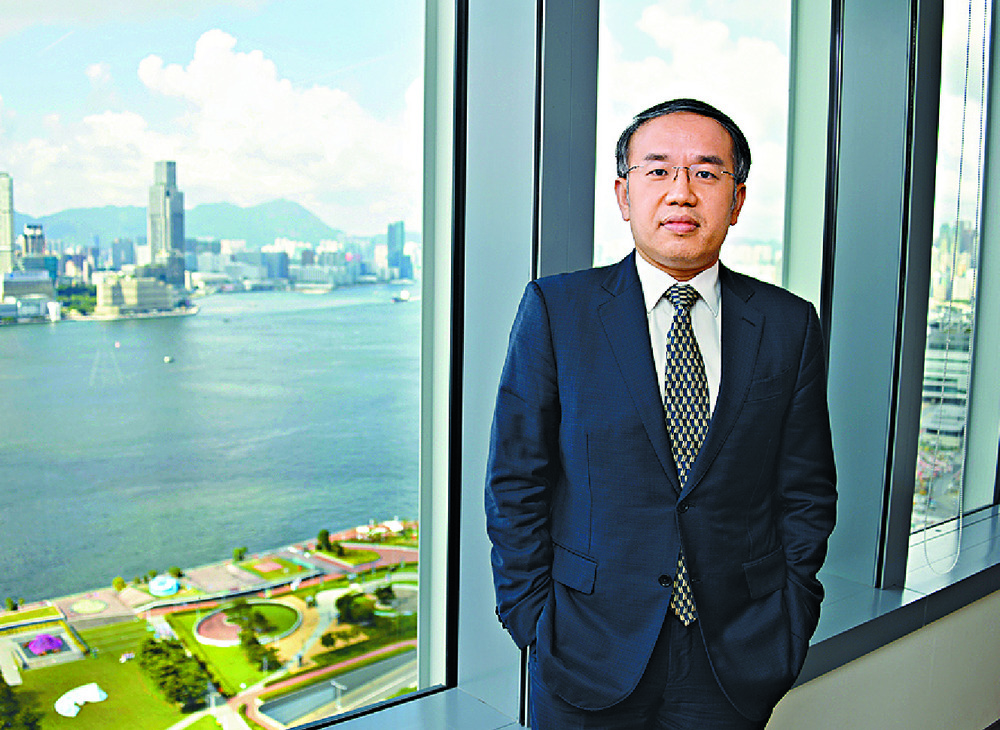
Christopher Hui spoke with many decision-makers during the conference. SING TAO