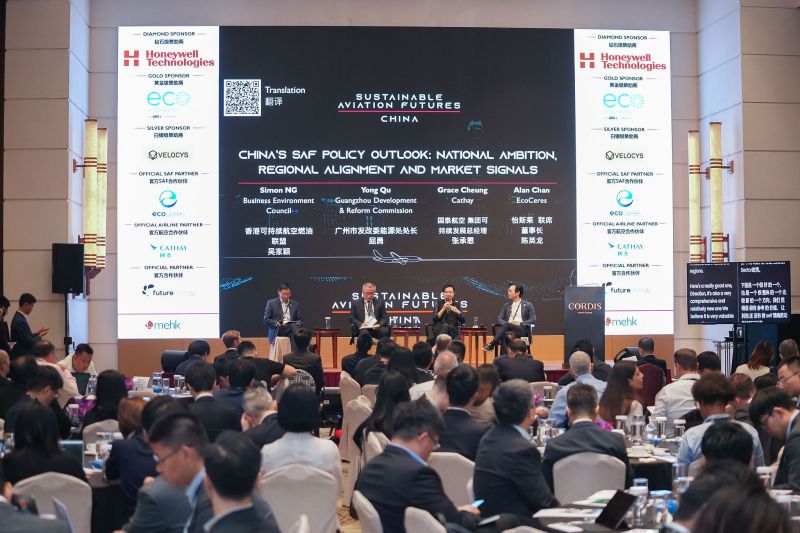
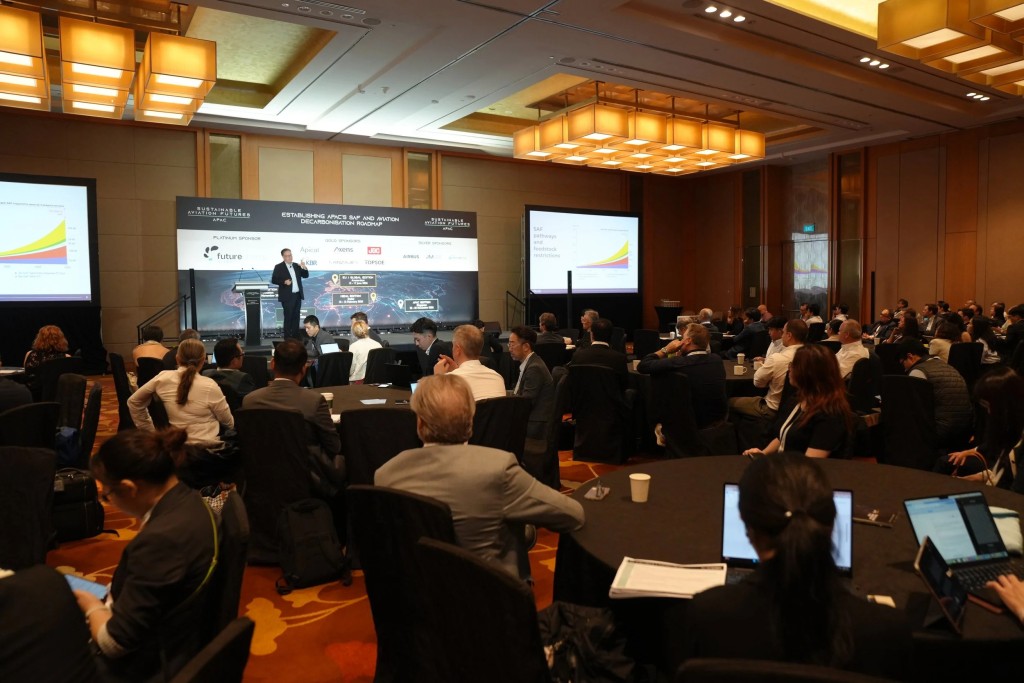
The inaugural Sustainable Aviation Futures China Congress kicked off on Monday in Hong Kong, connecting airlines, fuel producers, energy majors, financiers and regulators from across the global aviation and energy value chain to create momentum as China's sustainable aviation fuel market shifts towards scale.
The two-day congress brings over 250 professionals and 50 expert speakers together to cover topics including sustainable aviation fuel (SAF), blend mandates, fuel eligibility, alongside clean hydrogen, carbon capture, and eFuels to bankable and scalable supply.
In his opening remarks, Under Secretary for Transport and Logistics Liu Chun-san said SAF is not merely an alternative fuel, but the future of the global aviation industry as large-scale SAF development is essential for long-term sustainability.
He noted that leveraging Hong Kong’s operational base in Guangdong, the city is committed to building a world-class SAF industry and the government is advancing the development of the city's first SAF blending facility.
Cathay Pacific Airways chief executive Ronald Lam Siu-por said in a keynote session that SAF currently makes up less than 1 percent of global aviation fuel. He said the Greater Bay Area could bring together manufacturing, logistics, major airports, customers and capital, while Hong Kong can act as a bridge linking global aviation, international standards and overseas markets.
“Cathay is honored to be the Official Airline Partner of this Congress,” Lam said. “Through around HK$150 billion of investment committed in our fleet, cabins, lounges and digital capabilities, we are strengthening our customer proposition while advancing our decarbonization journey.”
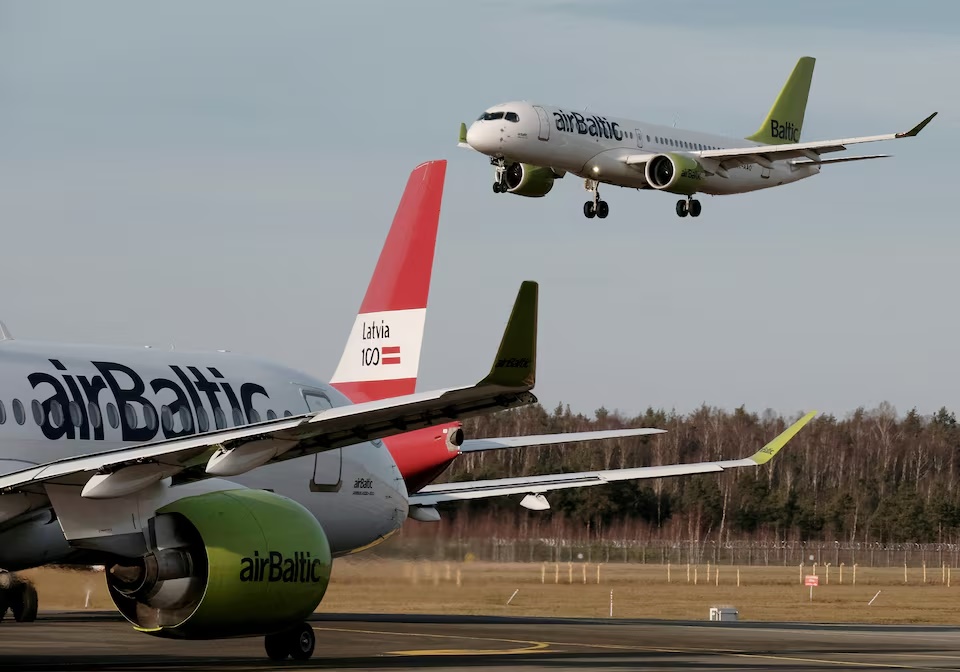
He noted that Cathay is also actively supporting the policy aiming to raise the share of SAF used on flights departing from Hong Kong International Airport to between 1 and 3 percent by 2030. The airline is already purchasing and using SAF, including fuel produced in China, while investing in future supplies and next-generation technologies and working with cargo customers to create new demand.
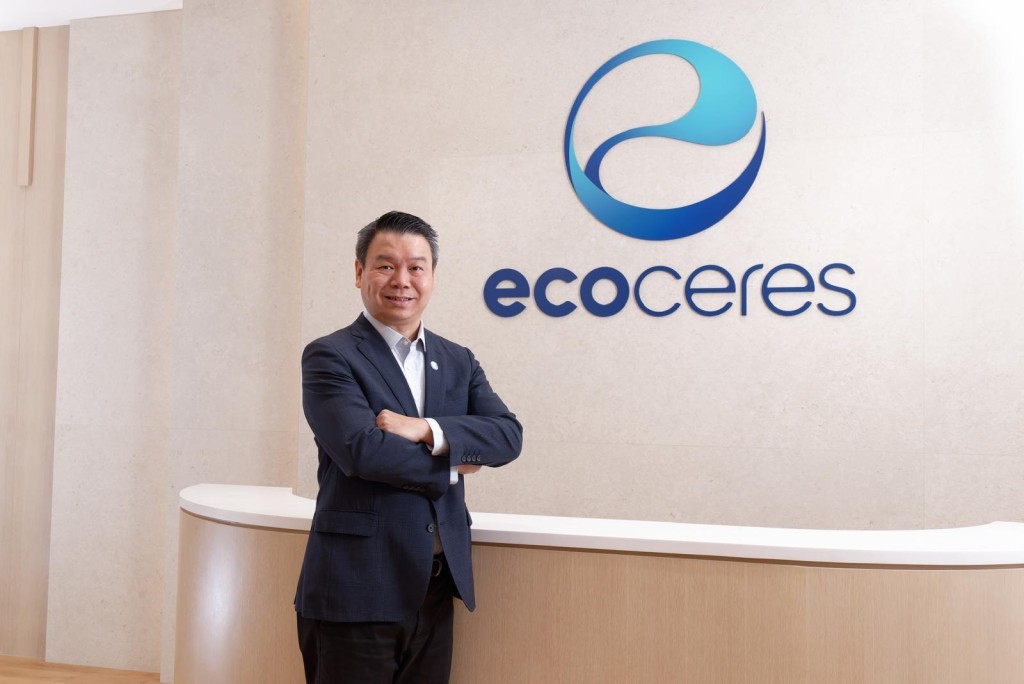
Alan Chan Ying-lung, the co-chairman of Ecoceres — a Hong Kong-incubated sustainable fuel and green molecules producer that will build the first complete SAF supply chain across the Greater Bay Area — stressed that Hong Kong should view SAF not only as a decarbonization measure but also as strategic aviation, energy security and industrial infrastructure for the Greater Bay Area.
He described Hong Kong’s unique opportunity to build a Greater Bay Area SAF ecosystem that can advance climate goals, strengthen aviation competitiveness and enhance energy resilience at the same time.
“To realize this opportunity, however, policy must move beyond broad aspirations towards clear, investable demand signals,” Chan stated. “The cost premium of SAF must also be shared through durable market mechanisms, supported by regional production underpinned by internationally credible certification, traceability and lifecycle carbon accounting.”
He also highlighted EcoCeres’ role in demonstrating that waste-based SAF can be scaled today, while helping the sector diversify feedstocks and build the systems required for long-term, internationally compatible growth.
Business Environment Council chief executive Simon Ng Ka-wing recommended to have a comprehensive study of tailored demand-side measures to determine which mechanism, or combination of mechanisms, can deliver the government target fairly and efficiently.
He noted that the Council supports the development of a carefully timed and commercially structured local blending capability that operates on strict open-access principles.
BEC also recommends establishing an interdepartmental Greater Bay Area task force to address customs procedures, tax treatment, testing and the regulatory classification of SAF for the Dongguan initiative.