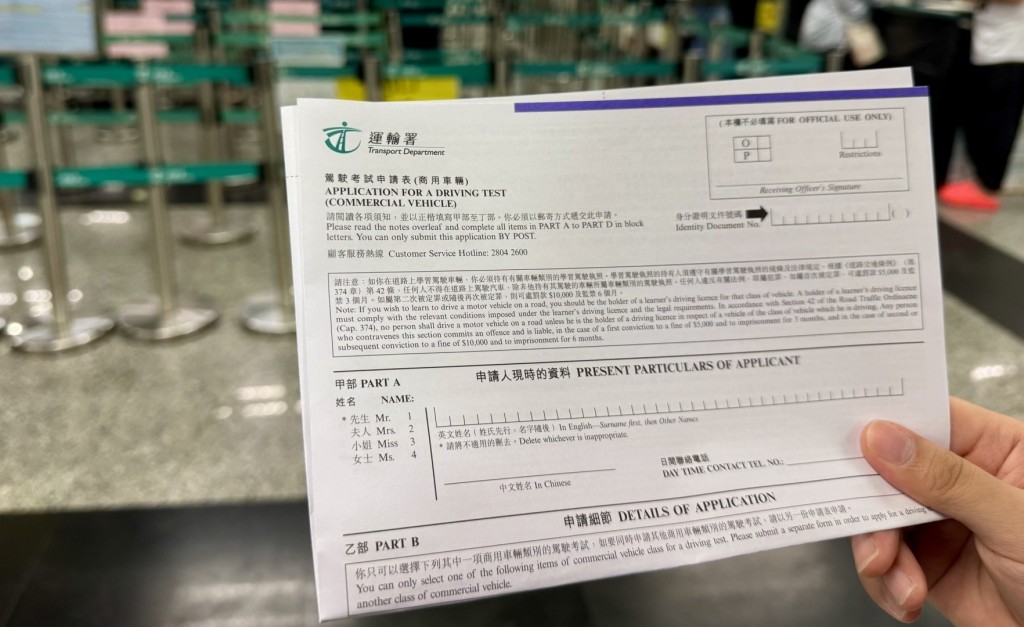
Lawmaker Mark Chong Ho-fung said that there will be sufficient drivers when the first batch of ride-hailing licenses is issued in November, as more than 1,000 online applications were received for the new combined written test for taxi and ride-hailing drivers on Monday.
Speaking on a radio program on Tuesday, Chong said that some drivers had previously obtained taxi licenses, which can be converted to ride-hailing licenses without additional testing. He said that, together with candidates who pass the new combined test, this would meet market demand.
On the new examination format, Chong said that while the overall difficulty level remains similar to the old taxi written test, the updated questions include skills related to technology applications, such as operating ride-hailing platforms and electronic payment systems. By contrast, road-knowledge requirements have been simplified.
Still, he stressed that knowledge of major routes, landmarks, and university locations remains necessary, as GPS navigation can occasionally be inaccurate or lose signal in rural areas.
Chong also reminded that, under the rules, only passengers would be penalized if taxi drivers fail to advise them to fasten seatbelts. However, ride-hailing drivers face direct penalties if they fail to ensure passengers wear seatbelts.
Following the introduction of stricter penalties for illegal ride-hailing services, Chong said hailing a ride through platform mobile apps now takes slightly longer, with average wait times increasing from one to two minutes to around three to four minutes, along with minor fare increases.
Chong said the new regulations are a strong deterrent, particularly for part-time drivers. He expected full-time ride-hailing drivers to reduce their trips, and some may switch to driving taxis instead.