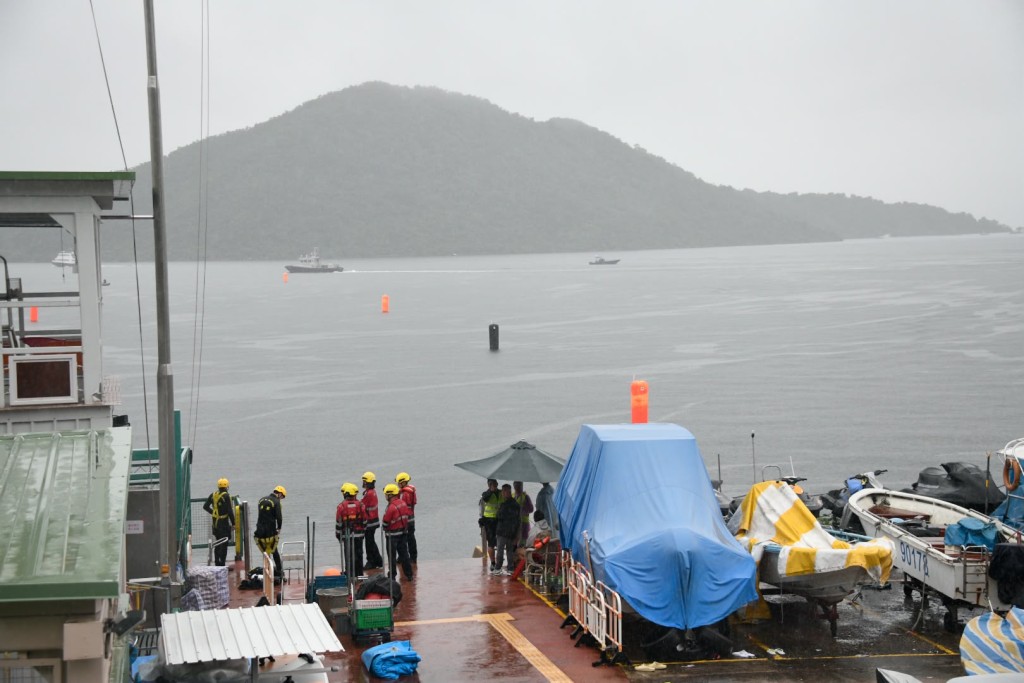
The Triathlon Association of Hong Kong China stated that the Tai Po triathlon on Sunday was held under safe conditions before it turned tragic when a 59-year-old athlete was found dead after entering the water.
The victim, believed to be a retired marine police officer, went missing during the swimming segment at Tai Mei Tuk. He was later found after a seven-hour search and pronounced dead in hospital.
In response to media inquiries, the association said weather conditions were suitable 20 minutes before the race, with no Amber Rainstorm Warning, no rain, no thunderstorms within five kilometers, and high sea visibility at the competition venue.
Despite the Amber Rainstorm Warning being issued shortly after the race started at around 6.10am, the organizer explained the race was deemed suitable to continue as light rain kept sea visibility clear.
It confirmed that 316 people participated in the race, which was divided into ten groups based on race distance and began at intervals to ensure a safe rescue-to-competitor ratio.
During the race, the association deployed 22 staff for water rescue support, with patrol speedboats and kayaks stationed across the swimming course.
The organizer said the staff immediately activated the emergency procedures around 7.15am after noticing the victim had not checked in after entering the water.
It stressed that the rescue team launched a search and remained on standby as law enforcement arrived to investigate.
Under race rules, the event would be canceled if the Observatory had issued a Red or Black Rainstorm warning, or a Strong Wind Signal No.3 two hours before the start.
If a thunderstorm warning, Red or Black Rainstorm warning is issued during the race, the event director may delay, alter the course, distance, or format, or even cancel the event.
Calls for reviewing standards to protect athletes
Speaking on a radio program on Monday, lawmaker Vincent Cheng Wing-shun called for a review of the hosting standards for the race due to the unpredictable nature of weather.
"There's no need to wait for the Observatory to issue a rain warning before calling it off," Cheng said, believing factors like thunderstorm warnings and actual wind conditions should be taken into account.
To better monitor race progress and enhance athletes' safety, he also suggested organizers consider equipping athletes with GPS trackers, which have been adopted in similar overseas events.
Similarly, Hong Kong and Kowloon Lifeguards' Union vice-chairman Wu Kai-wing agreed that weather warnings alone are not enough, and that organizers must also check rainfall radar, rain band movement, and wind direction.
"Strong winds can turn clear skies into a storm within 15 minutes," he warned.
Citing cases where competitors can suffer cardiac arrest during the swim and sink within seconds, he noted that many overseas and mainland water events now require athletes to wear bright-coloured water safety buoys around their waists to help identify their position in the water.
While acknowledging concerns that buoys might hinder swimming, he stressed safety should always come first and it would be fair if all competitors were wearing them.