With forged press credentials, professional-grade equipment, and perfectly scripted interview outlines, an organized ring of fake reporters is targeting Hong Kong exhibitors to trade "features" for costly contracts.
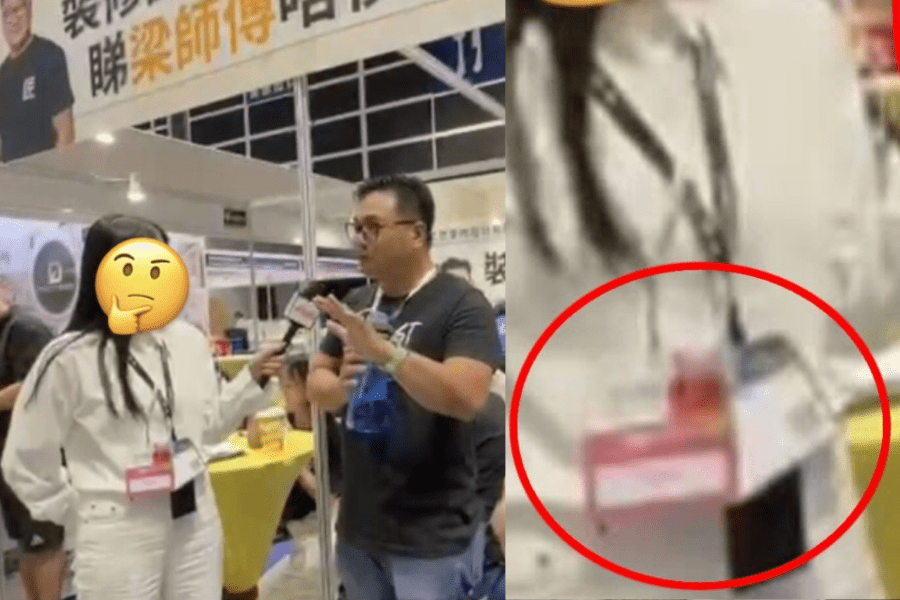
The incident came to light when Leung, an influencer and renovation contractor, shared his encounter with a self-proclaimed three-man CCTV crew online at Hong Kong's Home Expo. According to the photos, the female “reporter” was dressed in a white shirt, wearing a seemingly legitimate press pass and holding a microphone.
Although Leung was initially convinced by their professional equipment and credentials, suspicions grew when the crew invited him to Futian, Shenzhen, for an "exclusive interview" on Sunday (June 28)—the final and busiest day of the expo.
Leung later received an "interview outline" that raised a red flag when it listed the company on a "Candidate List for the Integrity Entrepreneur Conference"—a list he believed his company had no business being on.
Feeling uneasy about the "interview," he uncovered a scam tactic after some research, in which fake journalists pressure victims into signing contracts worth tens of thousands of yuan or purchasing worthless plaques.
He also noted that the team requested identity card verification before the interview—something he had never experienced in years of media interactions.
Leung's post triggered a flood of responses from other exhibitors who reported similar encounters at various venues. One exhibitor said they encountered the same group recently but declined the interview, noting that nearby exhibitors also felt off after the group asked to add contacts via WeChat.
Others also reported the fake crew sightings at other events, ranging from pet shows to ECA Expo, and more. According to several exhibitors, the fake journalists usually operate in a three-man crew, moving between exhibition halls and approaching multiple booths.
Alarmingly, another exhibitor who runs an escape room business received the same invitation to Shenzhen on Sunday, revealing that several groups of "reporters" were at the expo looking for potential targets.
An online user shared a former boss's experience of falling for the scam, paying over 30,000 yuan to be featured on one of the broadcaster's shows. However, the final product was only a few photos of questionable authenticity, with no video ever delivered.
Commenters also chimed in, noting that some scammers offer a detailed form and workflow to lure victims into an interview in Beijing.
The incident has sent many citizens into shock over how such an organized scam could operate openly at the city's major exhibition venues, where using false documents is a serious criminal offense under Hong Kong law.
Leung said he has notified the event organizers and urged them to warn other exhibitors, calling on businesses across all industries to stay vigilant.
According to reports, scammers impersonating the media have formed a well-developed ring in the mainland, where CCTV reported two cases in Heilongjiang province involving fake CCTV journalists who defrauded victims of up to 200,000 yuan. The scammers not only reportedly forged press credentials featuring fake website QR codes, but also fabricated the existence of a dedicated “CCTV Workstation."
More cases were seen in the Greater Bay Area as well, where a Guangzhou media company was found operating a fake "CCTV South China Reporter Station," forging official seals and authorization letters.
Through imitating producers of popular programs such as Bite of China, the syndicate scammed hotels and local eateries for advertising fees, and three ringleaders were sentenced to prison terms of 11 months to 1.5 years.
Additionally, a Jiangxi man posing as a "CCTV chief director" who lured victims with promises of TV features and awards was arrested and sentenced to three years in prison and fined 20,000 yuan last February.