Police have arrested 29 people linked to a loan shark syndicate with a family-run money-laundering ring, where minors as young as 14 were employed to carry out red-paint vandalism to pressure victims into repaying debts.
The arrests came after a seven-day operation conducted between June 17 and 23, targeting loan sharking and phone scams. According to the authorities, the syndicate operated a sophisticated crime network, splitting tasks into different locations without physical contact to evade detection.
It is reported that three bases were established in Tsuen Wan, with the first operating as an illegal loan call center that posed as a licensed finance company, randomly calling victims to lure them into borrowing money. The syndicate will make use of the victim’s personal data to launch phone scams against their family members, even if their loans had been repaid.
Through collaboration with a family-run money laundering group that operated from their home and a neighboring industrial unit, the syndicate relied on family members to control puppet bank accounts and handle the criminal proceeds.
Meanwhile, the syndicate would recruit teenagers, with some as young as 14 years old, in illegal debt collection through vandalism such as splashing red paint.
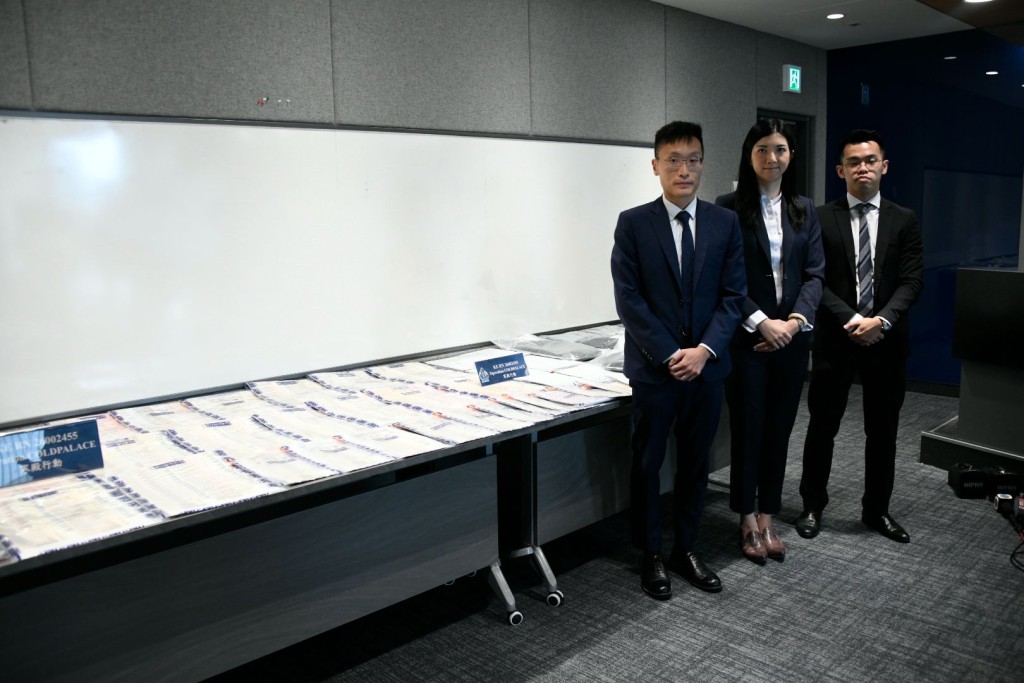
The operation has resulted in 29 arrests, compromising 17 men and 12 women, aged 14 to 70, including triad-affiliated ringleaders, money-laundering family members, puppet account holders, and debt collectors. During a raid on a 1,300-square-foot Tsuen Wan industrial unit, police seized large quantities of phones, SIM cards, computers, loan application forms, and call scripts for fraud.
A police spokesperson added that the arrests followed the discovery of a new loan-sharking model combined with phone scams that had emerged since early this year. The syndicate would first offer small loans with the deduction of unreasonable handling fees, then charge 25 to 50 percent interest over just four to seven days.
When the victims fail to repay, the syndicate will then force them into stricter loan terms to pay their old debt, trapping them in a crippling cycle. Notably, the annualized interest rate could reach a staggering 450 to 3,000 percent.
Yet the syndicate would go further with a "debt restructuring" scam, calling victims' family members with false claims of unpaid debts, exploiting their panic to extort more money while debt collectors carried out threats and vandalism.
In-depth investigations also revealed that the syndicate had trained staff with "brainwashing" techniques, requiring them to write short, medium, and long-term goals and set daily targets. Ringleaders were found demanding that staff share news articles daily to practice their speaking skills—making their persuasion stronger with smoother pitches.
As for the money-laundering ring, the investigation revealed it was managed by a pair of twin siblings, with their father and elder brother overseeing operations from behind. The group offered HK$10,000 to HK$15,000 to individuals eager for quick cash to open puppet bank accounts. The syndicate was also found using cryptocurrency.
Officers seized approximately HK$300,000 in cash, electronic devices, SIM cards, ledgers, and bank cards not belonging to the arrestees during the raids.
Stressing criminal damage as a serious crime, officers noted it carries a maximum penalty of 10 years in jail, while money laundering can lead to 14 years in jail and a HK$5 million fine.