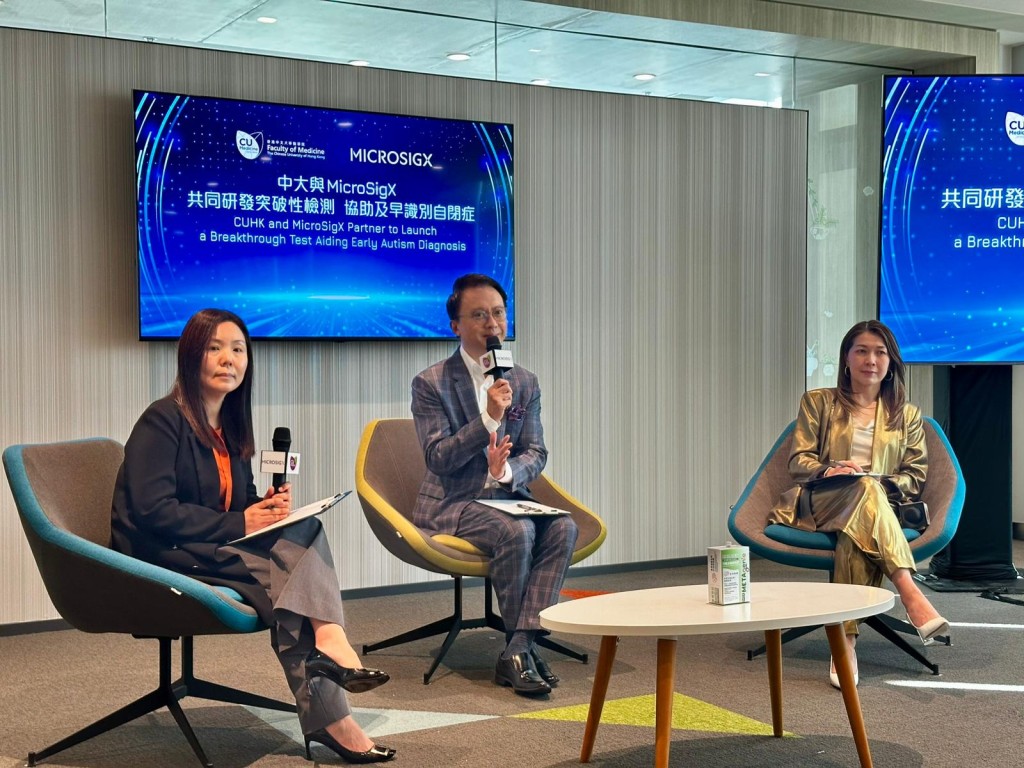
The Chinese University of Hong Kong’s Faculty of Medicine (CU Medicine) will launch a program next year offering free gut microbiome testing to 200 children to help assess the risk of autism spectrum disorder (ASD).
The initiative is based on a collaboration between CU Medicine and its spin-off company, MicroSigX Biotech Diagnostic, which has developed what it describes as the world’s first “AI-powered multikingdom microbial biomarkers technology” designed to support early intervention for high-risk cases.
The technology builds on earlier CU Medicine research that found children with ASD showed delayed gut microbiome maturity compared with typically developing children.
The test requires a small stool sample to measure microbial characteristics, including bacteria, archaea, and viruses. The data are analyzed using artificial intelligence to generate an ASD risk score for each child.
Test results will be available within two to three weeks. A negative result indicates that ASD can be ruled out, with a predictive value of more than 95 percent.
In January, the research team will partner with a non-profit organization to roll out a pilot program offering free testing to 200 eligible preschool children aged between 18 months and four years who show suspected signs of autism but have not yet received a formal diagnosis.
The test is expected to be made available to the public in the third quarter of next year, with the aim of helping parents detect autism in their children at an early stage.
Associate Dean (Research) and Croucher Professor in Medical Sciences Ng Siew-chien said most children with ASD show symptoms between the ages of one and one and a half, but many do not receive a formal diagnosis until around age three.
She added that the patented technology received certification under the Breakthrough Devices Program of the U.S. Food and Drug Administration last year, recognizing its potential as an innovative adjunct diagnostic tool.
Sandra Chan Sau-man, professor in the Department of Psychiatry, said the test could provide doctors with clinical reference data to help rule out low-risk cases, easing parents’ concerns and allowing resources to be focused on higher-risk groups.
Francis Chan Ka-leung, professor of Medicine and Therapeutics, said the pilot scheme will prioritize families with financial difficulties, while the test will be offered at an affordable price when it becomes publicly available in the third quarter of next year. He added that, in the longer term, the team hopes to promote the test in overseas markets.
CU Medicine also plans to establish an Advancement Centre for Autism to provide training for community healthcare professionals and offer more comprehensive support for families.