Political tensions and visa uncertainties have prompted some Hong Kong and mainland students to seek alternative study-abroad destinations instead of the United States, according to academic consultants.
And a mainland education agency said many students and parents, after considering tuition costs, recognition of degrees for employment in China, and safety concerns, are prioritizing studying in Hong Kong or Singapore.
The founder of Litz USA Student Service, Kitty Wu, told Sing Tao Daily, sister newspaper of The Standard, that the US tariffs and recent revocation of student visas have inevitably affected the interest of Hong Kong and mainland students studying in America.
Ng Po-shing, a student guidance consultant at Hok Yau Club, said US policies toward China, high living costs, visa issues, security concerns and racial discrimination have contributed to the flagging interest.
The number of secondary school students pursuing studies in the United States has declined over the past decade, dropping from 363 in 2015 to just 87 in 2023, according to the Education Bureau’s annual report on secondary six students' pathway survey.
Ng said most students prefer study-abroad destinations such as the United Kingdom, Canada and Australia.
Recently, the US government has abruptly canceled visas for many international students – including some from China – sowing panic, especially for prospective students and those who hope to return home for a summer break.
A Chinese student who was three weeks away from graduation received a notification from her university saying her F-1 student visa has been revoked due to an “other” criminal offense, mainland news website Jiemian reported.
The student said she has been passing classes with flying colors and that she never drinks. She does not even drive, she added. The only “blemish” on her record was an incident a year ago when she had a dispute with her ex-boyfriend, prompting a neighbor to call police.
On Chinese social media RedNote, many mainlanders in the United States are debating whether to go home for the summer. Some majoring in “sensitive subjects” such as biochemistry and optoelectronics are choosing to stay where they are to avoid problems at border controls on their way back to the United States.
Others do not feel the same way. “Since there’s always a risk of deportation even while staying in the US, I might as well return home – it’s just not worth the anxiety,” one student said.
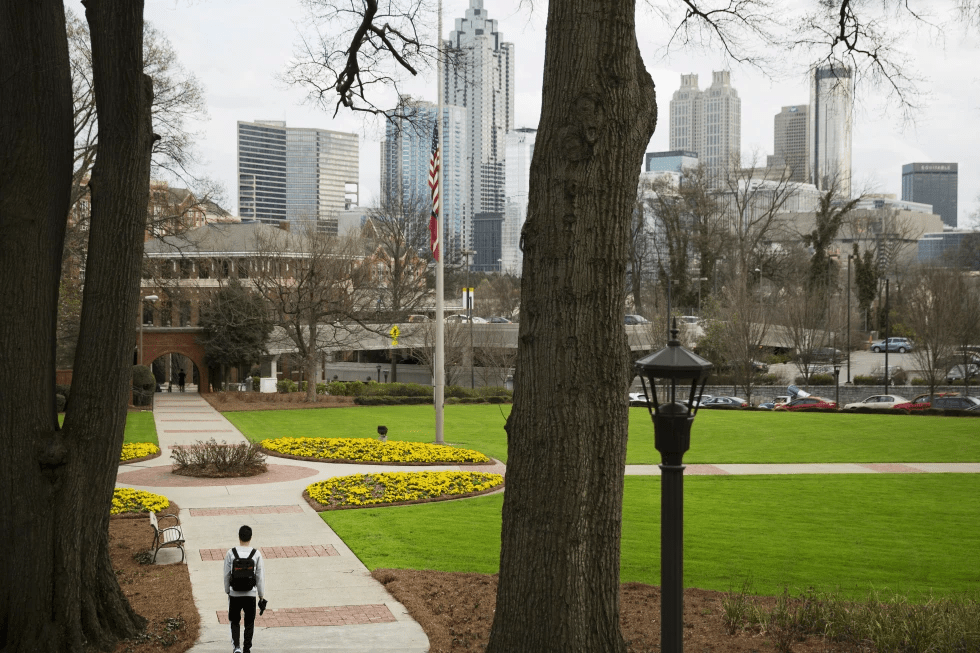
A mainland student who has been accepted into the Georgia Institute of Technology told Sing Tao she remains committed to her study-abroad plans but is also beginning her job search as a precaution.
Just in recent weeks, at least 790 students at more than 120 colleges and universities have had their visas revoked or their legal status terminated, according to an Associated Press review. Advocacy groups collecting reports say hundreds more students could be caught up in the crackdown.
Around 1.1 million international students were in the United States last year, AP reported. International students are not eligible for federal financial aid, and their ability to pay tuition often factors into whether they will be admitted to American schools.