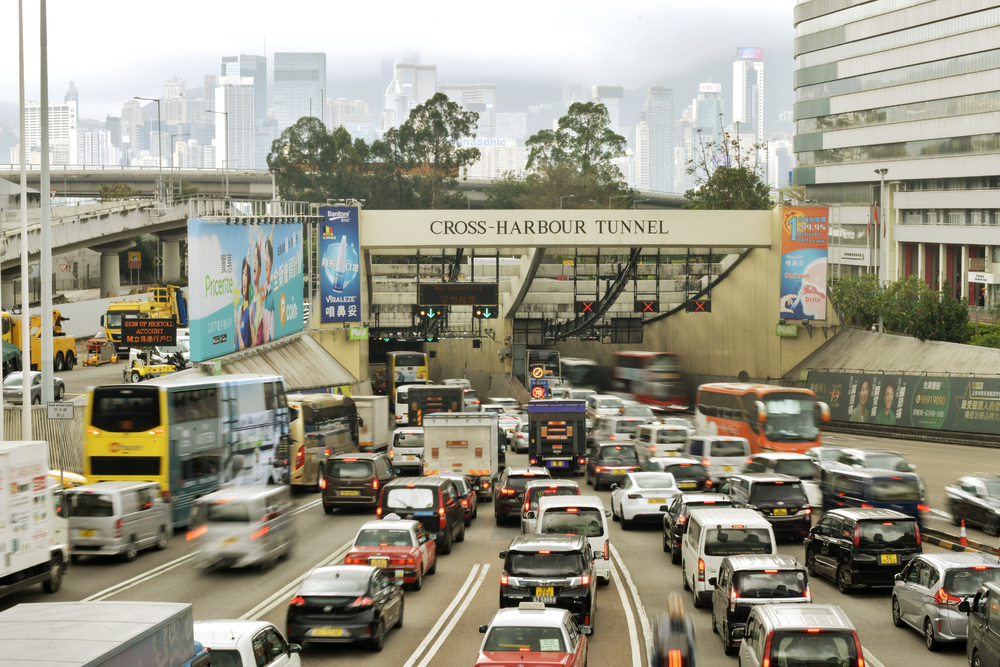
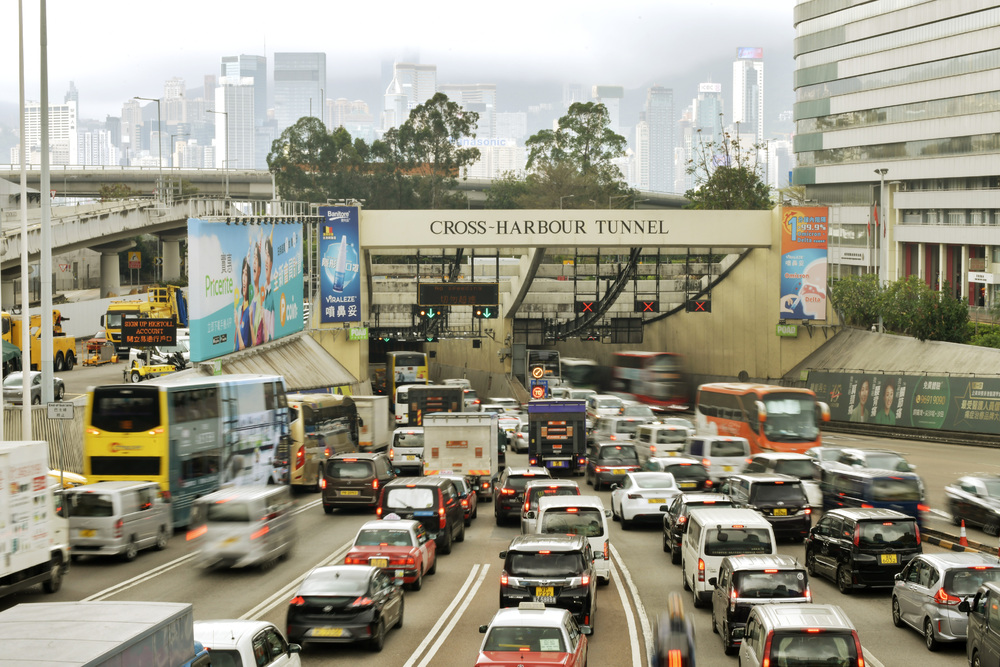
The crux of the problem in the controversy over tunnel tariffs lies with our ability to redistribute traffic flows in such a way as to ease congestion in the Hung Hom crossing.
There is an inevitable constriction at tunnel portals, as most harbor crossings have only two lanes each way, but the roads leading to them have many more lanes, so at peak hours, traffic builds up on the approach roads as the traffic merges.
With higher tolls for certain sections of roads, including congested tunnels, some drivers will choose roads with lesser traffic, as they can get to destinations at lesser costs despite the longer routes involved.
The calculations are complex, as drivers have different journey origins and destinations, and fuel costs and time spent on the road differ.
The way traffic engineers estimate the effect of toll changes is often done by interviews and questionnaires.
The accuracy of analytical results therefore depends on the way the questions were asked and the degree of seriousness of the replies from respondents.
That is why engineers’ predictions sometimes do not meet anticipated results.
But in general, they provide a good indication of directions and trends.
With our three crossings, the Hung Hom facility is full most of the day, from very early in the morning to late at night.
The Eastern crossing can generally cope with traffic flows, except during morning and evening peaks.
Western is relatively free of problems, and that’s not just because it has three lanes each way but also because it has long approach roads that help guide traffic into the correct lanes without too much criss-crossing.
The Transport Department’s plan for toll changes is sound, but the actual results may depends on the reaction of drivers.
Private car drivers will not mind paying a higher tariff for a shorter journey, as it should help them save time.
Commercial vehicle drivers are a lot more sensitive to the cost factor and will choose routes with the lowest costs, even if they have to spend more time on the road.
Taxi drivers will choose the shortest and quickest route when a passenger is in the car, but may otherwise choose a longer route if it helps them to spend less money.
Thus the proposed tolls are designed to take care of all these requirements, and in theory should help redistribute traffic to even out the peaks and reduce congestion.
However, human behavior changes with time and we may eventually find that some fine-tuning of tolls may be necessary to achieve the desired results.
There is no silver bullet to reduce congestion. We can continue to build more harbor crossings, but to do so, we will need a lot more land resources and capital.
Or we can try and charge higher tolls to suppress traffic volumes, by diverting some traffic to public transport.
Neither of these solutions would be simple and singularly effective and will be vulnerable to objections from different sectors of the community.
Fortunately, we have an excellent public transport network with the priority on the use of railways, which have a far larger throughput.
Trains may be relatively less comfortable, but a lot more convenient and economical, both in road space and in costs.
Commuters here can often take advantage of the efficient public transport network to get to their destinations with more accurate estimated times, meanwhile helping to reduce road traffic.
Changing commuting habits is always difficult, but I believe our Transport Department is doing its best to cope.
Veteran engineer Edmund Leung Kwong-ho casts an expert eye over features of modern life