Read More






Peace talks with an unpredictable president | High-flier | Jeffrey Lam
14-04-2026 04:51 HKT


Chinese auto giant BYD's female CFO earns more than its founder last year
15-04-2026 19:12 HKT
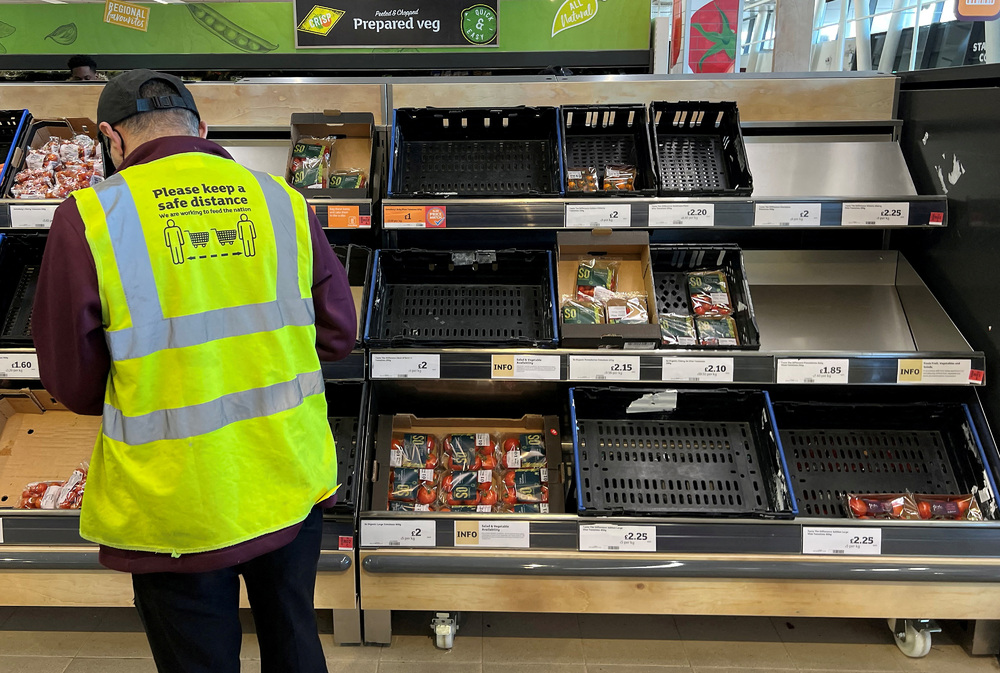
A "salad crisis" affecting British supermarkets hit headlines this year, but shoppers across Europe and the Middle East seeking basic groceries - from pasta to beer to toothpaste - are also finding gaps on the shelves.
For supermarket bosses are struggling to predict demand as the receding experience of Covid, new ways to buy, and a biting cost-of-living crisis change shopping habits.
Supply chain issues and a reluctance to strike deals with suppliers while commodities prices are high also contribute to erratic stocks of goods as diverse as chocolate, ketchup and shampoo, with war and weather playing a part too.
"The inflationary pressure of late means people are switching from products in a more unpredictable way - a more brutal way than they have done historically," says Luke Jensen, executive director at British online supermarket Ocado. "Because of higher prices people are buying smaller amounts of groceries overall and may have become more careful not to waste food."
Jensen is also chief executive of Ocado Solutions, which provides grocery delivery technology to European supermarkets such as Sweden's Ica, France's Casino Group, Alcampo in Spain and Auchan Retail in Poland.
Like many supermarket operators, Majid Al Futtaim Retail uses artificial intelligence to monitor and order about 90 percent of food supplies for its Carrefour stores across the Middle East.
Chief executive Hani Weiss says it recently tweaked the parameters set for the technology to cushion supply, adding more warehouses and storage to ensure it can meet demand.
"Despite all of that, there are eight to 12 percent items missing from shelves," he says. "It used to be around 7 to 9 percent prior to 2020, but now we've seen it increase drastically."
Changes to shopping habits as a result of Covid lockdowns and the growth of online retail are also a factor, though with lifestyles still adjusting as the pandemic runs down it's hard to predict to what extent people will return to stores.
Kevin O'Marah, a former Amazon executive and founder of Zero100, a community for supply chains and operations leaders, says multiple ways to shop have left retailers puzzling over what to order and where.
But the "massive disruptions have really forced chief supply chain officers to try to get a better handle on planning technology," O'Marah adds.
Suppliers too are struggling to pin down what consumers will want, while rising commodities prices, shipping logjams and shortages of raw materials and labor have prevented them fulfilling some orders.
"Post-Covid growth dynamics combined with energy and political discontinuities mean retailers and their suppliers are finding it harder to accurately predict demand in a volatile marketplace," says Ewan Andrew, president of global supply and procurement for Guinness maker Diageo.
"Often there is a perfect storm of events that contribute to shortages, such as in some food supplies in Europe currently being witnessed."
Weiss at Majid Al Futtaim says the 14-month-old war in Ukraine, a major exporter of grains and oilseeds, caused massive problems for food producers, who had been forced to adjust their supply sources to address shortages. This has created a major issue in most of 16 Middle Eastern countries where the company operates, he adds.
Laurent Thoumine, Accenture's Europe lead executive for retail, says supermarkets in Britain, France, Germany, Italy and Spain have had the worst stock issues.
Products that are scarce in some stores include ketchup, pasta, chocolate, tea, potato chips, toothpaste and pet food.
"Certain ingredients are simply in short supply like tomatoes for ketchup," says Bernstein analyst Bruno Monteyne, adding that problems at some factories have also hurt food production.
And extreme weather in Spain this year has hit tomato supplies in Europe, while higher costs for the fruit have prompted manufacturers like Kraft Heinz to raise prices.
In turn, retailers like Tesco have temporarily pulled products from shelves, risking driving shoppers to rival as they tough out supply talks into which all these factors feed.
"When products finally make their way to supermarket shelves we're seeing the end result of multiple negotiations," says James Brown of consultancy Simon-Kucher & Partners, which advises several major consumer goods makers on pricing strategies. "Those elements on the puzzle board have not been caused by tomatoes in Spain freezing accidentally."
REUTERS