Read More








Peace talks with an unpredictable president | High-flier | Jeffrey Lam
14-04-2026 04:51 HKT


Chinese auto giant BYD's female CFO earns more than its founder last year
15-04-2026 19:12 HKT




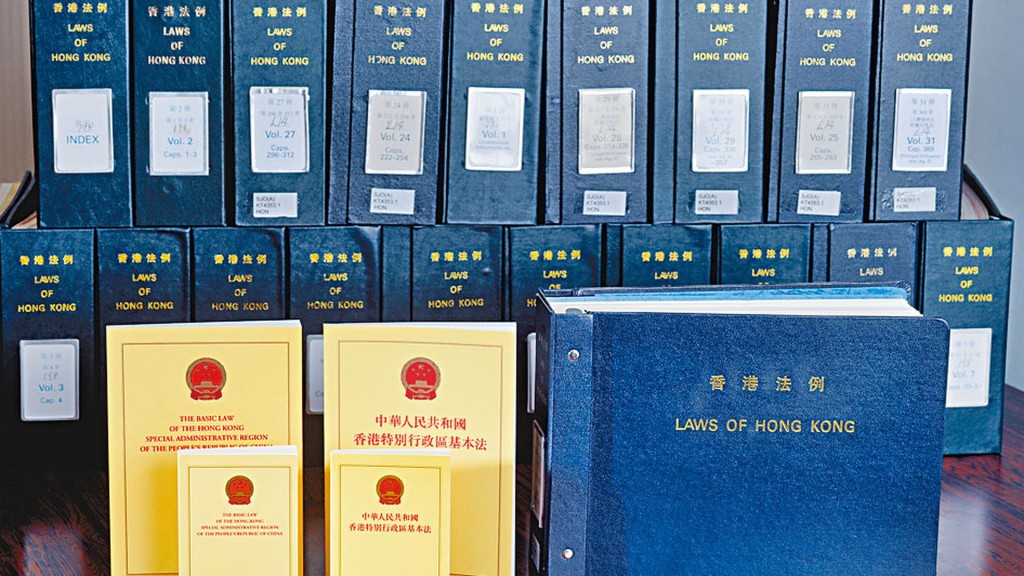
One often hears about judicial reviews. In the recent past, many such JR have aroused much debate. What is it? In the guide for administrators titled “the Judge over your shoulder,” the Department of Justice has helpfully summarized it as “the review by … the Court of any exercise, or any refusal to exercise, of any public decision-making powers … Its purpose is to determine whether that decision … is lawful and valid.”
It is important to remember that the laws are passed by the Legislature and enforced by the Executive. Everyone is equal before the law, whether a citizen or the government, and everyone is subject to it. This is the rule of law. In some jurisdictions, there has been a misunderstanding, wherein JR is seen to mean that the Court is hampering or curtailing the powers of the Executive, and therefore amounts to judicial encroachment or “overreach.”
In fact, it is the exact opposite. What powers are granted to the Executive, and how and when to exercise them, is a matter for the Legislature. The Legislature has to weigh many pros and cons and matters of policy, and this is often the result of much debate and fine-tuning. It is not for the Courts to make policy; the Court’s role is only to ensure that everyone, whether citizens or the Executive, follows the laws passed by the Legislature. This also ensures that decision making is procedurally proper and not irrational. The Courts are concerned with legality only, not the substantive merits of decision-making.
Looked at from this angle, it is indeed correct to say that the Court is looking from behind the shoulder rather than placing itself on the back of the decision-maker. This is for the good of all and improves governance.