Since 1997, Hong Kong has burnished its credentials as a leading global center for arbitration and mediation services. With its common law legal system and geographical positioning, it is an ideal venue for the resolution of commercial disputes. The Hong Kong SAR Government has actively promoted alternative dispute resolution (ADR) as an effective means of resolving conflicts in different walks of life, and its efforts are bearing fruit.
Although both arbitration and mediation seek to settle disputes without court proceedings, they are not identical.
Arbitration involves a formal dispute resolution process in which the parties agree to letting an independent arbitrator (or arbitrators) adjudicate. When the parties enter a contract, they include a dispute resolution clause, which means any disagreements that arise are dealt with privately without recourse to the courts. The arbitrator is invariably an expert in the particular field, and his or decision (“the arbitration award”) is, like a court judgment, final and binding on the parties.
However, mediation is less formal, and the parties in dispute voluntarily agree to participate. The mediator, a neutral figure with appropriate training, identifies the issues, considers possible solutions, promotes contacts between the two sides, and seeks to encourage an agreement. Unlike an arbitrator, a mediator does not reach a final decision, but simply facilitates an outcome agreeable to both parties. The process is entirely consensual.
Both arbitration and mediation have come into their own in recent times. This is partly explained by the costs of commercial litigation, which can be exorbitant. Court proceedings are often also protracted, and there are real incentives for parties in dispute to try to resolve matters without having recourse to the courts.
According to the 2021 Queen Mary University of London International Arbitration Survey, Hong Kong is now the world’s third-most preferred seat of arbitration (after London and Singapore), with its arbitration laws following international practice. This has undoubtedly benefited people wishing to take advantage of the China market.
Moreover, arbitral awards made in Hong Kong are enforceable in over 150 contracting states to the New York Convention. The Hong Kong International Arbitration Centre (HKIAC) is highly regarded globally, and its services are in great demand. It currently specializes not only in arbitration, but also mediation, adjudication (common in construction disputes) and domain name dispute resolution.
Although arbitration may have been deployed for longer, it is nicely complemented nowadays by mediation, and Hong Kong is excelling in both areas. The HKIAC says mediation “has proven an outstandingly successful management tool for resolving difficult disputes,” and its profile is rising. It can also play a part in widely different areas, including, for example, family disputes intellectual property disputes and trade disputes.
Indeed, the United Nations Charter seeks the peaceful settling of international disputes through dialogue and consultation, and mediation is a practical example of how disagreements can be amicably resolved in various situations. It furthers the Charter’s basic purposes and principles, and China fully recognizes its value. Thus, the National 14th Five-Year Plan supported Hong Kong’s development as a center for international legal and dispute resolution services in the Asia-Pacific Region, and this is now coming to a head.
After China and other countries that believe in the principles of discussion and co-development successfully concluded their negotiations on the Convention on the Establishment of The International Organization for Mediation (IOM), it was agreed that the signing ceremony would be held in Hong Kong on May 30 (followed subsequently by the ratification processes of the participating countries).
A consensus, moreover, has been reached that the IOM’s headquarters will be established in Hong Kong. This is a huge feather in the city’s cap, which nobody should underestimate. It is the first time the headquarters of an international body has been situated in Hong Kong.
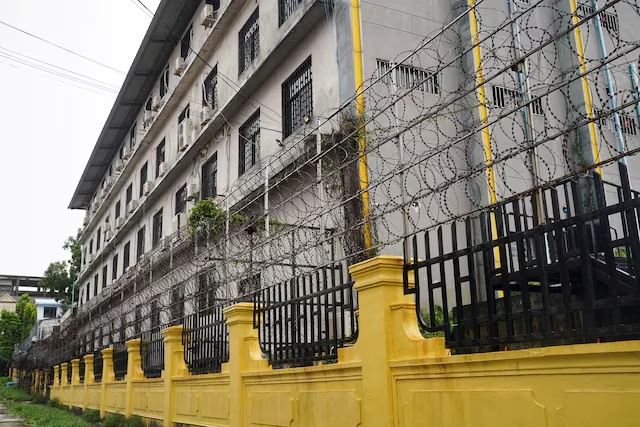
The IOM will be housed in state-of-the-art facilities in the former Wanchai police station, which is currently undergoing conversion with a view to a year’s end opening (or early next year). Its significance lies in its role as the world’s first global intergovernmental legal organization dedicated to resolving international disputes through mediation. Its status will be on a par, for example, with world bodies that specialize in other types of dispute resolution, including the International Court of Justice and the Permanent Court of Arbitration in The Hague.
The IOM’s opening will undoubtedly help to cement Hong Kong’s status as a trailblazer for alternative dispute resolution services in the Asia-Pacific region. As the deputy justice secretary, Horace Cheung Kwok-kwan, has explained, Hong Kong will be a “hub of mediation” that will attract not only people from around the world who need to settle disputes, but also international groups, NGOs and academic institutions. This, he added, will enhance Hong Kong’s international position and popularity, and bring ancillary benefits to the region.
The opening ceremony, at which the foreign minister, Wang Yi, is expected to be present, will be attended by senior representatives from almost 60 countries and some 20 international organizations. They will undoubtedly be impressed to see how Hong Kong is not only rising to the challenge of hosting the IOM, but also going the extra mile. They will also be assured to know that Hong Kong is continuing to go from strength to strength under its “one country, two systems” governing policy.
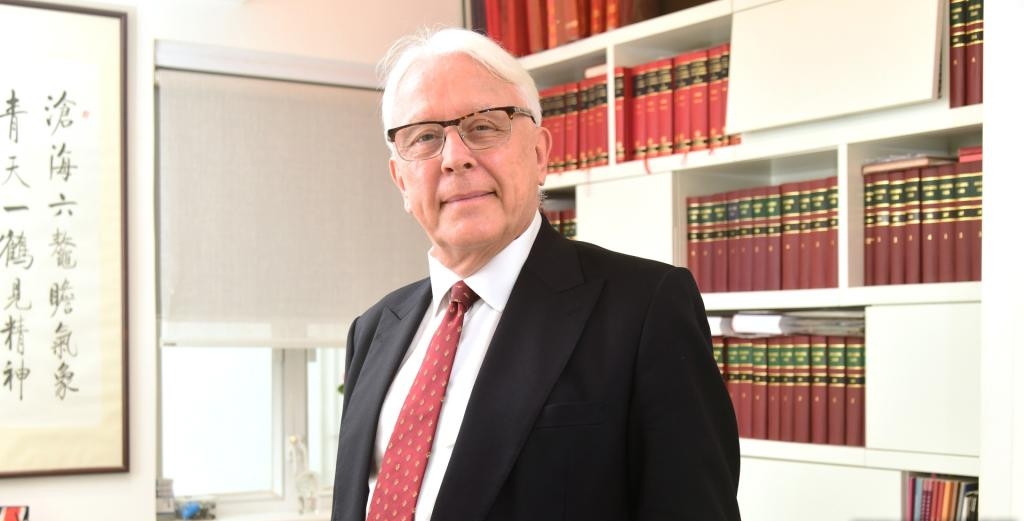
Grenville Cross is a senior counsel and law professor, and was previously the director of public prosecutions of the Hong Kong SAR
May 27, 2025