Read More







Peace talks with an unpredictable president | High-flier | Jeffrey Lam
14-04-2026 04:51 HKT



Chinese auto giant BYD's female CFO earns more than its founder last year
15-04-2026 19:12 HKT



Do gambling companies have a social responsibility to protect gamblers from losing too much? That is the highly unusual question brought before a court in Britain.
Scott O'Brien is what we here would call a tycoon. He started life with next to nothing, worked hard, and made loads of money from a recycling business, turning the junk that people throw away into a very profitable business. You could say he is an inspired risk-taking entrepreneur.
But as well as a knack for making money he also had a weakness for another high-risk occupation - gambling. He lost so much to a 'luxury' London gambling company that he has taken it to court, demanding the return of 100,000 (about HK$1 million).
O'Brien claims the company has a duty to protect him from his addiction, which he admits has been a "dark and destructive" habit throughout his adult life and which once drove him to attempt suicide. He is 54.
In 2012 he became very cash rich after selling his business for 9 million, an event that catapulted his addiction. He became obsessed and even kept huge quantities of cash hidden in his home.
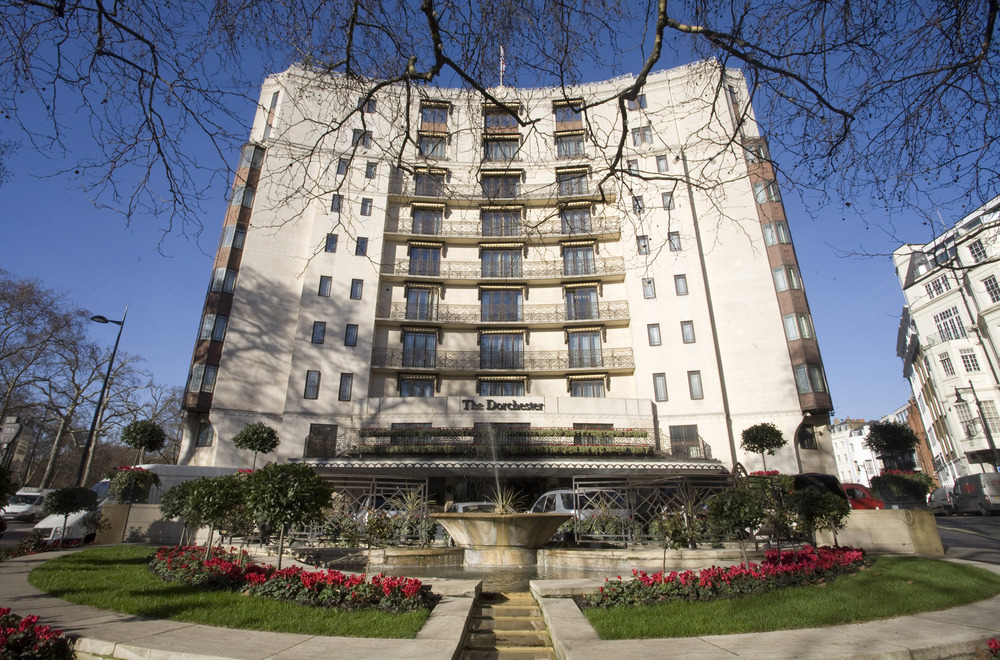
His favorite bets appear to have been dog and horse racing, a pastime that led him to the flagship outlet of a high-end bookmaker called Star Sports near London's famously expensive Dorchester Hotel,owned, needless to say, by one of the world's richest rulers, the Sultan of Brunei.
What is highly unusual is that O'Brien's lawyers are arguing Star Sports breached its duty to act in line with its "social responsibility code provisions" and that most of his losses "were due to Star Sports' failure to comply with the [code] applicable to its operating license." For good measure he is also suing for breach of contract in the sense that a contract is created between banker and gambler every time a bet is placed.
Star Sports is, of course, denying that O'Brien told them that he was addicted to gambling and insist a bookmaker has no "general duty of care" in such a situation.
O'Brien, for his part, maintains he told a member of Star Sports staff that he was a "compulsive gambler" and argues that the company should then have taken steps either to bar him from its outlet or to limit his wagers.
Star Sports' barrister told the judge at a hearing that O'Brien appeared to be very well off and gave no indication he was a compulsive gambling addict; he "portrayed himself as a successful businessman with a variety of interests, who lived in Knightsbridge, had a driver, dressed well and moved in wealthy social circles."
O'Brien's case could not have come at a more awkward moment for Britain's gambling companies because just a few days beforehand the Gambling Commission, the government regulator, fined the UK's biggest bookmakers William Hill a record 19.2 million for "widespread and alarming" failures to protect customers from substantial losses.
The commission appears to have established a rule that bookmakers have a "social responsibility" to protect their clients.
During the past 12 months it has penalized bookmakers 26 times with fines totalling 76 million.
What can Hong Kong learn from these events in Britain?
Might it be possible for an obsessive gambler at Happy Valley to reclaim his irresponsible losses from the Jockey Club?
And what about online gambling websites that are domiciled outside Hong Kong in the UK or elsewhere?
Could a Hong Kong punter who lost more than he could sensibly afford get back his money by claiming the bookmaker breached its "social responsibility?"
There is after all a popular online bookmaker named 888 which no doubt appeals mightily to many compulsive gamblers in Hong Kong.
Cheng Huan is an author and a senior counsel who practices in Hong Kong