Most Chinese Gen Z flood into top-tier cities for getting enrolled in a key university, finding a decent job, or meeting other talents. They live a more colourful life, but in the meanwhile, they are lonely and socially awkward.
“We are committed to assisting young people to find like-minded friends and offering a sense of belonging, which can’t be easily obtained in real life,” said Soul App’s chief executive Zhang Lu.
Zhang comes from a consultancy background. In 2016, as an internet newbie, she designed a prototype with PowerPoint and further set up a team of six people, which gave birth to Soul App, China’s popular gamified social platform featuring virtual identity and common hobbies.
As of 2022, Soul attracted 29.4 million MAUs (monthly active users). Moreover, about 80 percent of users are Gen Z.
Talk to the people of like mind under avatars
Each Chinese young person has only 2.5 close friends on average, a survey of 5,449 respondents by Soul App found in April this year. And about 57 percent of Chinese young people thought they were not good at, or felt pressured about offline interactions.
“Follow your soul, it knows the way” was the slogan when the app was launched.
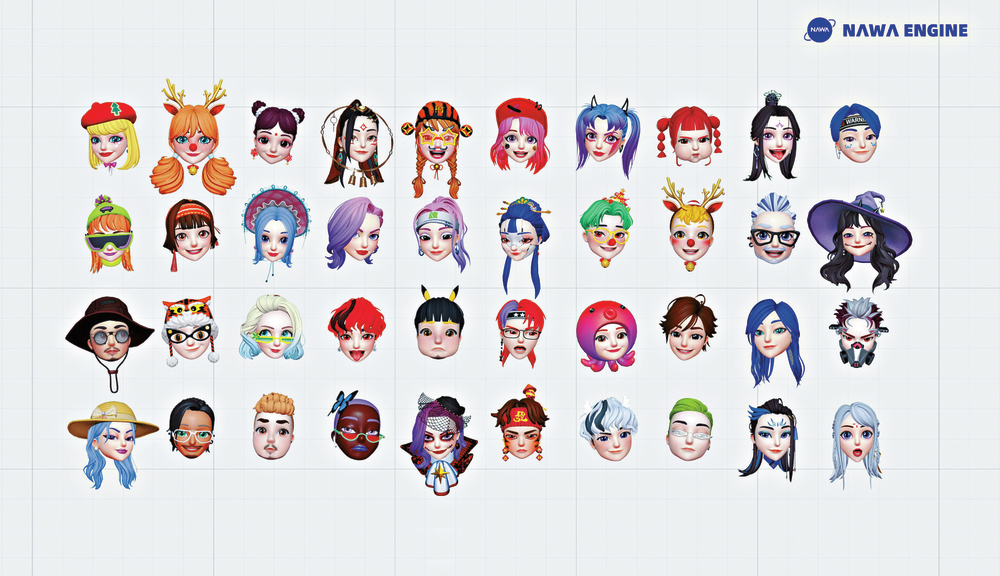
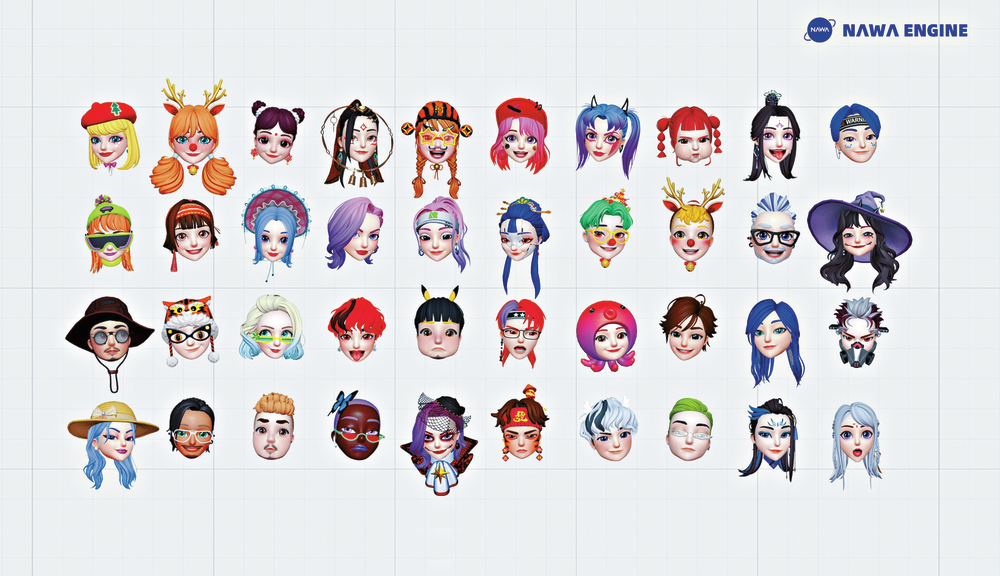
When beginning a journey in Soul, users need not reveal their faces in real life, but they are required to design their avatars, which showcase their virtual personalities and empower their self-value expression.
Gen Z feels more at ease talking with others under the avatars. “You are not here for getting ‘likes’ or recognition from your acquaintances. You just need to speak with the ones who can understand you,” said Zhang.
So how to reach out to the people of like mind?
“We found younger generations do enjoy socializing upon taste and same topics, which could be a good starting point,” noted Zhang.
With the help of ‘Lingxi’, an AI -powered relationship recommendation engine, Soul’s users with common hobbies will be automatically matched and can decide whether to start a private chat. Besides, users can send public posts and join audio party rooms based on certain hobbies or topics.
In the first half of 2023, a new trend of ‘dazi’ (Chinese slang for buddy) takes off in China, and the social behaviours based on hobbies starting from 2016 in Soul are highly consistent.
With interests trending toward more niche and specialized areas, finding dazi as a new form of networking doesn’t mean a compromise over emotional connection, but marks the beginning of a close relationship based on a shared passion.
In May alone, the number of topics and posts in Soul App related to ‘dazi’ jumped 76 percent and 136 percent from one month ago respectively.
“I unexpectedly got 2 concert tickets and had no idea about who I should go with, so I invited a net friend in a music interest group,” said a user. Soul is a platform where a gathering point for young users to find a dazi for almost anything – to support a charity, study for exams, or find a job.
Among those who have ‘dazis’, nearly half have 2-3, the survey by Soul App found.
“We aim to facilitate the building of one-to-one, one-to-many and many-to-many relationships, which are not limited to any specific gender,” said Zhang.
Soul doesn’t see itself as a dating platform, which is hormone-driven and typically focuses on finding an offline one-to-one relationship.
Zhang further added, “Not just for a love match, younger generations now want the apps to provide a more holistic experience that blends interest exploration and entertainment.”
Monetize socializing through diversified scenarios
To keep pace with the evolving demand of Gen Z, Soul App has been exploring diversified virtual scenarios with fun features. Nowadays, it has been seeing the returns.
The users did show their preference for avatars and other virtual socializing features, as value-added services accounted for 91.1 percent of Soul’s total revenue in 2022.
Besides the 2-dimensional version, empowered by a self-developed NAWA engine (a suite of multimedia technologies including keypoint detection, avatar creation and 3D rendering engine), Soul App introduced 3D avatars by applying video matching and Soul camera applying augmented reality technology. The combination of virtual and sound technologies provides more immersive interactions between the users and their surroundings.
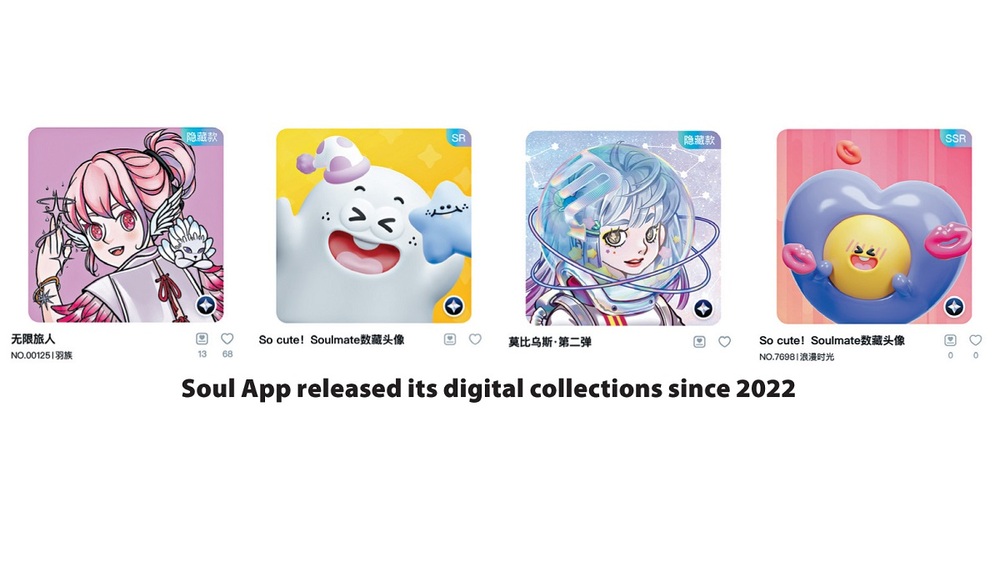
Last year, Soul App also released its first digital collection called ‘Mobius’, which can be applied to user profiles. A total of 15,996 pieces, with prices ranging from RMB108 to RMB158 a piece, were sold out within minutes.
More scenarios, such as Soul Bell, Audio Party Room, NAWA POP, and Giftmojis, also boost the company’s monetization. “The spending power of Gen Z can’t be ignored,” said Zhang.
Ze Bai (alias), a part-time avatar creator in Soul, noticed that people changed their avatars to match their emotions and created many imaginative avatars, which has brought him more than RMB50,000 in one month. In 2022, the average consumption amount of users who purchased avatars in Soul was RMB23.1, and a user had ever purchased up to 518 times.
According to iResearch, China’s Gen Z social networking market is estimated to reach RMB276.5 billion in 2026 from RMB93 billion in 2021, and the percentage of revenue in the mobile social networking market generated by Gen Z could expand to 67.1 percent in 2026 from 57.9 percent in 2021.
Soul App’s total revenue kept climbing from RMB498 million in 2020 to RMB1.67 billion in 2022, and its net loss margin significantly narrowed from 116.3 percent in 2020 to 30.5 percent in 2022.
Zhang responded that Soul has gone through rapid development and now should concentrate on quality growth. “We are glad to see Soul’s capability in monetization, but user experience should always be our priority,” she emphasized.
Aiming at meeting the changing demand of Chinese young people, Soul App has been applying more advanced technologies, including sweeping generative AI, to adjust its service portfolio.
The intelligent chatbot ‘AI Goudan’ can personalize conversations with users by learning people’s behaviours. Goudan demonstrates its capabilities in anthropomorphism and perception.
For instance, if you send Goudan a dinner photo, it may ‘guess’ this is your birthday gathering and take the initiative to send you a birthday blessing. Users are now encouraged to text Guodan photos, posts or even locations to see how it would respond.
In the near future, to help users obtain a better chat experience with others, Soul will launch an AI chat assistant to focus on private chat scenarios. And there will be more AI features to be introduced for better assisting users in realizing social and community interactions, such as leveraging AIGC to help users generate post contents and make friends.
A sense of happiness and belonging
The users in Soul App are called ‘Soulers’. In the past six years, Zhang said it was the recognition from the users that enabled Soul to stay in the fierce internet market in China, and it will remain a duty for her and the company to link individual souls and to provide ‘Soulers’ with a sense of happiness and belonging through gamified scenarios.
Soul App''s 3D Avatars