Read More
Hong Kong could consider setting tiered subsidies to enhance the HK$2 fare scheme to achieve a more equitable allocation of public resources, Ernst & Young Tax Services says.
ADVERTISEMENT
SCROLL TO CONTINUE WITH CONTENT
The authorities may set an annual subsidy cap of HK$800 per person for individuals aged 60 to 64, while maintaining the current subsidy system for those aged 65 or older, said Paul Ho Yiu-po, EY's financial services tax leader for Hong Kong.
This could save the government around HK$500 million per year, which can be used in other areas, Ho said at a briefing yesterday.
The scheme has come under increased scrutiny as the city's fiscal deficit persists even after the pandemic.
EY estimates the deficit for the financial year ending March will reach HK$98 billion.
However, the fiscal challenges will not simply be resolved through a natural economic recovery, according to the Hong Kong Economic Policy Green Paper 2025 published by the HKU Business School.
The paper found that a significant portion of the deficit stems from structural deficits, which cannot be passively alleviated by economic growth alone but require proactive fiscal policy adjustments.
While land revenue contributes a substantial proportion of fiscal income, its volatility also poses high risks, having driven most revenue fluctuations, it said.
Authorities should make full use of the government bond program to raise funds for infrastructure investment, an approach that would preserve long-term fiscal sustainability while fostering capital market development and supporting the internationalization of the yuan, the paper suggests.
Staff reporter
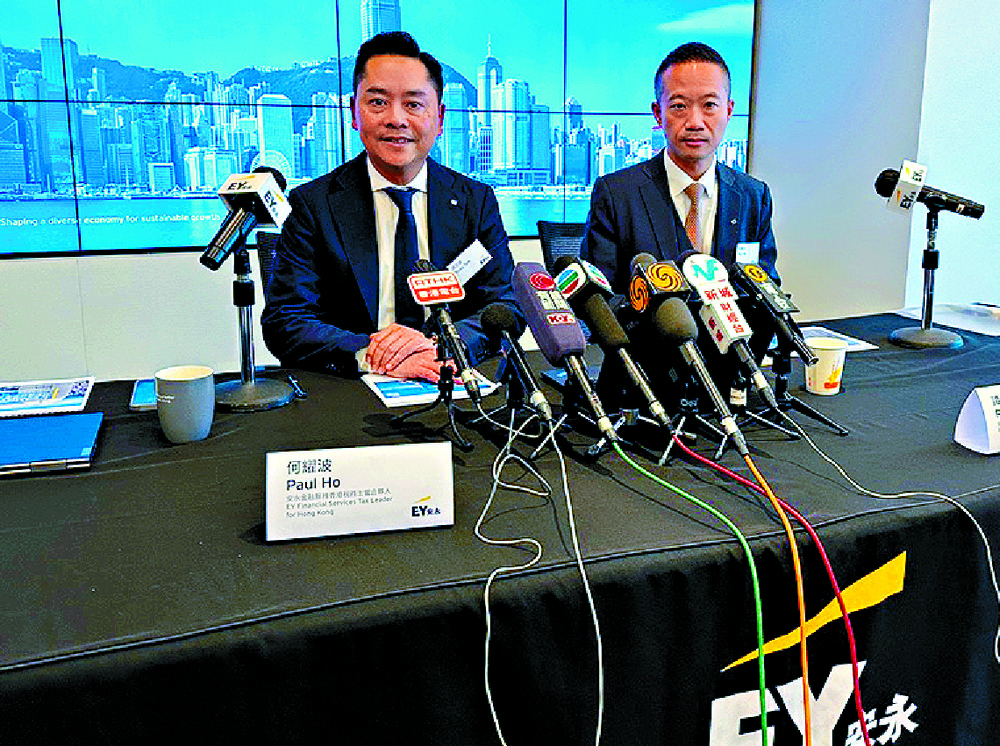
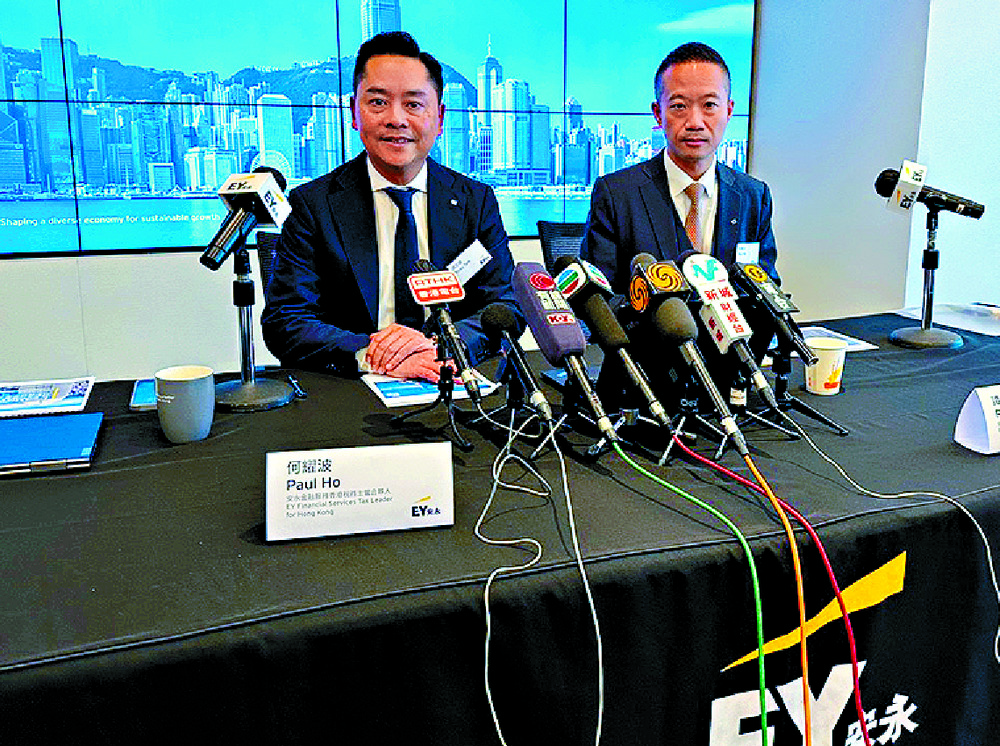
Paul Ho, left, and EY tax services partner Ricky Tam. SING TAO