Japan's economy grew faster than initially estimated in the April-June quarter from the previous three months, supported by business spending that was less weak than the first reading, revised data showed on Tuesday.
The figure released by the Cabinet Office showed the economy expanded an annualized 1.4 percent in the second quarter, compared with initial estimates of 1.1 percent. Economists' median forecast was for 1.6 percent growth.
Without annualization, GDP grew 0.4 percent, matching the median forecast and above the preliminary reading of a 0.3 percent rise.
"Given that the April–June quarter was a period when the Middle East situation could have exerted downward pressure, the fact that growth ended up around this level is notable," said Kento Minami, senior economist at Daiwa Securities. "It is not at all a situation where we need to worry about the economy ... That means the Bank of Japan can definitely move ahead with rate hikes."
Capital expenditure fell 0.9 percent in the second quarter, revised up from the initial estimate for a 1.2 percent drop but a slightly faster decline than economists' forecast for a 0.8 percent fall.
Private consumption, which accounts for more than half of Japan's economy, was flat, matching the initial data.
External demand, or exports minus imports, added 0.5 percentage point to GDP growth, unchanged from the preliminary data. Domestic demand knocked off 0.1 percentage point, better than a 0.2 percent drag in the initial estimate.
EYES ON BOJ DECISION NEXT WEEK
Markets widely see a Bank of Japan rate hike in September as a done deal, but investors are keen to assess the impact of the Middle East conflict and the BOJ's past rate hikes on Japan's economy.
The upward revision reflects capital spending data released last week that showed Japanese firms increased spending on plant and equipment by 1.6 percent in the second quarter from a year earlier.
Salary data also released on Tuesday showed Japan's inflation-adjusted real wages rose 2.4 percent in July from a year earlier, marking the biggest increase since May 2021 and the seventh consecutive month of gains.
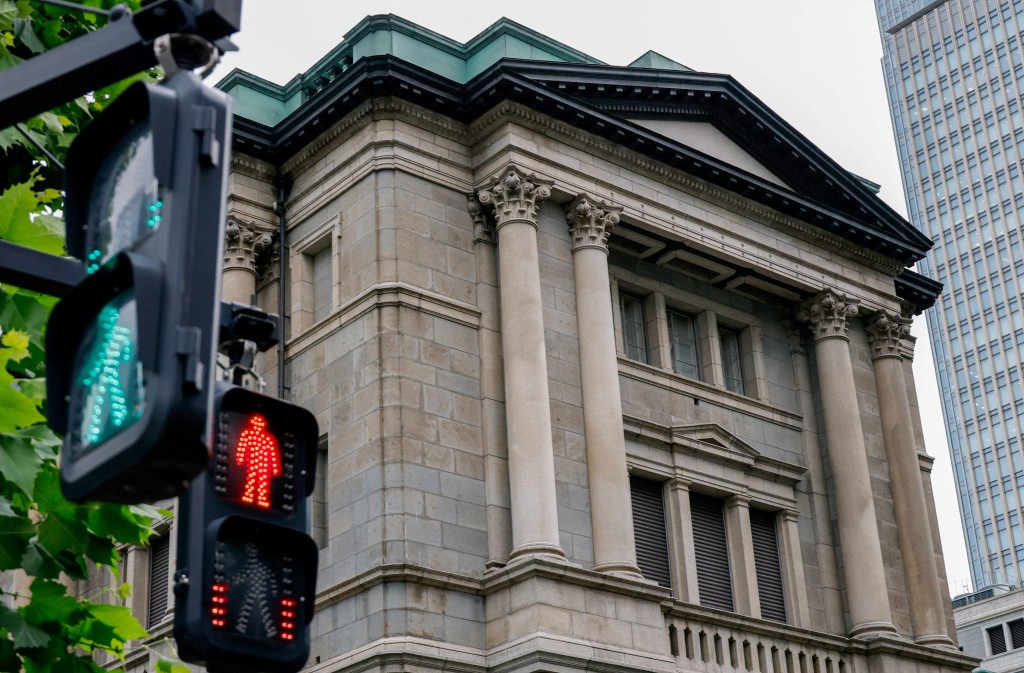
The BOJ raised its policy rate to a 31-year high of 1 percent in June, but the central bank remains under pressure to push borrowing costs higher amid price pressures from the Middle East war and the yen's downward trend.
Swap rates indicate a 98 percent chance for the BOJ to raise its policy rate by 25 basis points to 1.25 percent at its September meeting, according to money market broker Tokyo Tanshi. Traders also fully priced in another rate hike to 1.5 percent by the January meeting.
Reuters