Hong Kong has a highly successful equity market but lags in fixed income, hindering its goal of becoming a leading Fixed Income and Currency (FIC) center, said Eric Yip, executive director of the Securities and Futures Commission.
Speaking at the Hong Kong FIC & Bond Connect Summit on Tuesday, Yip compared Hong Kong to other international financial centers, where fixed-income daily turnover is a multiple of equity turnover. He noted that fixed income centers on offshore yuan in Hong Kong, require a full ecosystem including issuance, repo markets, derivatives for risk management, and more.
Yip outlined four key components for success: competing globally while complementing onshore markets, adopting international best practices, balancing platform resilience with technology such as AI and tokenization, and strong governance through cross-border collaboration – including the new electronic trading platform involving China Foreign Exchange Trade System and HKEX.
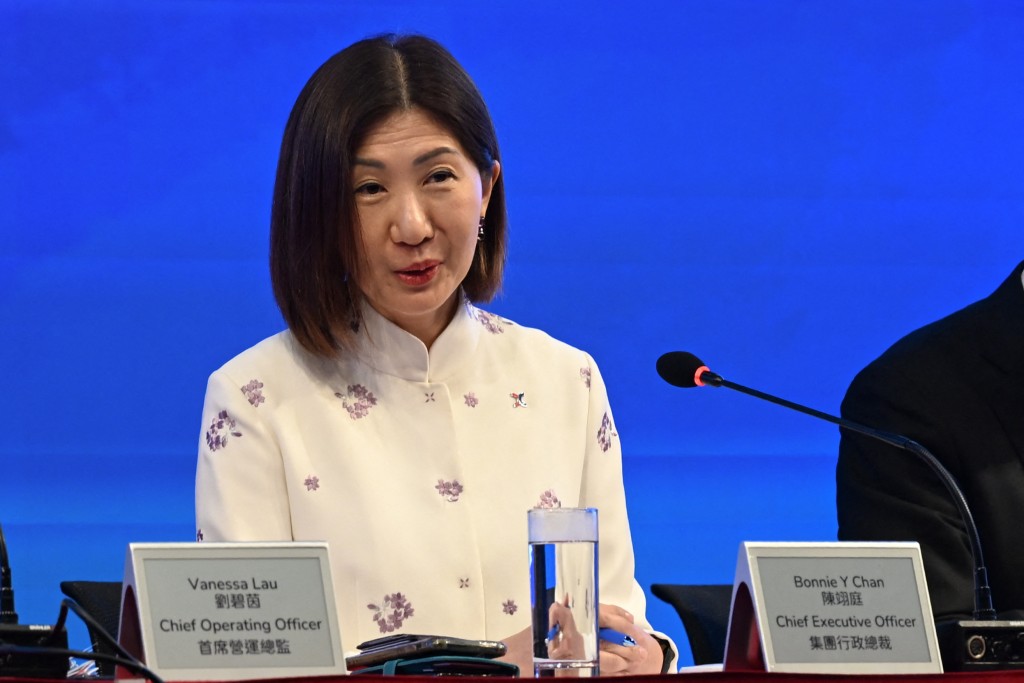
Vanessa Lau, chief operating officer of Hong Kong Exchanges and Clearing (0388), highlighted the massive opportunity. She said China is the world's second-largest bond market but remains underrepresented in global reserves and benchmarks, as international investors seek onshore exposure to China FIC, while mainland investors want offshore diversification through Hong Kong.
"The global stock market capitalization is US$126 trillion (HK$982.8 trillion), compared to the US$145 trillion global debt market," Lau said. She pointed to a virtuous cycle in which more primary bond listings drive secondary-market liquidity, derivatives, ETFs, and indices. Year-to-date, HKEX has listed over 130 bonds, raising more than HK$500 billion, and has also listed 41 CNH bonds, raising 112 billion yuan (HK$129 billion).
Lau mentioned that HKEX is streamlining bond listing rules, expanding Southbound Bond Connect, launching Five-year Chinese Government Bond futures in August, and enhancing collateral management and repo market development to boost liquidity and efficiency.
Stanley Chan, chief executive of CMU OmniClear, detailed the transformation of the Central Moneymarkets Unit (CMU) into a more commercial, multi-asset Central Securities Depository. He added that the new entity aims to provide one-stop, multi-currency clearing and settlement services, expand into equities, support tokenized securities, and deepen collaboration with HKEX on collateral and cross-border services for Chinese investors going abroad.
Jianyang, chairman of the Shanghai Clearing House, emphasized the need for strengthened connectivity, as the Central Counterparty has expanded Swap Connect derivatives clearing for over 13 trillion yuan in notional, admitted more Hong Kong clearing members, supported offshore Panda and Free Trade Zones (FTZ) bonds, and secured international regulatory recognition to facilitate lower-cost participation by overseas institutions.