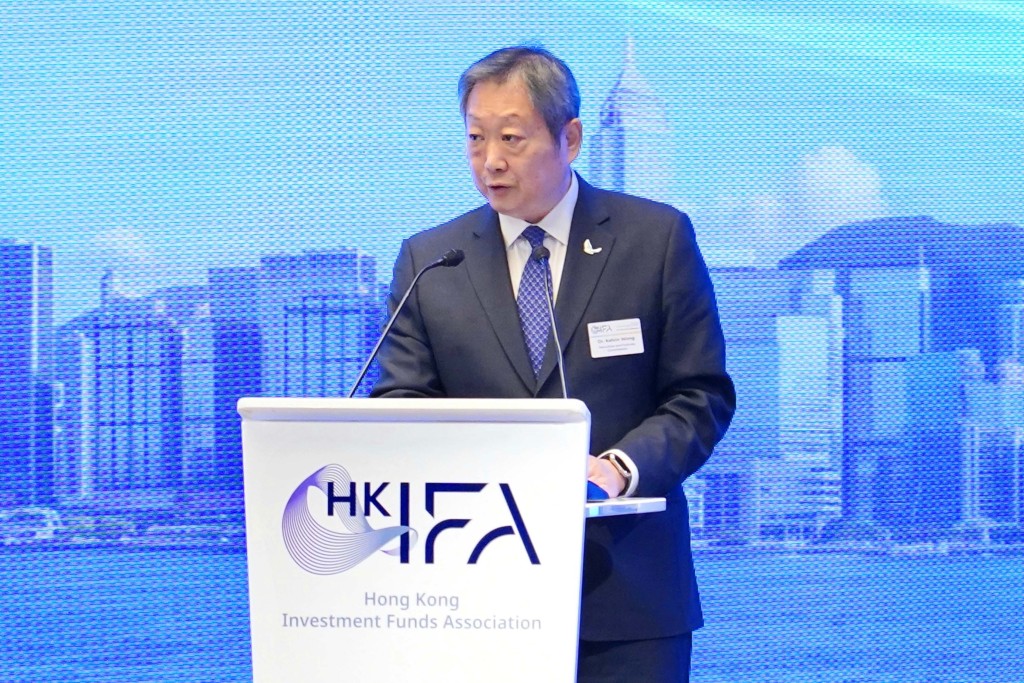
Chairman of Securities and Futures Commission Kelvin Wong Tin-yau called on Monday that asset managers should practice active stewardship to enhance Hong Kong's competitiveness in wealth management.
Hong Kong has overtaken Switzerland to become the world's largest cross-border wealth management hub, while being the world's largest hub is not the same as being the world's most impactful hub, Wong said.
Although the explosive growth of passive investing - exchange-traded funds and index-tracking beta funds - has brought benefits like lower costs, widen access, and democratise portfolios, index fund managers generally lack incentives to invest in stewardship, he noted.
Wong explained that as improving governance lifts every rival fund tracking the same benchmark, it creates a free rider dynamic built into the business system.
He pointed out that passive investors cannot use divestment as a governance lever the way active managers can, which could lead to weakened board independence, fading pay-for-performance alignment, and erosion of management accountability.
Passive investing is a business choice, while stewardship is a professional duty, he said, adding that the two are not incompatible but reconciling them requires deliberate investment in dedicated teams, robust processes, and the courage to ask difficult questions in public forums.
Wong also noted that fund managers are reluctant to participate in annual general meetings, even when companies deliver weak results or pursue strategies that demand open debate. Citing his personal experience, he stated that not a single fund manager attended an AGM during his 28-year tenure in a listed company.
While some asset managers cite concentrated ownership as justification, Wong acknowledged the challenge but rejected such defeatism.
"Hong Kong's concentrated ownership is not the obstacle; institutional silence in the face of it is," he added.