The US current account deficit widened to a record high in the first quarter as businesses front-loaded imports to avoid President Donald Trump's hefty tariffs on imported goods.
The Commerce Department's Bureau of Economic Analysis said on Tuesday the current account deficit, which measures the flow of goods, services and investments into and out of the country, jumped US$138.2 billion (HK$1.08 trillion), or 44.3 percent, to an all-time high of US$450.2 billion. Data for the fourth quarter was revised to show the gap at US$312.0 billion instead of US$303.9 billion as previously reported.
Economists polled by Reuters had forecast the current account deficit increasing to US$443.3 billion last quarter.
The deficit represented 6.0 percent of gross domestic product, the highest since the third quarter of 2006 when it peaked at 6.3 percent. That was up from 4.2 percent in the October-December quarter.
Economists have warned that the widening current account gap and ballooning federal government budget deficit could pose a risk to the dollar in the long term. Trump's sweeping tariffs have taken some of the shine off the dollar's safe haven status.
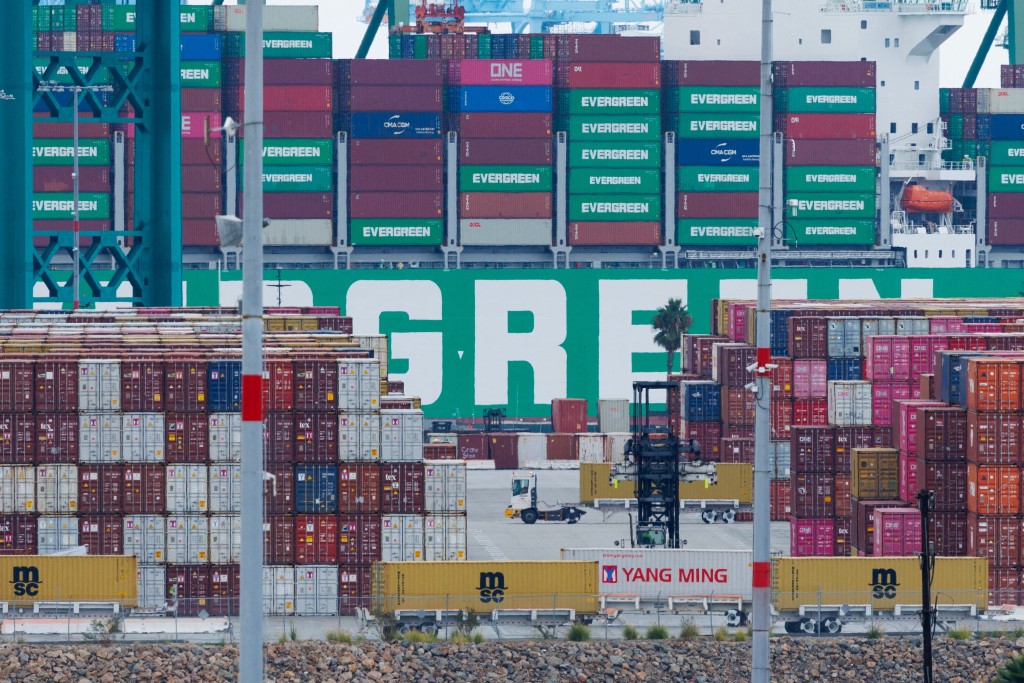
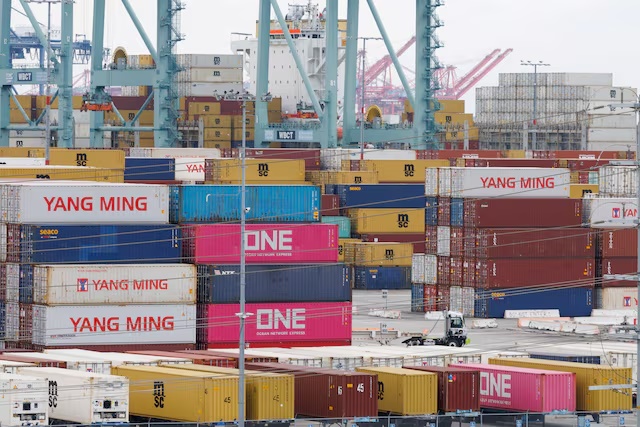
Imports of goods surged US$158.2 billion to a record US$1.00 trillion, driven by nonmonetary gold and consumer goods, mostly medicinal, dental and pharmaceutical products. Imports of services dropped US$1.8 billion to US$217.8 billion, weighed down by declines in charges for the use of intellectual property such as licenses for the use of outcomes of research and development.
Goods exports increased US$21.1 billion to US$539.0 billion, the highest since the third quarter of 2022, lifted by capital goods, mainly civilian aircraft and computer accessories, peripherals and parts.
Exports of services decreased US$4.4 billion to US$293.2 billion, pulled down by declines in government goods and services like military units and agencies. Personal travel also decreased as did professional and management consulting services.
The goods trade deficit widened to a record US$466.0 billion from US$328.9 billion in the fourth quarter. The import flood has, however, since subsided as the front-running of merchandise ran its course. Goods imports slumped by a record 19.9 percent to US$277.9 billion in April, the government reported this month.
Receipts of primary income decreased US$22.9 billion to US$355.1 billion last quarter. Payments of primary income also fell US$13.7 billion to US$362.7 billion. Receipts and payments of primary income were both restrained by declines in direct investment income, mostly earnings.
Receipts of secondary income increased US$2.3 billion to US$49.6 billion, lifted by fines and penalties. Payments of secondary income dropped US$8.4 billion to US$101.5 billion amid decreases in government transfers.
Reuters