Read More





China's spy chief warns of national security risks from AI
14-09-2026 20:03 HKT


Seven arrested over Kwai Chung illegal gathering
14-09-2026 12:33 HKT


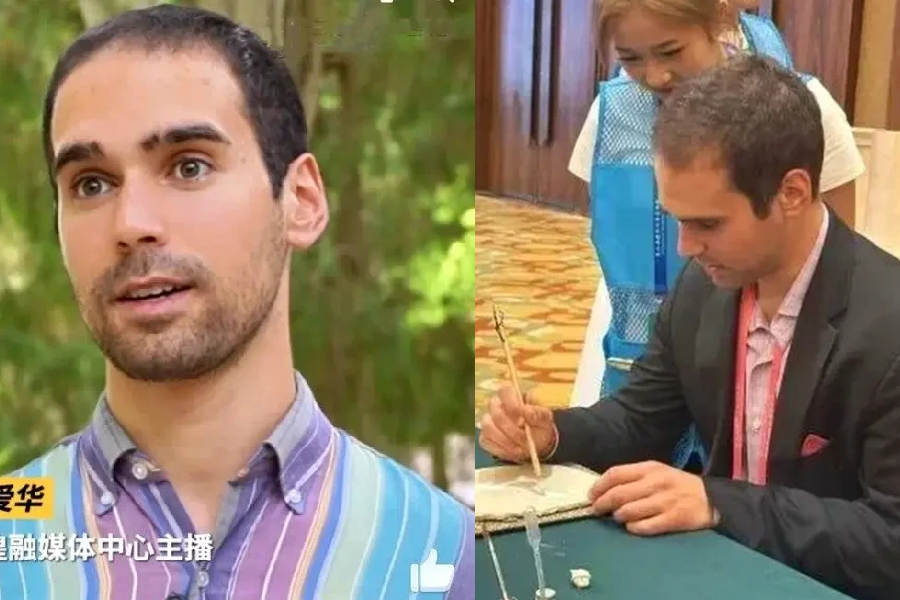
A local Chinese state media organization’s plan to hire a 24-year-old American Yale University graduate has ignited a firestorm of online controversy, with netizens questioning both his massive compensation package and his political background, which includes studying in Taiwan and interning at a prominent United States think tank.
The controversy centers around the Dunhuang Media Convergence Center in Gansu province, which recently announced its intention to hire the American graduate, who goes by the Chinese name Gu Aihua, as a host.
The proposed compensation package totals 900,000 yuan, or approximately US$125,000.
This figure includes a base annual salary of 300,000 yuan, complemented by an equal amount for living allowances and another 300,000 yuan as a housing subsidy.
Prominent Chinese media commentator Hu Xijin recently weighed in on the issue, noting that such a substantial financial offer is exceptionally rare, even within the highly competitive media landscape of Beijing.
He suggested that artificially inflating the market value for foreign talent is unnecessary and advised local authorities to reconsider and adjust the proposed salary and benefits.
Beyond the financial aspects, the prospective hire has faced intense scrutiny over his academic and professional history. Internet users quickly uncovered that the Yale graduate had previously traveled to Taiwan to study Mandarin Chinese.
Furthermore, he completed an internship at the American Enterprise Institute, a Washington-based think tank, where he reportedly contributed to research reports concerning Taiwan.
These discoveries prompted a wave of skepticism regarding his political leanings, with some vocal netizens going so far as to accuse him of being a foreign spy.
In response to the escalating espionage allegations, media analysts have attempted to provide broader context.
Observers have pointed out that for an American university student majoring in East Asian studies, spending time in Taiwan and interning at a policy institute is an entirely standard academic trajectory.
Experts have noted that finding a foreign specialist with a completely neutral or unblemished resume by strict domestic standards is increasingly difficult in the current geopolitical climate.
Commentators have also clarified the reality of such media roles, emphasizing that foreign hosts are primarily hired for on-camera appearances and international outreach.
They do not possess any editorial control or decision-making power over the topics they cover, as all content is strictly managed by the Chinese editorial board. Any deviation from the approved scripts would quickly result in termination.
Ultimately, analysts suggest that the root of the public uproar is financial envy rather than genuine national security concerns.
The extraordinarily high salary package likely triggered public resentment, leading to the exaggerated spy accusations as an attempt to sabotage the lucrative job offer.
Media professionals are now urging the Dunhuang municipal government to handle the situation with tact to ensure that the controversy does not undermine broader public confidence in the country's foreign exchange and international exchange policies.