A new kind of preschool in China offers games, nibbles, treadmills and music for puppies, clawing out a fast-growing niche in a booming industry as youthful owners spend more on pets increasingly regarded as family.
Pets arrive by 9 a.m. each day at Paw³, which bills itself as a kindergarten for dogs in the commercial hub of Shanghai, providing tightly scheduled activities for the canines, rather than strict training or age limits.
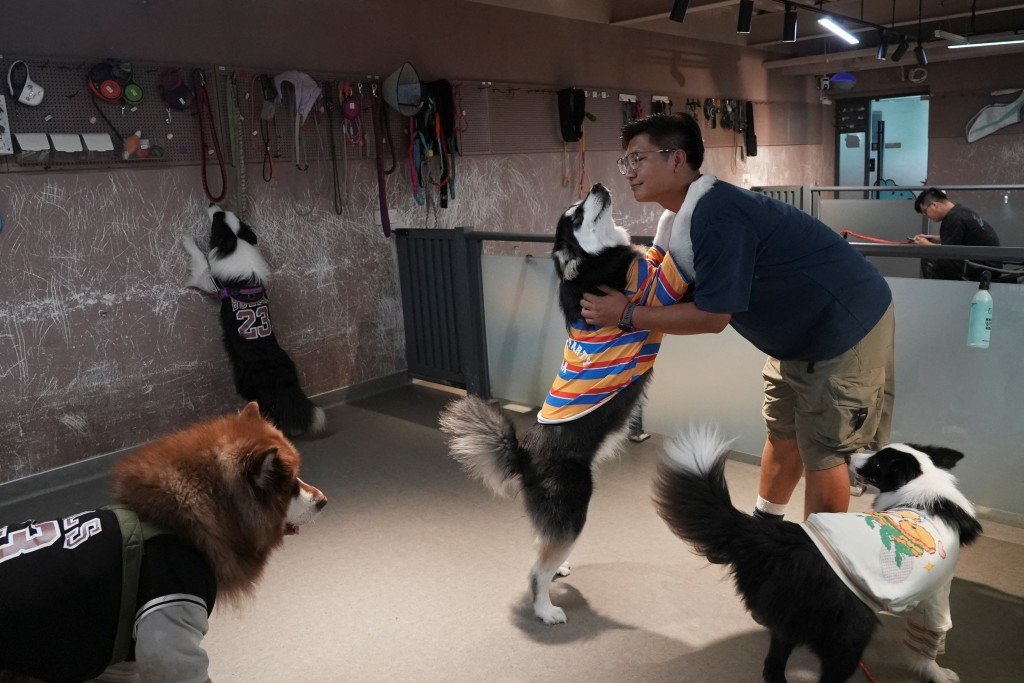
They follow a routine of interactive games and obstacle courses, interspersed with freshly made snacks and naps as a pianist plays classical music, and can stroll on a special doggie treadmill before their owners pick them up around 7 p.m.
"We raise our dog like a child," said Qian Yi, whose one-year-old border collie, Harry, visits every weekday.
As declining birth rates alter lifestyles, pets are increasingly treated as members of the family, driving growth in higher-value services such as daycare, grooming and training.
Their popularity stems from broader structural shifts in China’s consumer economy. Younger, urban consumers prioritise spending on experiences and emotional fulfillment, despite a softening in overall demand.
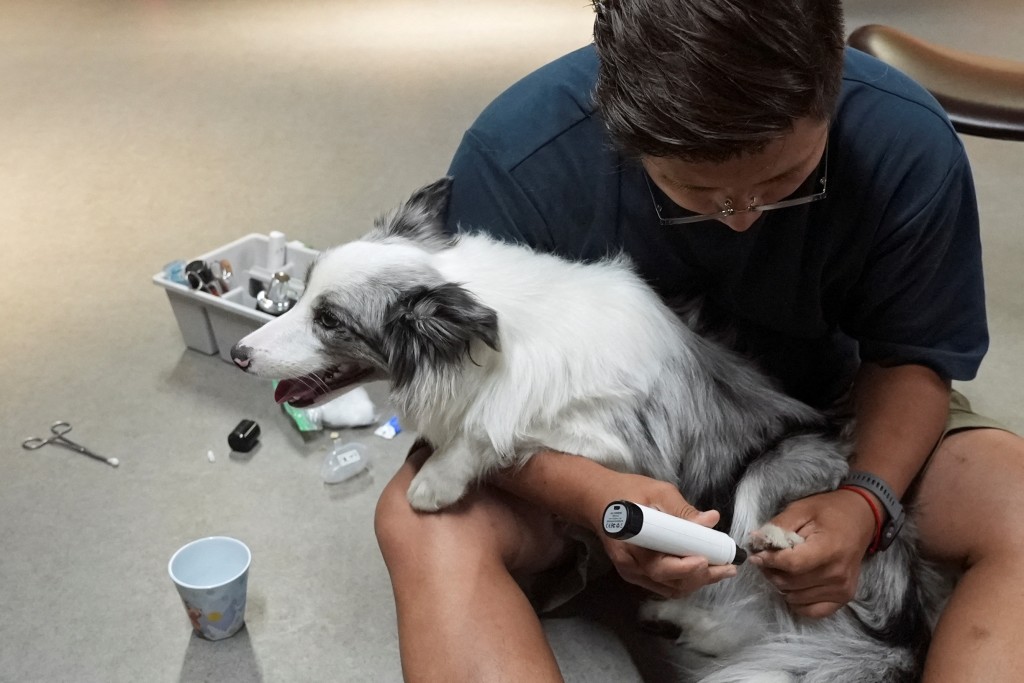
Jann Zhang, founder and principal of Paw³, a kindergarten for dogs, grooms a border collie, in Shanghai, China (Reuters)
Jann Zhang, founder and principal of Paw³, a kindergarten for dogs, interacts with a dog in Shanghai, China (Reuters)
Qian estimated that she spends about 4,000 yuan (US$560) each month on her dog for daycare, meals, grooming, swimming and visits to dog parks.
Pet Data, a China-based industry research firm, estimates the market for urban pet consumption reached 312.6 billion yuan (US$46 billion) in 2025, and was on track to exceed 405 billion by 2028.
Paw³ founder Jann Zhang said the idea came to him after a struggle to find help for his six-year-old golden retriever, Fuzai, who developed anxiety-related behavioural problems.
His search led him to discover dog daycare equivalents in the United States and he came to believe the main issue was a lack of socialization.
"I was hoping to give my own dog more space to be social, so I could distract his attention," Zhang said. "That's how the idea of opening the kindergarten came about."
His clientele has grown to 200 since it started with fewer than 20, and owners pay daily sums ranging from 98 yuan to 138 yuan, according to the size of the dog.
"What attracts me most about the place is that it gives dogs a space of their own," said William Tang, whose one-year-old border collie, Cinderella, has attended the kindergarten since it opened in May 2025.
(Reuters)