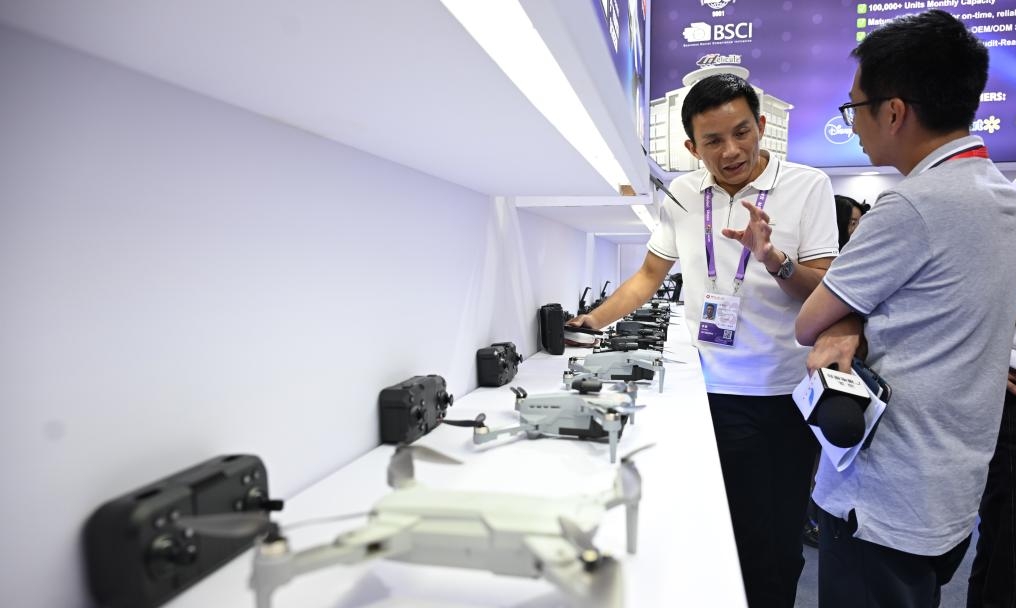
Mainland China is looking into the implementation of a "scan-to-fly" model to improve the efficiency of drone flight plan approvals, according to the National Development and Reform Commission Department of Low Altitude Economic Development.
2026 has seen the strictest regulations. Since January 1st, unauthorized drone flights have been regulated, with violations punishable by administrative detention; whereas flight activities in controlled areas must apply for a permit at least one day in advance.
Starting May 1st, all drones must complete real-name registration and have their flight activities tracked in real time; Beijing has even banned the flying and sale of drones citywide.
The Department stated that during the 15th Five-Year Plan period, the department will promote the low-altitude economy to achieve "good management, stable flight, and flexible utilization."
It was emphasized that there would be no low-altitude economy without safety, and that the department will strengthen the full-lifecycle management of aircraft and strictly implement safety supervision measures.
Regarding the recent public concern about the difficulty of drone flight approvals, it stated that the government is working with relevant departments to study and promote mature experiences such as the "scan-to-fly" model in some areas to improve the efficiency of flight plan approvals.
On January 1st, the new version of the Public Security Administration Punishment Law officially came into effect, explicitly classifying "black flights" (flights violating airspace management regulations) as illegal acts endangering public safety, with serious offenses punishable by five to ten days of administrative detention.
To overcome the difficulties in obtaining approvals, cities like Nanchang in Jiangxi Province and Shanghai have pioneered the establishment of "scan-to-fly" mini-program platforms.
However, this model has not yet been rolled out nationwide. It is reported in Mainland that some applicants have reported slow responses after submitting flight applications, with an approval failure rate as high as 90 percent.
The New York Times quoted a drone owner as saying that only two of his 30 flight applications were approved, and those two applications had extremely strict flight restrictions, limiting flights to within 10 meters and visual line of sight.
Regulations will be further tightened on May 1st. By then, all drones must complete real-name registration and actively report identification information such as identity, location, speed, and status during flight, achieving "full traceability.
Under strict regulations, the drone market has cooled. A DJI distributor reported that sales of enterprise drones have declined by nearly 50 percent in the past two months.
An industry insider bluntly stated that many aerial photographers are now afraid to fly, "fearing they might accidentally fly into unreported airspace and get in trouble with the police."