Read More





China's spy chief warns of national security risks from AI
14-09-2026 20:03 HKT



MTR opens new Tung Chung Line Extension track section with smooth service
13-09-2026 12:59 HKT


During a press conference at the "Two Sessions" on Friday, Foreign Minister Wang Yi emphasized that within the United Nations, Taiwan is officially recognized as "Taiwan Province, People's Republic of China." This statement quickly sparked widespread discussion in mainland China.
In response, Taiwanese officials reiterated that Taiwan and mainland China are separate and not subordinate to one another. Despite this, the term "Taiwan Province" is still used in mainland China's administrative maps and remains part of Taiwan's legal framework, although it is not historically prevalent in Taiwan.
The concept of the "Taiwan Provincial Government" saw a significant reduction in its role during President Tsai Ing-wen's administration in 2018. According to Taiwanese law, Taiwan Province, abbreviated as "Tai," consists of 11 counties and 3 cities, covering 69.38 percent of the land and 30.68 percent of the population under the control of the Republic of China. This excludes the six directly-administered cities and several affiliated islands like the Penghu Archipelago. Changhua County and Hsinchu City are the largest county and city, respectively.
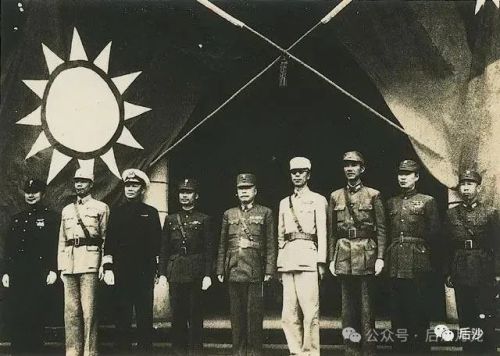
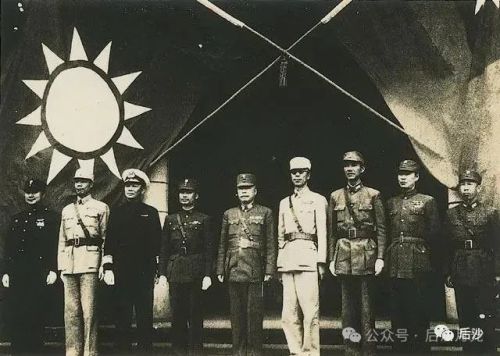
Taiwan was established as a province in 1887 during the Qing Dynasty as Fujian Taiwan Province. After the First Sino-Japanese War, Japan occupied Taiwan until 1945, when it was returned to China. Following the retreat of the Nationalist government to Taiwan in 1949, the chairpersons of Taiwan Province were mainly senior Nationalist officials. Notable among them was James Soong, whose tenure marked the transition from a significant to a nominal provincial chairmanship.
In 1994, Soong was appointed by then-President Lee Teng-hui. By 1996, the position of provincial chairmanship became elective, and Soong won with a 56 percent approval rate. Facing political challenges from Soong and aiming to promote "de-Sinicization," Lee announced the "freezing of the province" during the Taiwan Strait Crisis. This freeze was officially implemented in July 1997, leading to the provincial government's chairperson being appointed rather than elected.
Starting December 21, 1998, the Taiwan Provincial Government's functions were adjusted, transforming it into an agency dispatched by the central government.
Under President Tsai Ing-wen's administration, on June 28, 2018, the Executive Yuan decided to fully devolve the provincial government's tasks, and by July 1, 2018, all provincial administrative organizations and functions were transferred to the central government, effectively ending the operation of the Taiwan Provincial Government, which then existed only in legal texts. The last chairperson, Wu Ze-cheng, served for just six months.