The family of a Chinese-Canadian billionaire arrested in Hong Kong by Chinese security forces before being taken to the mainland to stand trial carry on his legacy in a nondescript office, engaging in multi-billion dollar deals on a regular basis.
Xiao Jianhua was one of China’s wealthiest people when a group of men abducted him at the Four Seasons resort in Hong Kong and rolled him out in a wheelchair with a blanket over his head.
He was held in secret detention for five years in mainland China while regulators picked apart a financial empire that helped him build an estimated US$6 billion fortune at its peak. Xiao emerged in public last month for the first time since 2017, only to be sentenced to 13 years in jail.
Yet hiding in plain sight is one of the world’s most enigmatic family office operations built by Xiao’s kin. It represents only a portion of the wealth that he and his family once lorded over, but its survival is remarkable given the odds against Xiao, whose financial conglomerate authorities said paid bribes to state employees and illegally raised more than 312 billion yuan, including through shadow loan products. The Shanghai court that convicted Xiao said he was given a lenient sentence — and credited him for his “voluntary surrender” — even though human rights groups denounced how he resurfaced in custody after his abduction. His case ignited fears over the long arm of Chinese justice and contributed to outrage that fueled Hong Kong’s massive street protests in 2019.
Meanwhile, in its home base of Toronto, the small but influential family operation has backed firms involved in billions of dollars' worth of deals from Silicon Valley to China. It’s a striking example of how family offices can cultivate wealth through financial markets even in the direst of circumstances: a disappeared patriarch.
Xiao, who was born in China and became a Canadian citizen before he was taken, parlayed some of his fortune overseas by borrowing against Chinese assets with the help of local banks starting in the 2000s, when the government still encouraged investments abroad. The family started diversifying its wealth outside of the country well before he vanished, but its main management firm, WinnerMax Capital, was created in Toronto in 2017, weeks after his abduction.
The family of Xiao’s wife, Zhou Hongwen, is linked to WinnerMax via her sister, Zhou Liwen, who is listed as a director. Zhou Liwen is also a director of RedJay Asset Management, which is part of the family-backed group of Toronto-based companies that includes J17 Capital and Sixty Degree Capital, as well as real-estate arm WinnerMax Property.
The Zhou family’s fortune in Canada was built independently of Xiao’s in China, according to Guy Saint-Jacques, the Canadian ambassador to China from 2012 to 2016, based partly on private research about the origins of the wealth of which he has knowledge.
WinnerMax and Sixty Degree have hired dozens of people in Toronto over the past two years, according to an analysis of LinkedIn, and a person familiar with the matter said the constellation of firms has tripled headcount to more than 100 people since 2018. They all share the same Toronto address in company documents: 251 Consumers Road. The 13-story building, off a highway amid office parks and condominiums, has a directory that features the names of several companies linked to the family.
Sixty Degree has made dozens of investments with exits in healthcare, digital health and information technology, PitchBook data show, amassing a portfolio that has included Nanjing-based pharmaceutical company TransThera Biosciences and New York-based health-care software company Schrodinger. J17’s website shows investments in venture capital firm Andreessen Horowitz and exiting DigitalOcean, the New York-listed software firm.
WinnerMax Capital has business partners in New York and Hong Kong — its LinkedIn page says that helps “capture market opportunities.” Five people familiar with the matter say the group works closely with Alpha Square Group, an investment advisory firm with an office in Manhattan’s Empire State Building. Its principal and top shareholder is listed as ZiQiang Xiao, also known as Ivan, whose surname is also spelled as Shaw in some filings. Ziqiang Xiao was also the name of a director of J17 Capital who stepped down in April.
Alpha Square has been an informal adviser to the Zhou family, according to a person familiar with the arrangement. Filings show the firm has US$1.3 billion in assets under management and has origins as a single-family office that catered to an unnamed female anchor investor. Alpha Square declined to comment.
The family is reclusive given Xiao’s uncertain future. Human rights groups have called Xiao’s case one of the most outrageous examples of China’s secret detention system, which was once reserved for political dissidents but is increasingly used to target business moguls. The kidnapping served “as an act of intimidation to the greater business mogul community,” said Peter Dahlin, the Swedish activist who was held in secret detention in China in 2016.
Xiao’s five-year saga reflects injustices in China’s detention system, including forced confessions, being held without public charges and secret trials, said Irwin Cotler, a former Canadian justice minister. He called on Canada and its allies to sanction Chinese officials involved in cases like Xiao’s.
Meanwhile, Canadian diplomats, who are offering consular services to Xiao’s family, say they’ve been denied access to the mogul at every turn, even during his trial. It’s the latest case in which China cut off consular access to Canadian citizens of Chinese origin, Saint-Jacques said.
“He knew what was waiting for him,” the former ambassador said of Xiao. “He had no choice but to collaborate.”
Saint-Jacques said he suspects the government used Xiao to try to obtain information about rival political factions to Xi Jinping, given the mogul’s connections.
“According to China’s law, we don’t recognize dual nationality,” Wang Wenbin, a Ministry of Foreign Affairs spokesperson, said last month after Xiao’s sentence. “China tries its citizens for criminal acts according to law, and he doesn’t have the right to consular protection of other countries.”
Xiao can apply for a shortened sentence once he pays about US$1 million personally. His Tomorrow Holding was fined US$8 billion. The court said his sentence was lenient because he cooperated with authorities in recovering stolen assets.
Run out of a nondescript five-story concrete building in Beijing with a glass facade, Xiao’s Tomorrow was labyrinthine — authorities found that the group used 209 shell companies from 2005 to 2019 to mask loans to itself through Baoshang Bank in Inner Mongolia. It also paid bribes worth more than 680 million yuan to state employees in the form of cash, shares, real estate and other properties, the court said.
China took over Baoshang in 2019, the first time the state had to intervene at a lender in two decades, then assumed control of nine more financial firms linked to Tomorrow in 2020. Baoshang alone required rescuing 5 million depositors and foreshadowed deeper issues over self-lending practices in China.
Even so, Xiao’s sentence was lighter than those of other fallen Chinese moguls. Anbang founder Wu Xiaohui was given 18 years after facing charges of fraud and embezzlement. Wu’s firm, which bought the Waldorf Astoria hotel in New York in a record US$2 billion transaction in 2014, was taken over by China’s government in 2018. Ren Zhiqiang, a real estate mogul who once publicly mocked Xi as a clown, received an 18-year sentence on corruption charges.
As for Xiao, also known within the group as James, he’s denied any wrongdoing, saying that he made his wealth not on corruption but through Warren Buffett-inspired investment strategies, bolstered by an early start as a reseller of major US computer brands. He turned to business after a formative experience in politics as the student union head at Peking University, where he started studying at age 14. Classmates formed a rival union that backed pro-democracy protests that culminated in a bloody crackdown at Tiananmen Square in 1989.
In a 2014 letter published in the New York Times, Xiao confirmed through a spokesperson that his group bought a company that was linked to Xi’s sister — one of multiple transactions with politically connected people.
A report in the magazine Caijing, which was later removed from newsstands, said several companies linked to Xiao were involved in the privatization in the 2000s of state-owned power company Luneng, which had shareholders including Zeng Wei, the son of a former Chinese vice president. In 2009, one of Tomorrow’s units did a property transaction with a company linked to the son-in-law of Jia Qinglin, a high-ranking Communist Party member.
Xiao’s backstory can come as news to some of those who’ve worked at the handful of family firms, thousands of miles from China.
A former WinnerMax employee in Toronto said they only found out after several months on the job from someone who left the firm that it was part of a business empire linked to the family of Xiao’s wife.
(Bloomberg)
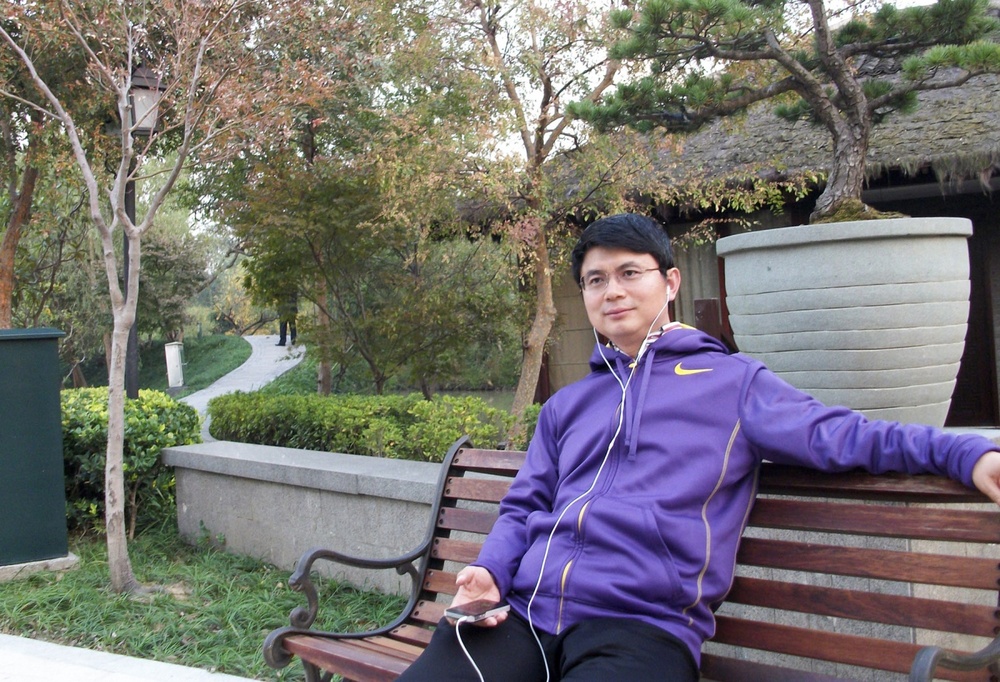
Xiao Jianhua. (New York Times via Bloomberg)