Read More






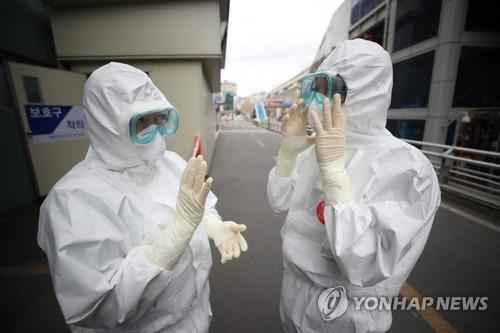
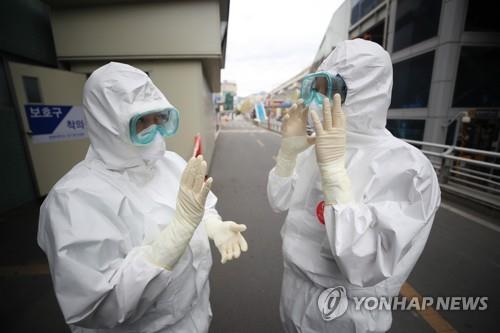
South Korea's new coronavirus cases stayed below 30 for the second straight day today, but health authorities are vigilant over imported and cluster infections.
The 27 new cases, detected Monday and slightly up from 25 a day ago, brought the total infections to 10,564, according to the Korea Centers for Disease Control and Prevention (KCDC), Yonhap reports.
Tuesday's new virus cases also mark a sharp drop from the February 29 peak of 909 new cases. The country's daily number of new virus cases has been below 50 in the last six days.
But health authorities remain on high alert over new cases coming from overseas as well as cluster infections at churches and hospitals. They are also keeping an eye on those who retested positive for coronavirus. Of the 27 new cases, 12 were from overseas.
The death toll from the new coronavirus, which emerged in Wuhan in China in December, increased by five to 222, according to the KCDC.
The number of patients released from quarantine after making full recoveries reached 7,534, up 87 from a day earlier.
The southeastern city of Daegu, the worst virus-hit region, added three new cases. Its surrounding North Gyeongsang province reported five new cases.
The total number of cases reported in Daegu and North Gyeongsang province reached 6,822 and 1,342, respectively.
Other major provinces and cities also reported infections, with Seoul and the surrounding Gyeonggi Province adding two and eight new cases, respectively.
The country detected seven new cases coming from overseas at border checkpoints. The total number of imported cases is now at 940.
Since April 1, South Korea has enforced a mandatory 14-day self-quarantine for all travelers coming from overseas to better contain imported cases.
Starting Monday, all arrivals from the United States have been required to be tested for the virus. Previously, only those with symptoms had undergone tests.
All 43 evacuees who arrived in South Korea from Spain on Monday tested negative for the virus, according to Yoon Tae-ho, a senior health ministry official.
Seeking to reduce the daily number of new infections to below 50, South Korea has extended strict guidelines on social distancing by two weeks to Sunday.
South Korea has vowed to show no leniency toward those who breach quarantine rules. Violators could face up to one year in jail or a fine of up to 10 million won (US$8,200), and they will be asked to wear electronic wristbands for the rest of their quarantine period. Foreigners could be deported if they break quarantine rules.
Health authorities have vowed that they will monitor self-isolators closely when they cast ballots for the parliamentary elections Wednesday.
The government has said those in self-quarantine will be accompanied by health officials from their isolation facilities to polling stations at a separately designated time in a bid to keep them from meeting other voters.
Yoon said South Korea is setting up a pan-governmental system to support development of a vaccine and cure.
He added the country aims to conduct clinical trials on antibody drugs this year and introduce them next year. It also targets to develop vaccines by the second half of 2021 or 2022.