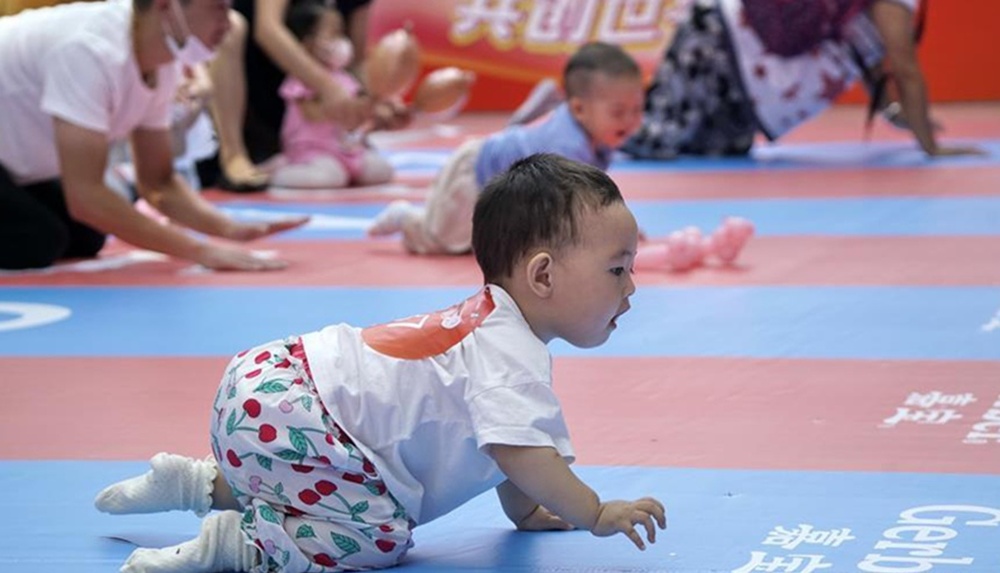
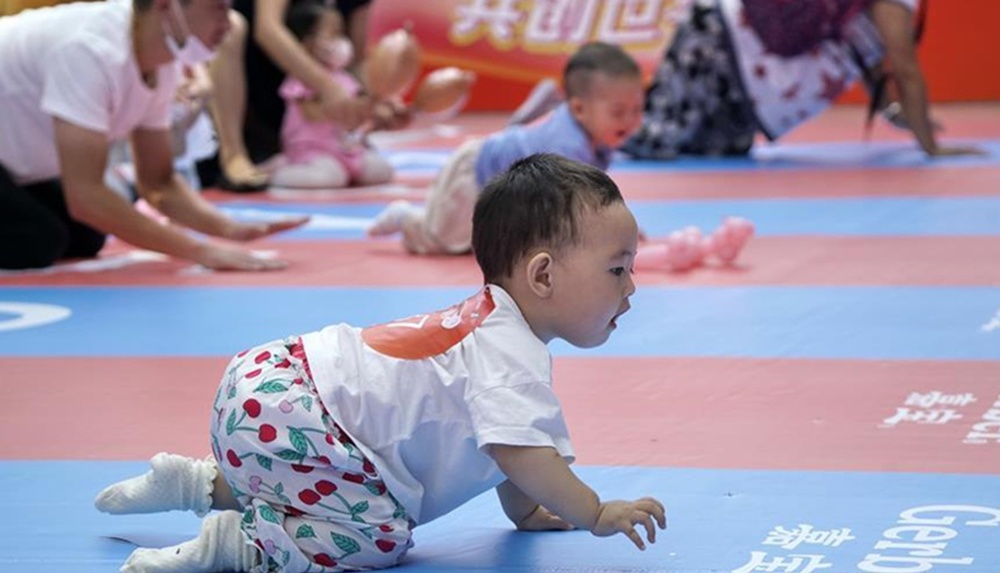
According to a latest survey, China is currently experiencing a double transition of population and family, with a low fertility rate and an obvious trend of smaller family sizes.
The average household size dropped to 2.62 people in 2020, 0.48 fewer than that in 2010. The number of children a woman has now dropped from 1.63 in 2019 to 1.19 in 2022. Delayed marriage and childbearing, non-marriage infertility caused by the changes of family concept have become the most important factors behind declining fertility levels in China.
The latest survey was released by the third China Population and Development Forum, hosted by the China Family Planning Association, Committee of Population, Resources and Environment of the Chinese People's Political Consultative Conference National Committee and China Population and Development Research Center, in Beijing on Saturday, China's Central Television reported.
According to the survey, the average age of first marriage for women rose from 22 in the 1980s to 26.3 in 2020, and the age of first childbearing has been pushed back to 27.2.
The fertility intention of couple of childbearing age continues to decline. The average number of children they intend to have in 2021 is 1.64, down from 1.76 in 2017 and 1.73 in 2019, while the number of "post-1990s" and "post-2000s," as the main fertility subjects, is only 1.54 and 1.48.
Lifetime childlessness among women is rising rapidly, from 6.1 percent in 2015 to nearly 10 percent in 2020.
According to a survey conducted by China Population and Development Research Center in 2021, less than 70 percent of women under the age of 35 believe that their life is complete only when they have children, Wang Pei'an, Party Secretary and executive vice president of China Family Planning Association, said at the forum.
Countries such as Japan and Singapore have been encouraging fertility since the last century, but their fertility levels in 2020 are still at a very low level of 1.3 and 1.1, respectively, Wang said. In the case that the level of fertility protection in our country is still very low, if there is no guidance on the concept of marriage and childbearing, the improvement of fertility level will be extremely difficult, Wang noted.
Wang suggested giving full play to the leading role of the new marriage and childbearing culture, advocating age-appropriate marriage and childbearing, and encouraging couples to share child-rearing responsibilities.
He also suggested implementing an annual leave system, gradually adjusting and shortening working hours, introducing flexible working hours, and providing more support for family life and leisure travel.
"We should vigorously develop the homemaking, aged care, and childcare industries, and continue to empower and enhance the efficiency of family construction, so as to raise the level of services for childbirth and continue to improve the quality of the newborn population," Wang said.
He also noted that, the family should be regarded as the basic unit of public policy, and the orientation of protecting marriage and family and encouraging family members to reunite should be fully reflected in the policies in such fields as urbanization, household registration reform, employment, medical care, pension, social security, housing and taxation.
For example, policies such as housing reform and citizenization of migrant workers should fully reflect the policy orientation of maintaining family and marriage stability and promoting family reunion; formulation of tax incentives should be based on household size and structure as the basis for the pricing of public consumer goods. As another example, family needs should be considered in social insurance policies, especially medical insurance policies, and part of insurance should be allowed to transfer moderately among family members, according to Wang.
(Global Times)